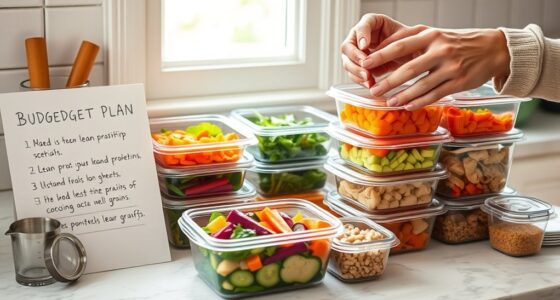
To stay safe, focus on proper meal planning by choosing fresh ingredients and avoiding spoiled foods. Shop carefully by checking expiration dates, discarding damaged items, and selecting less risky options. Cook in batches and store leftovers properly to prevent spoilage. Keep your kitchen clean by sanitizing surfaces and avoiding cross-contamination. Confirm your fridge stays below 40°F and regularly inspect stored foods. Continuing will help you learn essential techniques for maintaining food safety every day.
Key Takeaways
- Plan meals with fresh, whole ingredients and avoid foods prone to spoilage or contamination.
- Check expiration dates and packaging to ensure only safe, fresh items are purchased.
- Use batch cooking and proper leftover storage to prevent spoilage and reduce waste.
- Maintain kitchen cleanliness by disinfecting surfaces and preventing cross-contamination.
- Keep the refrigerator below 40°F and store raw meats separately to prevent foodborne illnesses.
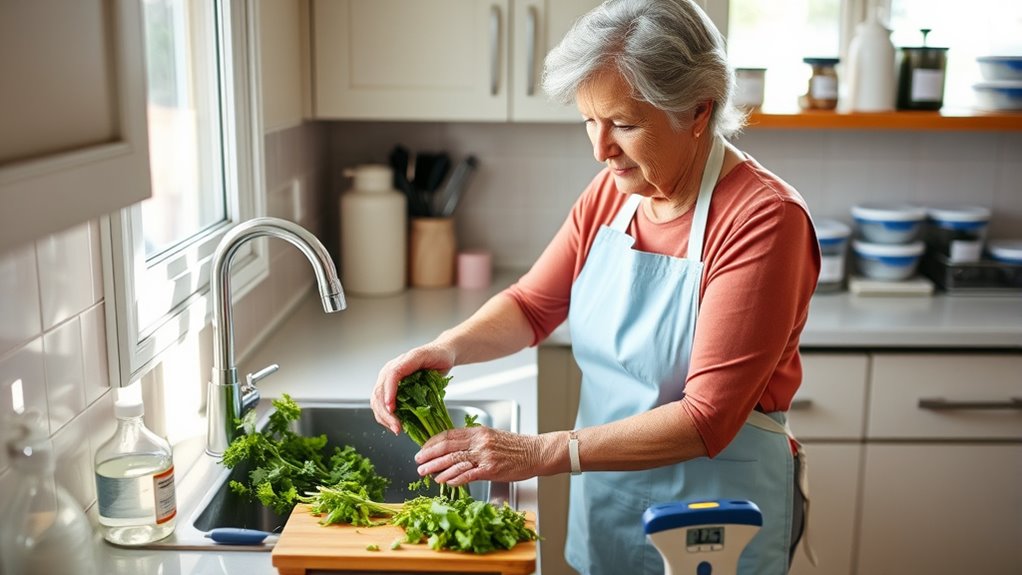
As you age, your immune system weakens, making food safety more important than ever. Staying vigilant about what you eat and how you handle food can markedly reduce your risk of illness. One of the best ways to do this is by paying close attention to meal planning. When you plan your meals, focus on selecting fresh, whole ingredients and avoiding foods that are prone to spoilage or contamination. Proper meal planning also involves preparing a shopping list to prevent impulse buys that may be past their prime or unsafe to eat. By organizing your grocery trips carefully, you guarantee that you bring home only safe, fresh items, reducing the chances of foodborne illnesses. Additionally, consider batch cooking and storing leftovers properly to minimize unnecessary handling and reduce waste. Incorporating knowledge about food safety practices can further enhance your efforts to keep meals safe and nutritious.
Kitchen sanitation plays a critical role in maintaining food safety. Before you start cooking, make sure your work surfaces are thoroughly cleaned with hot, soapy water. Regularly disinfect cutting boards, utensils, and counter spaces to eliminate bacteria that can transfer from raw meats or vegetables. Keep raw meats separate from other foods, especially ready-to-eat items, to prevent cross-contamination. Wash your hands thoroughly with soap and water before and after handling raw ingredients, as well as after touching anything potentially contaminated. Maintaining a clean kitchen environment extends beyond just surfaces—pay attention to your refrigerator and pantry. Ensure your fridge is at the correct temperature (below 40°F or 4°C) and that expired or spoiled items are discarded promptly. Check canned and packaged goods for damage or bulging, indicating potential spoilage.
Frequently Asked Questions
How Can Seniors Prevent Food Allergies From Developing Later in Life?
To prevent new food allergies, you should stay aware of allergy symptoms and avoid risky foods, especially nuts. Practice nut allergy prevention by reading labels carefully and asking about ingredients when dining out. If you notice symptoms like hives or difficulty breathing, seek medical attention promptly. Staying vigilant and informed helps you catch allergies early, reducing risks and maintaining your health as you age.
What Are the Best Ways to Store Leftovers Safely for Seniors?
You should store leftovers properly by ensuring proper refrigeration at or below 40°F (4°C) to prevent bacteria growth. Use airtight containers and label them with the date to keep track of freshness. Always refrigerate leftovers promptly, ideally within two hours of cooking. When reheating, make sure the food reaches a safe internal temperature. These steps help seniors maintain food safety and enjoy leftovers without health risks.
How Does Medication Affect Seniors’ Ability to Follow Food Safety Practices?
Medication interactions and cognitive impacts can make it harder for you to follow food safety practices. You might forget to wash hands, check food temperatures, or properly store leftovers. These effects can impair your judgment and attention, increasing the risk of foodborne illness. To stay safe, you should set reminders, keep a food safety checklist, and ask your healthcare provider for tips tailored to your medications.
Are There Specific Foods Seniors Should Avoid Due to Safety Concerns?
You should avoid foods with high contamination risks, like raw seafood, unpasteurized dairy, and raw eggs, because they can cause serious infections. Foods to avoid also include deli meats and unwashed produce, which may harbor bacteria or parasites. These risks increase with age, making it essential to choose thoroughly cooked, properly stored, and well-washed foods to protect your health and prevent foodborne illnesses.
How Can Caregivers Ensure Seniors Maintain Proper Hand Hygiene During Meal Prep?
You can guarantee seniors maintain proper hand hygiene during meal prep by reminding them to wash their hands thoroughly with soap and water, following proper handwashing techniques for at least 20 seconds. Encourage regular use of hand sanitizer when soap isn’t available, especially after touching raw ingredients or surfaces. Keep handwashing stations accessible and well-stocked with soap, water, and sanitizer, and gently supervise to reinforce good hygiene habits.
Conclusion
By following simple food safety practices, you can considerably reduce your risk of foodborne illnesses. Did you know seniors are 3 times more likely to experience severe complications from food poisoning? Staying vigilant with proper handwashing, cooking temperatures, and storage can make a real difference. Prioritize your health by implementing these tips daily — it’s a small effort that leads to a safer, healthier life. Your well-being is worth every mindful step you take.