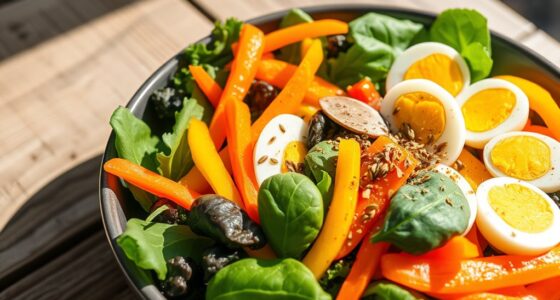
To support your gut health as a senior, focus on including plenty of fiber-rich foods like fruits, vegetables, and whole grains, which help keep your digestive system regular and nourish beneficial bacteria. Adding probiotics through foods like yogurt, kefir, or fermented vegetables boosts gut microbiome balance, improving digestion and immunity. Combining these strategies can make a noticeable difference in your well-being—keep exploring to discover how you can optimize your gut health further.
Key Takeaways
- Adequate fiber intake promotes regular bowel movements and nourishes beneficial gut bacteria in seniors.
- Probiotics help restore and maintain a healthy microbiome, improving digestion and immune function in aging adults.
- Combining fiber-rich foods with probiotic sources enhances overall gut health and supports nutrient absorption.
- Age-related digestive changes can be mitigated by targeted dietary supplements of fiber and probiotics.
- A holistic approach using both dietary strategies and supplements benefits gut health and overall well-being in seniors.

Have you ever wondered how your gut health changes as you age? As you grow older, your digestive system undergoes several shifts, often leading to discomfort, irregular bowel movements, or nutrient absorption issues. These changes are a natural part of aging, but understanding how to support your aging digestive system can make a significant difference in your overall well-being. One effective way to do this is by paying attention to your diet and considering dietary supplements that promote gut health. Incorporating the right nutrients can help maintain a balanced microbiome, improve digestion, and boost immunity.
Fiber plays an essential role in supporting your aging digestive system. As you age, your digestive tract may become less efficient, and fiber helps keep things moving smoothly. It adds bulk to your stool, preventing constipation and promoting regularity. Plus, fiber acts as food for the beneficial bacteria in your gut, encouraging a healthy microbiome. You can get fiber from fruits, vegetables, whole grains, nuts, and seeds. If your diet isn’t rich in these foods, dietary supplements like fiber powders or capsules can bridge the gap. These supplements help guarantee you meet your daily fiber needs, which is crucial for maintaining gut health and preventing common digestive issues that come with age. Supporting digestive health is especially important as you get older.
Probiotics are another essential component for supporting your gut as you age. These live microorganisms are beneficial bacteria that help restore and maintain a healthy balance in your gut microbiome. Aging can lead to a decline in beneficial bacteria, which may result in bloating, gas, or susceptibility to infections. Taking probiotic supplements can help replenish these good bacteria, improving digestion and immune function. When choosing probiotics, look for strains like Lactobacillus and Bifidobacterium, which have been shown to support digestive health in seniors. Incorporating probiotic-rich foods such as yogurt, kefir, sauerkraut, or kimchi can also enhance your gut flora naturally. Combining dietary supplements with probiotic-rich foods offers a holistic approach to nurturing your aging digestive system.
Frequently Asked Questions
How Do Fiber and Probiotics Specifically Benefit Senior Brain Health?
Fiber and probiotics boost your senior brain health by enhancing gut health, which is linked to cognitive enhancement and mental clarity. They help reduce inflammation and support the growth of beneficial bacteria, positively affecting brain function. As a result, you may experience sharper thinking, improved memory, and better focus. Incorporating these into your diet can be a simple way to maintain mental agility and overall cognitive well-being as you age.
Are There Any Risks of Over-Consuming Fiber or Probiotics for Seniors?
You should know that over-consuming fiber can lead to fiber overload, causing bloating, gas, and even nutrient absorption issues. Similarly, probiotic overuse may result in digestive discomfort or infections, especially in seniors with weakened immune systems. Studies show that excessive intake increases risks, so it’s crucial to follow recommended amounts. Always consult your healthcare provider before making significant changes to your fiber or probiotic intake to avoid potential health complications.
Can Gut Health Improvements Reduce Medication Side Effects in Seniors?
Yes, improving your gut health can help reduce medication side effects. When you enhance gut flora diversity, your body processes medications more effectively, which can minimize adverse reactions. A balanced gut microbiome may also lessen medication interactions that cause issues like nausea or fatigue. Keep in mind, though, always talk to your healthcare provider before making changes to your diet or supplement routine to guarantee safety and ideal results.
How Do Gut Health Needs Differ Between Seniors and Younger Adults?
Think of your gut as an aging garden—needs different tending as years pass. As you age, digestion slows, and microbiome diversity decreases, making it harder to absorb nutrients and fight off illness. You might notice more sensitivity or constipation. Your gut health needs shift, requiring tailored care to support digestion and maintain a balanced microbiome. Staying proactive helps keep your gut thriving, no matter your age.
What Are the Best Food Sources of Prebiotics for Seniors?
You should include prebiotic foods like garlic, onions, leeks, asparagus, bananas, and whole grains in your diet to boost digestive health. These foods naturally nourish good bacteria in your gut, improving overall digestion and immune function. Incorporate them into your meals regularly to support your gut health. By focusing on prebiotic foods, you can help maintain a healthy digestive system and enhance your well-being as you age.
Conclusion
As you nurture your gut with fiber-rich foods and probiotics, imagine your digestive system as a vibrant garden, blossoming with healthy bacteria that keep everything running smoothly. Every bite you take is like watering this garden, helping it flourish with vigor and strength. By tending to your gut, you create a haven where good bacteria thrive, supporting your overall health. Embrace these simple habits, and watch your gut become a thriving sanctuary of wellness.