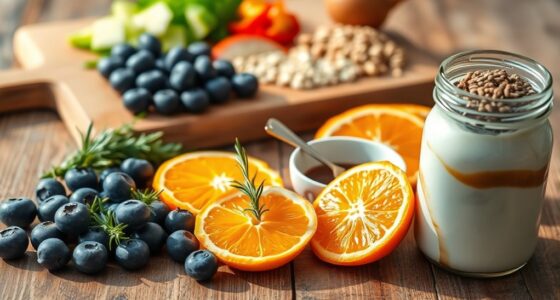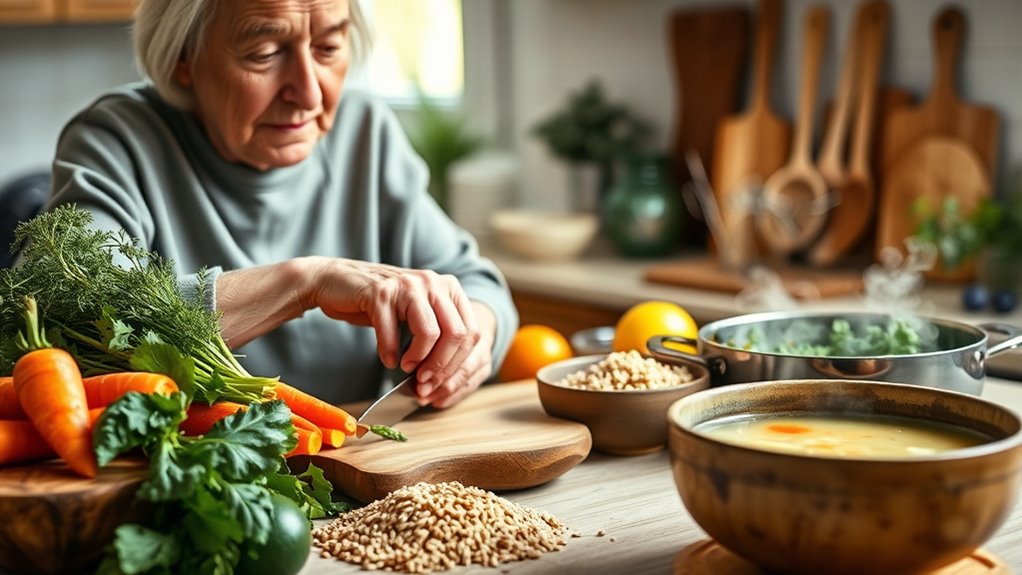

To promote digestive health in older adults, focus on preparing soft, well-cooked foods using gentle cooking methods like steaming or baking. Limit spiciness and use mild seasonings such as herbs or lemon juice to avoid irritation. Incorporate easily digestible fibers like oats and bananas, and verify meals aren’t too heavy. Keep hydration levels up with water and serve meals in a calm, inviting environment. Continue exploring these tips to create more comfortable, nourishing meals for better digestion.
Key Takeaways
- Use soft, well-cooked, and pureed foods to ease digestion and reduce strain on the aging digestive system.
- Incorporate mild seasonings like herbs and lemon juice, avoiding heavy spices to prevent stomach irritation.
- Focus on soluble fiber sources such as oats and bananas, and monitor fiber intake to prevent bloating.
- Opt for gentle cooking methods like steaming, boiling, and baking to preserve nutrients and aid digestion.
- Serve meals in a calm, inviting environment with natural materials to promote relaxation and digestive comfort.

As you age, maintaining good digestive health becomes increasingly vital, yet it can also present unique challenges. Your digestive system might not work as efficiently as it once did, leading to discomfort, bloating, or irregularity. One way to support your digestive wellness is by paying close attention to how you prepare your meals. Meal texture becomes a key factor; opting for softer, well-cooked foods can ease the burden on your digestive tract. Instead of raw vegetables or tough meats, choose steamed, boiled, or pureed options that are gentler to digest. This doesn’t mean you have to sacrifice flavor or variety—many delicious dishes can be prepared with softer textures that still satisfy your palate.
Another important aspect is spice moderation. While herbs and spices can enhance flavor and make meals more appealing, too much spice might irritate your stomach or cause reflux. As you age, your stomach’s lining may become more sensitive, so it’s wise to use spices sparingly. Instead of heavy seasoning, consider gentle flavorings like herbs, lemon juice, or a splash of olive oil. These add taste without the risk of discomfort. You might find that gradually reducing spicy ingredients helps your digestive system adapt and prevents unnecessary irritation.
When preparing your meals, focus on balancing fiber intake with digestion-friendly options. Incorporate soluble fiber from sources like oats, bananas, and apples, which are easier on your gut. Insoluble fiber from whole grains and raw vegetables is beneficial but can sometimes cause bloating if consumed in excess or if your system isn’t used to it. Adjust your intake based on how your body responds, and always aim for moderation. Remember, small, frequent meals are often better tolerated than large, heavy ones, and this can help prevent overloading your digestive system.
Hydration also plays a vital role. Drink plenty of water throughout the day to facilitate digestion and prevent constipation. Avoid caffeinated or sugary drinks that might irritate your stomach or cause dehydration. When it comes to cooking, using gentle methods like steaming, poaching, or baking preserves nutrients and makes foods easier to digest, which is especially helpful as your digestive efficiency declines with age.
Additionally, incorporating natural materials like wooden utensils or serving ware can help create a calming and wholesome eating environment that supports overall digestive comfort.
Frequently Asked Questions
Are There Specific Spices That Improve Digestion for Seniors?
Yes, you can use specific spices as herbal remedies to improve digestion for seniors. Ginger and turmeric are popular spicy enhancements that help soothe the stomach and reduce inflammation. Peppermint and fennel are also beneficial, offering calming effects on digestion. Incorporating these spices into meals can make dishes flavorful while supporting digestive health, making mealtime both enjoyable and beneficial for older adults.
How Can I Modify Recipes for Easier Swallowing?
You can modify recipes for easier swallowing by adjusting the texture through texture modification techniques. Use thickening agents like pureed fruits or vegetables, or commercial thickeners, to create a smoother, more manageable consistency. Avoid large chunks or tough ingredients, and consider blending or mashing foods thoroughly. This way, you guarantee the food is easier to swallow while maintaining flavor and nutrition, making mealtime safer and more comfortable.
What Are the Best Cooking Oils for Digestive Health?
Choose olive oil, avocado oil, or flaxseed oil when selecting cooking oils for digestive health. These dietary fats are gentle on your gut and packed with beneficial nutrients. They help reduce inflammation, support nutrient absorption, and promote overall digestion. Incorporate these oils into your meals to enhance flavor and health, making your diet both delicious and digestive-friendly. Remember, moderation matters for ideal digestive comfort.
Can Probiotics Be Incorporated Into Everyday Meals?
Yes, you can incorporate probiotics into your everyday meals for better digestive health. During meal prep, add probiotic-rich foods like yogurt or fermented vegetables for flavor enhancement and health benefits. You can also blend probiotic powders into smoothies or sprinkle them on salads. Just guarantee you add these after cooking or at the end of preparation to preserve their beneficial bacteria, making your meals both tasty and gut-friendly.
Are There Traditional or Cultural Dishes Beneficial for Digestion?
Imagine a gentle stream guiding your digestion—traditional dishes like fermented vegetables and herbal teas do just that. These age-old favorites are known for their soothing properties, helping to balance your gut flora and ease discomfort. Incorporate them into your routine to support digestive harmony. Their natural probiotics and calming herbs work subtly yet effectively, making your mealtime both comforting and beneficial for your digestive health.
Conclusion
By choosing gentle, fiber-rich ingredients and preparing meals thoughtfully, you can support your digestive health and enjoy mealtime more. Remember, small changes can make a big difference in how you feel each day. So, aren’t your health and comfort worth the effort? Embrace these cooking tips and take control of your well-being—because a happier, healthier digestive system is within your reach.