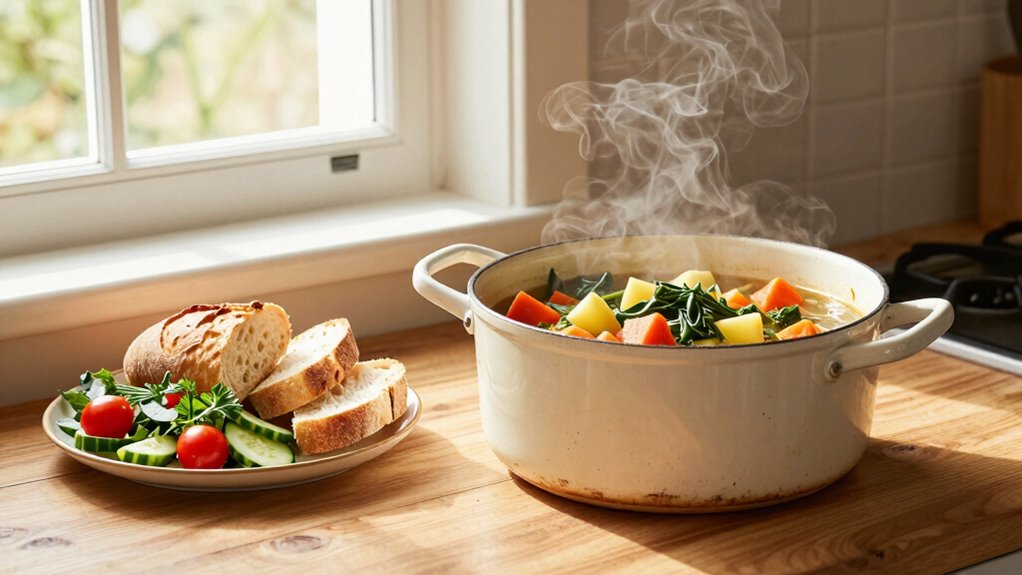

You can cook less and still feed everyone well by planning ahead with meal prep—chopping vegetables and cooking grains in bulk makes quick assembly easy. Use versatile pantry staples like canned beans and frozen veggies to create a variety of dishes with simple techniques like sautéing or slow-cooking. Incorporate smart gadgets or involve family members to share tasks and streamline routines. Keep flavors interesting and nutritious to satisfy appetites while saving time—more tips for busy, nourishing meals await you.

Get health and wellness essentials delivered free with Prime
- Fast, free delivery on millions of items
- Prime Video, Amazon Music and more included
- Member-only deals all year
Key Takeaways
- Implement meal prep routines by batch-cooking and pre-portioning ingredients for quick assembly.
- Use versatile pantry staples like canned beans and frozen vegetables to create diverse, nutritious meals.
- Incorporate simple cooking techniques such as sautéing and steaming to save time and effort.
- Leverage technology and shared efforts, involving family members for efficient meal preparation.
- Focus on quick, wholesome meals like salads, stir-fries, and sandwiches to maintain variety with less cooking.

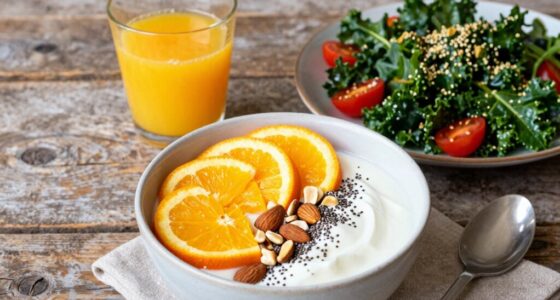
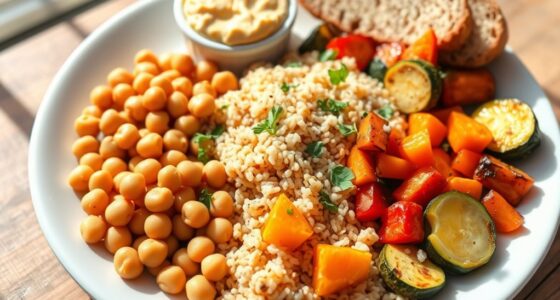
Cooking less doesn’t mean sacrificing flavor or nutrition. Instead, it’s about working smarter in the kitchen so you can spend less time preparing meals without compromising taste or health. One of the simplest ways to do this is by mastering meal prep. When you dedicate a little time each week to preparing ingredients in advance, you set yourself up for quick, nutritious meals later on. Chop vegetables, cook grains, or portion out proteins in bulk so that during busy weekdays, you only need to assemble or heat your ingredients. This approach not only saves time but also reduces the temptation to order takeout or settle for less healthy options.
Meal prep saves time and keeps meals healthy and flavorful. Simplify your cooking routine today.
Another key to cooking less and still feeding everyone well lies in ingredient flexibility. Instead of relying on specific recipes that require a long list of ingredients, focus on versatile staples that can be combined in various ways. For example, canned beans, frozen vegetables, and pre-cooked rice can be transformed into countless dishes. These ingredients are easy to store, quick to prepare, and adaptable to different cuisines and flavor profiles. By building your pantry around flexible ingredients, you create an arsenal of options that allow you to whip up satisfying meals with minimal effort. Additionally, using home theatre projectors or other simple kitchen tools can help streamline your cooking process by making meal prep more efficient and enjoyable.
To maximize your efficiency, consider batch cooking dishes that can be enjoyed multiple times in different ways. For instance, roasting a batch of vegetables or cooking a large pot of stew provides leftovers that you can reheat or repurpose into new meals throughout the week. This not only reduces daily cooking time but also minimizes cleanup. Additionally, utilizing simple cooking techniques like sautéing, steaming, or slow-cooking can help you prepare nutritious meals without much fuss. These methods are straightforward and often require less attention, giving you more free time. Incorporating meal prep strategies can further enhance your ability to cook less while still providing variety and nutrition. Developing a meal planning routine can also help you stay organized and ensure you always have ingredients ready to go, saving you even more time during busy days.
Research indicates that sound vibrations can influence cellular regeneration and overall health, which underscores the importance of incorporating relaxing or healing sounds into your routines. Moreover, adopting connected fitness technology or smart kitchen gadgets can make meal preparation even more seamless by providing guidance and automation to your cooking routines. Involving your family in meal prep can also lighten your load. Assign simple tasks to kids, like washing vegetables or setting the table, which helps teach them valuable skills while making meal preparation faster. Finally, don’t hesitate to keep things simple—sometimes, a well-made salad, a hearty sandwich, or a quick stir-fry is all you need to satisfy everyone’s appetite. By focusing on meal prep, ingredient flexibility, batch cooking, shared effort, and leveraging smart kitchen tools, you can reduce your time in the kitchen while still serving delicious, nutritious meals every day.
meal prep containers for bulk cooking
As an affiliate, we earn on qualifying purchases.
As an affiliate, we earn on qualifying purchases.
Frequently Asked Questions
Can Meal Prepping Help Reduce Daily Cooking Time Effectively?
Yes, meal prepping can help reduce your daily cooking time effectively. By doing batch cooking and preparing freezer meals, you save time on busy days. You just reheat and serve, which minimizes daily effort. Planning ahead also prevents last-minute cooking stress. This approach makes it easier to eat well without spending hours in the kitchen, giving you more time for other priorities while still enjoying homemade meals.
What Are Some Quick and Nutritious Dinner Ideas?
Quick and nutritious dinner ideas are like a well-choreographed dance—fast yet graceful. You can whip up simple stir-fries with plenty of veggies, or toss together salads with protein-rich options like beans or grilled chicken. Incorporate quick snacks like nuts or fruit, and make nutrient swaps, such as cauliflower rice instead of traditional rice. These ideas save time without sacrificing health, making dinner both efficient and nourishing.
How Can I Make Simple Meals Look More Impressive?
To make simple meals look more impressive, focus on plating techniques—use height, color contrast, and garnishes to elevate the presentation. You can also try ingredient substitutions to add variety and finesse, like swapping out plain rice for saffron or wild rice. Pay attention to symmetry and negative space on your plate, and finish with a drizzle of sauce or fresh herbs. These small touches make your dishes visually appealing and memorable.
Are Slow Cookers or Instant Pots Better for Saving Time?
Did you know that 80% of home cooks find faster appliances more convenient? For saving time, Instant Pots are better—they cook meals up to 70% faster with multiple functions. Slow cookers benefit from low, steady heat, which enhances flavors and requires less attention. If you want quick, versatile results, go for the Instant Pot. But if you prefer hands-off cooking and richer flavors, a slow cooker is your best bet.
How Do I Handle Dietary Restrictions With Minimal Effort?
You handle dietary restrictions with minimal effort by planning meals around common dietary substitutions and being allergen-aware. Keep versatile ingredients like gluten-free grains or dairy-free alternatives on hand, so you can easily swap them in. Always read labels carefully and communicate with your guests about allergies or restrictions. This proactive approach saves time, prevents mishaps, and guarantees everyone enjoys the meal comfortably and safely.
As an affiliate, we earn on qualifying purchases.
Conclusion
By embracing smarter cooking habits, you can serve satisfying meals without overextending yourself. A little planning and thoughtful ingredient choices go a long way, allowing you to enjoy more time and less stress at the table. Remember, the goal isn’t perfection but creating warm, nourishing moments with those you care about. So, relax and savor the joy of sharing good food—sometimes, less truly is more when it comes to making memories around the table.
food processor for chopping vegetables
As an affiliate, we earn on qualifying purchases.
As an affiliate, we earn on qualifying purchases.
As an affiliate, we earn on qualifying purchases.
Halloween Picks
halloween
As an affiliate, we earn on qualifying purchases.