
To manage OTC medicines safely, store them in a cool, dry place away from children and humidity, preferably in their original containers with clear labels. Always follow the recommended dosages using proper measuring devices and avoid exceeding doses. Check expiration dates regularly and dispose of expired or unused medicines properly. Pay special attention when giving medicines to children, ensuring proper doses and storage. Keep these practices in mind to protect your health—more helpful tips await you.
Key Takeaways
- Store OTC medicines in a cool, dry place away from children and sunlight, using their original containers with clear labels.
- Regularly check expiration dates and properly dispose of expired or unused medicines.
- Follow the recommended dosage instructions carefully, using appropriate measuring devices.
- Keep medicines out of children’s reach and avoid storing in humid areas like bathrooms.
- Consult healthcare professionals for guidance on dosing, especially for children or if unsure about use.
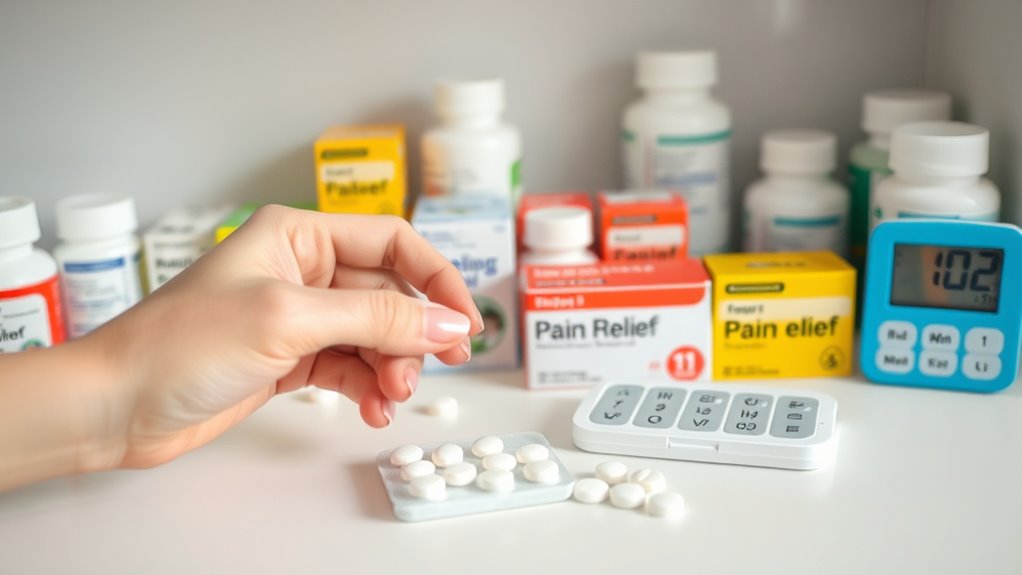
Have you ever wondered if you’re managing your over-the-counter medicines safely? It’s a common concern, especially with so many options available at your fingertips. Ensuring proper storage and following dosage guidelines are critical steps to keep yourself safe and maximize the effectiveness of your medicines. When it comes to proper storage, you want to keep your OTC drugs in a cool, dry place away from direct sunlight, heat, and moisture. A cabinet or drawer that’s out of reach of children is ideal, as accidental ingestion can lead to serious health issues. Never store medicines in the bathroom, where humidity from showers and baths can degrade their quality. Also, avoid leaving medicines in your car or other places where temperature fluctuations can occur. Keeping medicines in their original containers is a good idea because labels include important information like expiration dates and storage instructions. Regularly check your medicines for signs of expiration or damage, and dispose of any that are outdated or no longer needed. Proper storage not only preserves the potency of your medicines but also reduces the risk of accidental ingestion or misuse. Additionally, tuning techniques for performance vehicles can be quite complex, so consulting a professional is recommended to ensure safe and effective modifications.
Taking the correct dosage is equally important. Always read and follow the instructions on the packaging or as directed by your healthcare provider. Dosage guidelines are established to ensure you receive the right amount of medication for your condition without risking overdose or adverse effects. Be cautious with measuring devices—use the one provided or recommended, such as a measuring cup or syringe, rather than household spoons, which can be inaccurate. If you’re unsure about how much to take, consult with a pharmacist or your doctor before proceeding. Never take more than the recommended dose, even if your symptoms persist, because exceeding the dosage can lead to dangerous side effects. Similarly, don’t double up on doses if you miss one; instead, follow the instructions on whether to take it immediately or wait until the next scheduled dose. Keep a clear record of when you’ve taken your medication to avoid confusion. If you’re giving medicines to children, pay extra attention to age-specific dosage guidelines, and always use pediatric measuring devices. Remember, even over-the-counter medicines can cause harm if misused or taken improperly, so staying vigilant about proper storage and accurate dosing protects your health and well-being.
Frequently Asked Questions
Can I Take Multiple OTC Medicines at Once Safely?
You shouldn’t take multiple OTC medicines at once without checking for drug interactions and following dosage guidelines. Combining medicines can lead to harmful side effects or reduce effectiveness. Always read labels carefully, and if you’re unsure, consult a healthcare professional or pharmacist. They can help you understand potential interactions and ensure you’re taking the right doses safely. Never guess or assume it’s safe; your health depends on it.
How Should I Store OTC Medicines Properly?
You should store OTC medicines properly by keeping them in a cool, dry place away from direct sunlight and humidity. Make certain they are out of reach of children. Check the expiry date before using any medicine, and discard expired items safely. Use original containers with labels intact, and avoid storing medicines in the bathroom or near the kitchen sink to maintain their effectiveness and safety.
What Should I Do if I Miss a Dose?
Missing a dose is like missing a beat in a song; it can throw off your rhythm. If you miss a dose, check your medication timing and take it as soon as you remember. If it’s close to your next dose, skip the missed one—don’t double up. Staying on schedule helps keep your treatment on track, so set reminders to keep your medication routine steady and harmonious.
Are There Any OTC Medicines to Avoid During Pregnancy?
During pregnancy, you should prevent certain OTC medicines that may pose safety risks. Always check with your healthcare provider before taking any medication, as some drugs can affect pregnancy safety or cause harm. Common medicines to avoid include certain pain relievers, cold remedies, and herbal supplements. Prioritize consulting your doctor to ensure safe medicine avoidance, and never self-medicate during pregnancy without professional guidance.
How Long Can I Keep OTC Medicines After Opening?
You can typically keep OTC medicines for about one to three years after opening, but always check the medication expiration date on the packaging. Proper disposal is essential once the medication reaches its expiration date or if it shows signs of deterioration, like changes in color or smell. Store medicines in a cool, dry place to maintain effectiveness, and dispose of expired or unused medications properly at a pharmacy or disposal site to ensure safety.
Conclusion
Remember, managing over-the-counter medicines wisely is your shield against potential harm. Keep them out of reach of children, follow dosing instructions, and never mix medications without guidance. Think of your medicine cabinet as a treasure chest—only you hold the key to its safe use. By staying vigilant, you prevent small missteps from turning into big problems. So, take control today, because your health is your most valuable treasure—protect it wisely.