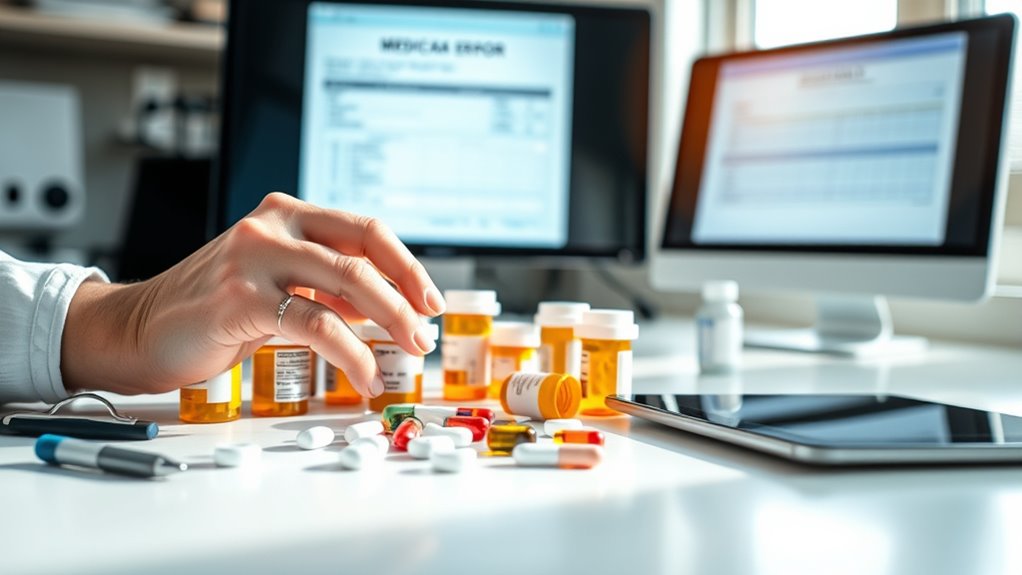

To catch medication errors, carefully verify prescriptions, checking for dosages, drug interactions, and unusual orders. Use double-checks and barcode systems to make certain of accuracy before dispensing. If you suspect an error, stop the process immediately, verify details, and communicate with healthcare providers to clarify. Document all findings thoroughly and report incidents via proper channels like incident reports. Continuing your efforts will help you master effective strategies for preventing and reporting medication errors successfully.
Key Takeaways
- Carefully review prescriptions, labels, and patient records to identify discrepancies or unusual orders.
- Use double-checking procedures and barcode scanning systems to verify medication accuracy.
- Verify each step of the medication process promptly if an error is suspected before administration.
- Document suspected errors thoroughly, including details of the mistake, verification steps, and corrective actions.
- Report errors through established channels like incident reports or electronic health records to promote safety and learning.
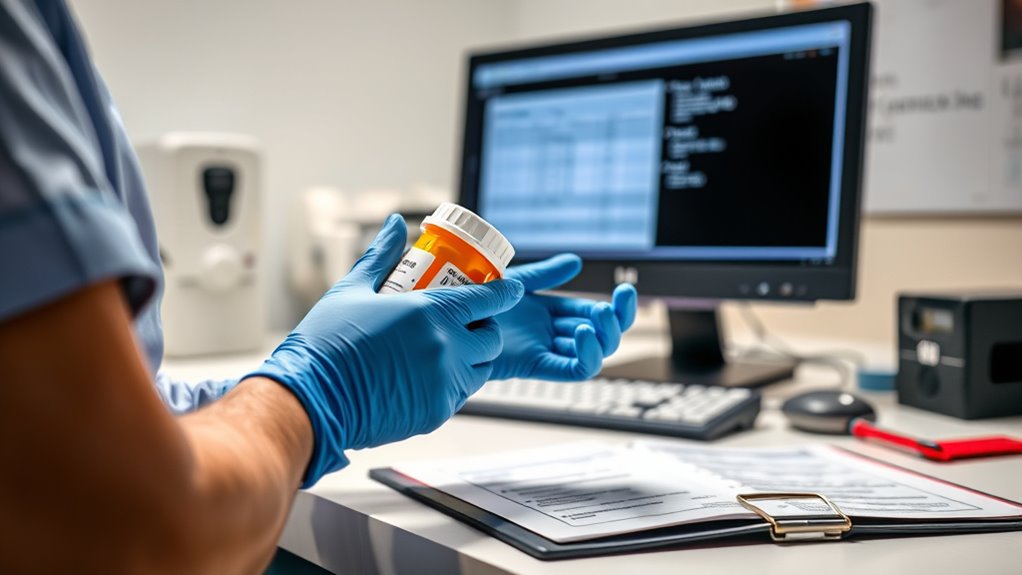
Have you ever wondered how to identify and handle medication errors effectively? Recognizing these errors is essential for maintaining patient safety and ensuring proper treatment. As a healthcare professional or someone involved in medication management, understanding the pharmacist responsibilities plays a key role. Pharmacists are often the last line of defense before medication reaches the patient, so their responsibilities include verifying prescriptions, checking for potential drug interactions, and ensuring the correct dosage and administration. By diligently reviewing each prescription and being attentive to details, pharmacists help prevent errors before they occur. Patient safety measures are also integral; these include implementing protocols such as double-checking prescriptions, using barcode scanning systems, and maintaining clear communication with healthcare teams. Staying vigilant for any discrepancies or unusual prescriptions is part of your role in safeguarding the patient.
Recognizing and preventing medication errors is vital for patient safety and effective healthcare delivery.
When you suspect a medication error, it’s imperative to act swiftly and systematically. First, verify the information—double-check the prescription details, patient records, and medication labels. Confirm whether the error was in prescribing, dispensing, or administration. If you find an inconsistency or mistake, stop the process immediately to prevent harm. Communicating clearly with the prescribing healthcare provider can clarify uncertainties and prevent further errors. Document the error thoroughly, noting what was wrong, how it was identified, and the steps taken to correct it. Accurate documentation is essential for reporting and preventing future mistakes. Additionally, employing herbal infusion machines and tools can enhance the safety and quality of compounded medications by ensuring precise preparation.
In handling medication errors, you also need to be proactive in educating patients and caregivers. Explain the situation calmly, inform them of any potential risks, and advise on the next steps. Encouraging patients to ask questions and report any adverse effects they experience further supports patient safety. Remember, transparency is key; reporting errors through the proper channels ensures that the healthcare system learns from mistakes and improves safety protocols. Whether it’s notifying a supervisor, filling out an incident report, or updating electronic health records, documenting errors helps create a safer environment for everyone.
Ultimately, catching and reporting medication errors is about being attentive, responsible, and committed to patient safety. Your role involves not only identifying errors but also ensuring they’re communicated and addressed promptly. Adhering to patient safety measures, staying vigilant during every step of medication management, and understanding your responsibilities as a pharmacist or healthcare worker make all the difference. By doing so, you help protect your patients from preventable harm and contribute to a culture of safety in healthcare. The more proactive and precise you are, the better equipped you’ll be to catch mistakes early and turn errors into learning opportunities that improve overall medication safety.
Frequently Asked Questions
How Can Patients Verify Their Medication Accuracy?
You can verify your medication accuracy through patient verification by carefully reading your prescription label and comparing it with your doctor’s instructions. Always check the medication name, dosage, and instructions before taking it. Don’t hesitate to ask your pharmacist or healthcare provider if something seems wrong or unclear. Staying proactive helps guarantee medication accuracy, reduces errors, and keeps you safe. Remember, your involvement is key to safe medication use.
What Technologies Assist in Detecting Medication Errors?
You can use barcoding systems and electronic alerts to detect medication errors effectively. Barcoding systems verify prescriptions match patient records before administration, reducing mistakes. Electronic alerts notify you of potential drug interactions, allergies, or dosage issues in real-time. These technologies help you catch errors early, improve patient safety, and streamline medication management, making it easier to provide accurate and safe treatment.
Who Is Responsible for Reporting Medication Mistakes?
Imagine you notice a medication mistake in your hospital. As a healthcare provider, you’re responsible for reporting errors promptly to guarantee medication accountability and patient safety. You should follow error reporting protocols, which typically include documenting what happened and notifying the appropriate team members. By taking responsibility, you help prevent future errors, maintain trust, and improve overall medication safety within your facility. Your proactive reporting makes a vital difference.
How Do Hospitals Track Medication Error Trends?
Hospitals track medication error trends through detailed documentation and analysis of incidents. You should participate in regular medication reconciliation to identify discrepancies early. Staff training is crucial; it helps staff recognize patterns and prevent errors. By consistently recording errors and reviewing them during team meetings, you enable the hospital to monitor trends effectively, improve safety protocols, and reduce future mistakes. Your active involvement ensures better medication management and patient safety.
What Are the Legal Consequences of Reporting Errors?
You might worry about legal repercussions when reporting errors, but fulfilling your reporting obligations actually protects you. Legally, honesty and transparency can shield you from punishment, especially if you follow proper procedures. Reporting errors demonstrates your commitment to patient safety and compliance with laws. While some legal consequences exist, proactive reporting often reduces liability, showing you’re dedicated to improvement and accountability rather than neglect.
Conclusion
By staying attentive and proactive, you can help guarantee patient safety and smooth medication processes. If you notice something off, gently address it or report it quietly—your keen eye can make all the difference. Remember, catching small hiccups early keeps the bigger picture healthy. Your diligence may be just what’s needed to prevent a potential mishap, so trust your instincts and act confidently. Together, you help create a safer, more reliable healthcare environment.