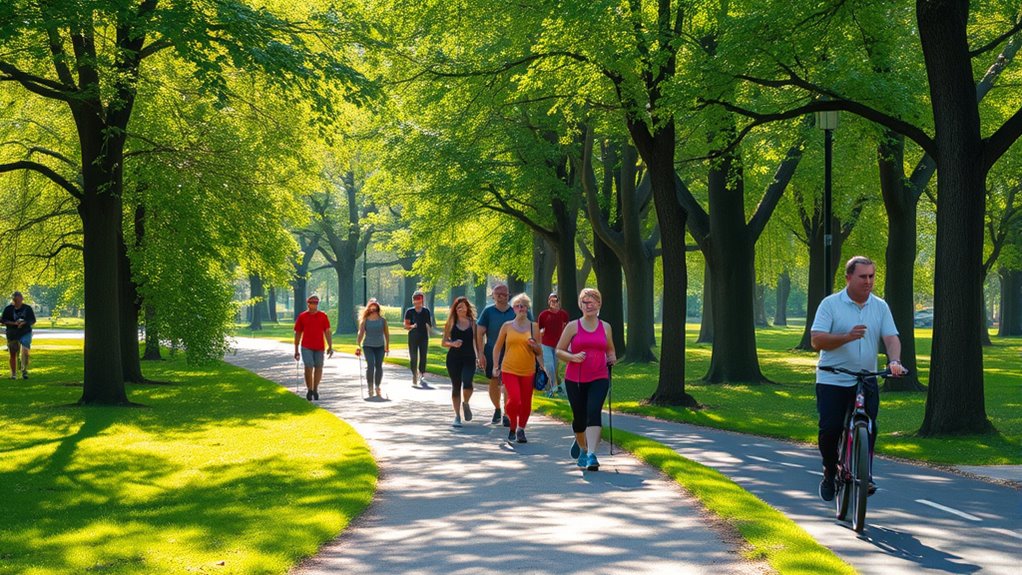

To enjoy walking programs safely outdoors, choose well-lit, populated routes, especially during early morning or evening. Use reflective gear, carry essentials like water and a charged phone, and wear weather-appropriate clothing. Track your progress with apps or devices to stay motivated and monitor your health. Always stay alert, trust your instincts, and vary your routes if needed. Keep these tips in mind, and you’ll enhance both safety and enjoyment on your walk. There’s more to explore to keep your walks secure.
Key Takeaways
- Use tracking devices to monitor progress and set goals, enhancing motivation and consistency.
- Choose well-lit, populated routes during daylight hours for safer outdoor walking.
- Wear reflective gear and carry essentials like water and a charged phone for safety.
- Avoid secluded or poorly maintained paths, and inform someone of your route and return time.
- Adjust routes and walking times based on weather, safety concerns, and personal comfort.

Walking programs offer a simple yet effective way to stay active outdoors while prioritizing safety. When you commit to regular walks, it’s important to monitor your progress through exercise tracking. Keeping track of your distance, duration, and pace helps you stay motivated and see tangible progress over time. Using a pedometer, fitness app, or smartwatch makes it easy to log your activities and set goals. Not only does this boost your accountability, but it also encourages consistency, which is essential for reaping the health benefits of walking.
While enjoying outdoor walks, safety should always be a top concern. Before heading out, review outdoor safety tips to minimize risks. Start by choosing well-lit, populated routes, especially if you plan to walk early in the morning or late in the evening. Avoid secluded or poorly maintained paths where help might be harder to reach if needed. Wearing visible clothing or reflective gear enhances your safety, making sure drivers and other pedestrians can see you clearly. Always tell someone your route and estimated return time, particularly if you’re walking alone.
Choose well-lit, populated routes and wear reflective gear for safe outdoor walking.
Pay attention to your surroundings. Stay alert for uneven sidewalks, potholes, or other hazards that could cause falls or injuries. If you’re walking in a new area, research it beforehand to identify any potential risks and find the safest routes. Carry essentials like water, a fully charged phone, and some basic first aid supplies. Dressing appropriately for the weather is also crucial—layer clothing if it’s cold, and wear breathable fabrics if it’s hot. Protect yourself from sun exposure with sunscreen, sunglasses, and a hat, especially during peak hours. Additionally, using exercise tracking devices can help you stay aligned with your fitness goals and enhance overall safety during your walks.
Incorporate outdoor safety tips into your routine to make walking both enjoyable and secure. For example, walk during daylight hours whenever possible, and stick to familiar routes initially to build confidence. If you encounter any issues, such as suspicious activity or unsafe conditions, don’t hesitate to change your route or cut your walk short. Trust your instincts; if something feels off, prioritize your safety above all. Remember to listen to your body—if you feel dizzy, short of breath, or unwell, stop immediately and seek assistance if necessary.
Frequently Asked Questions
How Can I Start a Walking Program Safely Alone?
To start a walking program safely alone, begin with route planning by choosing well-lit, familiar paths. Always wear safety gear like reflective clothing and sturdy shoes. Let someone know your plans and expected return time. Carry a phone for emergencies and stay aware of your surroundings. Gradually increase your pace and distance. Following these steps helps guarantee your walks are safe and enjoyable.
What Should I Wear for Outdoor Walking in Different Weather Conditions?
Dressing for outdoor walking is like preparing for a dance—each piece needs to move with you. Wear appropriate footwear to keep your feet comfortable and protected. Use layering strategies—start with moisture-wicking base layers, add insulation if needed, and top with a waterproof or windproof jacket in bad weather. Don’t forget a hat, gloves, and sunglasses for sun or cold, ensuring you’re ready for any weather twist.
Are There Specific Routes Recommended for Beginners?
You should choose beginner-friendly routes that prioritize trail safety, such as well-maintained parks, paved paths, or designated walking trails. Look for routes with gentle slopes, clear signage, and minimal traffic to guarantee a safe and enjoyable experience. Starting with these beginner-friendly options helps you build confidence, avoid hazards, and gradually improve your stamina. Always check trail conditions before heading out and carry essentials like water, a map, and your phone.
How Do I Stay Motivated to Walk Regularly?
You stay motivated to walk regularly by setting clear goals and tracking your exercise progress. Use exercise tracking apps or journals to see your improvements, which boosts motivation. Incorporate motivation techniques like rewarding yourself for milestones or walking with friends for accountability. Remember, consistency is key, so remind yourself of the benefits, stay positive, and make walking an enjoyable part of your routine to keep your momentum going.
Can Walking Outdoors Help Manage Chronic Health Conditions?
You might find it no coincidence that walking outdoors can substantially help manage chronic health conditions. The benefits of walking include improving circulation, reducing inflammation, and boosting your immune system. Walking also enhances mental health by lowering stress and anxiety. Regular outdoor walks can be a powerful, natural way to support your health, making it easier to thrive despite chronic issues. So, step outside and experience these benefits firsthand.
Conclusion
By choosing walking programs and safe outdoor options, you embrace health, enjoy nature, and boost your well-being. You step outside to refresh your mind, move your body, and connect with the world around you. You take a walk to find clarity, to feel alive, and to stay active. In every step you take, you build strength, resilience, and joy. So, keep walking, keep exploring, and keep embracing the simple power of outdoor movement.