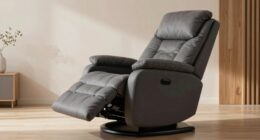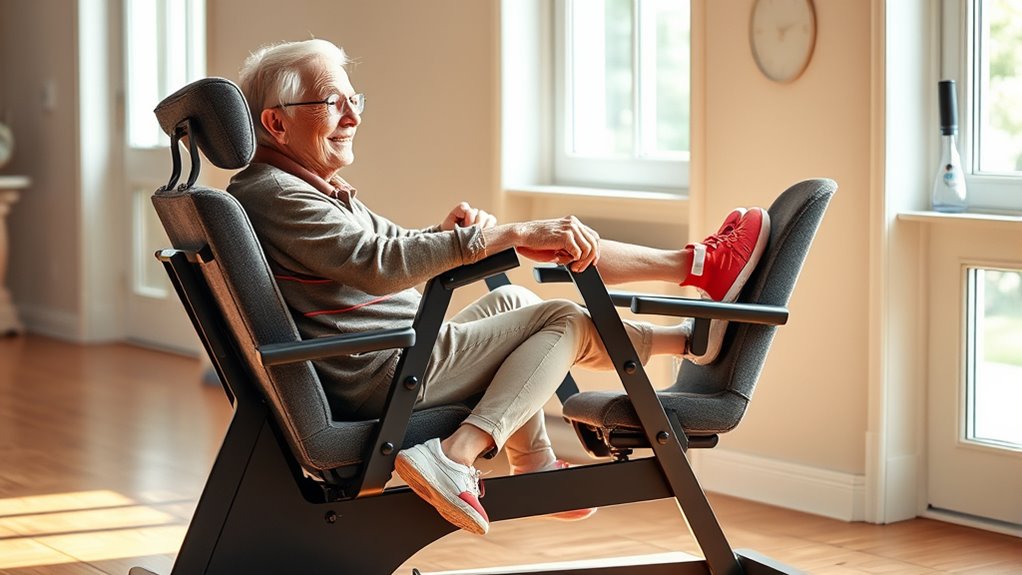

Gentle cardiovascular options like chair cycling and seated marching are great for boosting your heart health without straining your joints or muscles. With chair cycling, you mimic pedaling while seated, adjustable to your fitness level, making it ideal for home or rehab. Seated marching involves lifting your knees alternately, which improves circulation and stamina. These easy routines can fit into your daily schedule, and if you keep exploring, you’ll discover even more ways to stay active safely.
Key Takeaways
- Chair cycling mimics pedaling while seated, providing a low-impact cardiovascular workout suitable for all mobility levels.
- Seated marching involves lifting knees alternately, promoting circulation and endurance with minimal joint stress.
- Both exercises are gentle, customizable, and can be performed multiple times daily for consistent heart health benefits.
- These routines reduce fall risk, making them safe options for seniors, rehabilitation, or individuals with mobility concerns.
- Incorporating chair cycling and marching into daily activity enhances overall cardiovascular health and stamina safely.
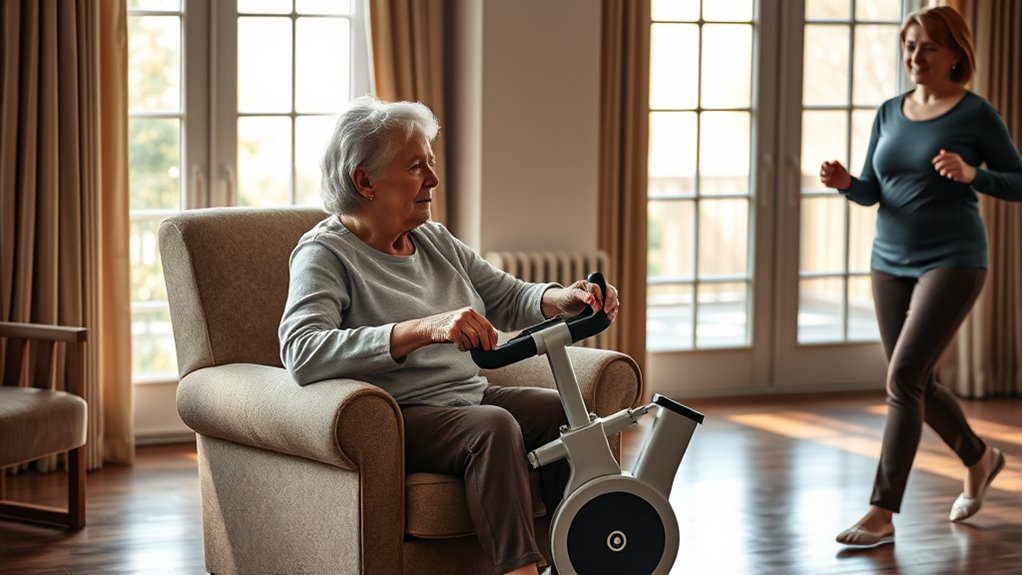
Are you seeking cardiovascular treatments that are effective yet gentle on your body? If so, exploring low impact exercises can be a game-changer. These routines are designed to boost your heart rate without putting excessive strain on your joints or muscles. One excellent way to incorporate low impact exercises into your routine is through seated aerobic routines, which are especially suitable if you have mobility issues or need a gentler approach. Seated aerobic routines involve simple movements performed while sitting, making them accessible and safe while still providing cardiovascular benefits.
Discover gentle, seated cardio exercises to boost your heart health safely and effectively.
Chair cycling is a prime example of a seated aerobic routine that offers a low impact way to get your heart pumping. Using a stationary bike or even mimicking pedaling motions while seated, you can engage your leg muscles and increase your heart rate without the jarring impacts associated with traditional cycling or running. The beauty of chair cycling is that you can adjust the intensity to match your fitness level, gradually increasing resistance or speed as you become more comfortable. It’s a versatile option that you can do at home or in a rehabilitation setting, making it convenient and flexible.
Marching in place while seated is another effective low impact exercise that can be incorporated into your routine. Simply lift your knees alternately, mimicking the motion of marching, while seated in a sturdy chair. This simple movement activates your leg muscles and promotes circulation, all while maintaining a gentle pace that’s suitable for most fitness levels. You can add arm movements or incorporate light weights to increase the intensity, but even the basic motion provides cardiovascular benefits without overwhelming your body.
Both chair cycling and seated marching are not only easy to perform but also help improve your endurance and stamina over time. They’re especially beneficial if you’re recovering from an injury, managing arthritis, or just prefer a less strenuous approach to cardio. These exercises can be done multiple times a day, gradually building your strength and cardiovascular health without risking discomfort or injury. Plus, because they’re performed in a seated position, you avoid the risk of falling or losing balance, giving you peace of mind during your workouts.
Incorporating these low impact, seated aerobic routines into your daily routine can make a significant difference in your overall health. They’re simple, effective, and adaptable to your needs. Whether you’re just starting out or looking for a gentle way to stay active, chair cycling and seated marching provide a safe, accessible path to better cardiovascular health. Consistent practice can help improve your circulation, stamina, and overall well-being—especially when combined with proper nutrition and hydration.

Achairgo Patient Lift Transfer Chair - Electric Assist Lift Aid for Home Care Use - Portable Folding for Car - Transport Wheelchair for Seniors, Adults & Disabled
3-Year Guarantee eligibility: allowing customers to have the product reliability. Purchase now with confidence!
As an affiliate, we earn on qualifying purchases.
Frequently Asked Questions
Are Chair Cycling and Marching Suitable for All Ages?
Yes, chair cycling and marching are suitable for all ages, but you should consider individual health and fitness levels. Chair fitness exercises are gentle and adaptable, making them safe for seniors, children, and those with limited mobility. Always account for age considerations and consult a healthcare professional if you have any medical conditions. These activities help improve cardiovascular health without strain, making them accessible and beneficial for everyone.
How Often Should I Perform Chair Exercises for Cardiovascular Benefits?
You should aim for exercise frequency of at least 3 to 5 times a week to gain cardiovascular benefits. Keep your activity duration around 10 to 30 minutes per session, depending on your fitness level. Remember, consistency matters most. Start with shorter sessions if needed, and gradually increase your activity duration to build endurance. Listening to your body guarantees safe and effective chair exercises.
Can These Exercises Help Lower Blood Pressure Effectively?
These exercises can substantially lower your blood pressure, feeling like a gentle revolution inside your body. By regularly practicing chair cycling and marching, you boost stress reduction and improve metabolic health, both essential for controlling blood pressure. Consistency is key—aim for daily sessions. Over time, you’ll notice your blood pressure stabilizing, your stress easing, and your overall health improving, proving that gentle movement can be powerful medicine.
What Safety Precautions Should I Take During Chair-Based Workouts?
During chair-based workouts, you should always stay hydrated by sipping water before, during, and after exercise. Wear supportive, non-slip footwear to prevent slips or discomfort. Confirm your chair is stable and positioned on a flat surface. Start with gentle movements, listen to your body, and avoid overexertion. If you feel dizzy or short of breath, stop immediately and consult your healthcare provider. These precautions help keep you safe and comfortable.
Are There Specific Medical Conditions That Restrict These Exercises?
If you have medical contraindications like severe heart conditions or joint issues, these exercises might be risky, limiting your participation. You should consult your healthcare provider to identify any restrictions. They can recommend exercise modifications, such as adjusting intensity or duration, ensuring you stay safe while still gaining health benefits. Always listen to your body and stop if you experience discomfort or pain during chair-based workouts.

Senior-Friendly Treadmill with Ultra-Long Handrails for Home, Easy Operation Treadmill for Senior Elderly with PAD Holder & Cup Holder, with Heart Rate Monitor, 300 LBS Capacity, Safety Design
【Senior-Friendly Treadmill】Slow speed range (0.5-6.0 MPH) perfect for walking, rehabilitation exercises, and gentle workouts. Easy-to-read controls and simple...
As an affiliate, we earn on qualifying purchases.
Conclusion
While vigorous workouts push your limits, gentle options like chair cycling and marching keep your heart moving without strain. These low-impact choices may seem simple, but they carry the power to improve your health steadily and sustainably. Sometimes, the quiet strength of gentle movement proves more effective than intense effort. Embrace these accessible options, and you’ll find that progress is achievable—step by step, heartbeat by heartbeat, in a way that respects your body’s pace.
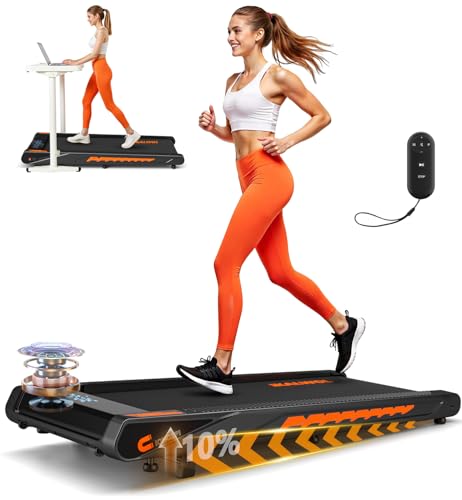
Walking Pad Treadmill with Speaker, 4-in-1 6.2MPH Treadmills for Home with App Compatible, Walking Pad with 10% Incline, LED Display, 2.75HP Brushless Drive, 350 LB Weight Capacity, 12 HIIT Programs
KALWOL: Craftsmanship Meets Quality! With 18 years of dedicated fitness equipment manufacturing, we prioritize precision and durability in...
As an affiliate, we earn on qualifying purchases.

Walking Pad Treadmill for Home - Folding Treadmills with Handle Bar Portable Compact Fold up Indoor Foldable Handles Electric Walk Pads Small Spaces Mini Running Quiet Under Bed Office
【Folding Treadmill with Handle Bar】This foldable walking pads functions as a traditional treadmill with handle bar, a foldable...
As an affiliate, we earn on qualifying purchases.