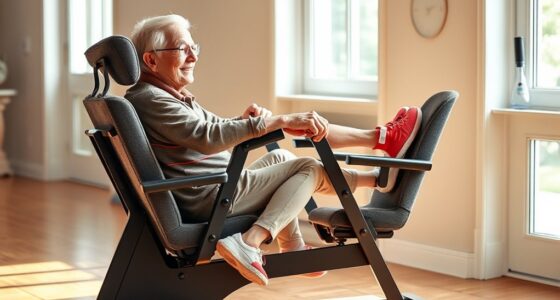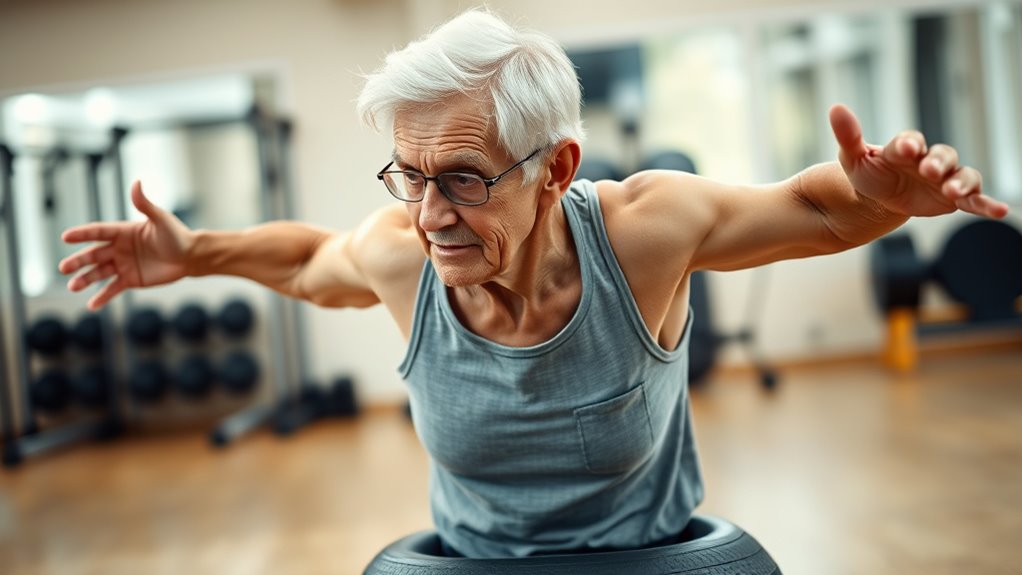

Improving your balance and core strength is vital for fall prevention and staying independent. By practicing exercises like standing on one leg, using unstable surfaces, and strengthening your core muscles, you’ll enhance your body’s ability to react quickly and maintain stability during movement. These exercises stimulate sensory feedback and proprioception, helping you respond better to unexpected shifts. Continuing with these methods can help you build a stronger foundation and move confidently through daily activities.
Key Takeaways
- Incorporate proprioceptive exercises on unstable surfaces to enhance sensory feedback and improve balance.
- Strengthen core muscles to provide a stable foundation, reducing fall risk during movement.
- Use dynamic balance activities like lunges and step-overs to improve coordination and reactive stability.
- Regularly practice single-leg stands and wobble board exercises to boost proprioception and body awareness.
- Combining core strengthening with balance training supports better control and reduces the likelihood of falls.
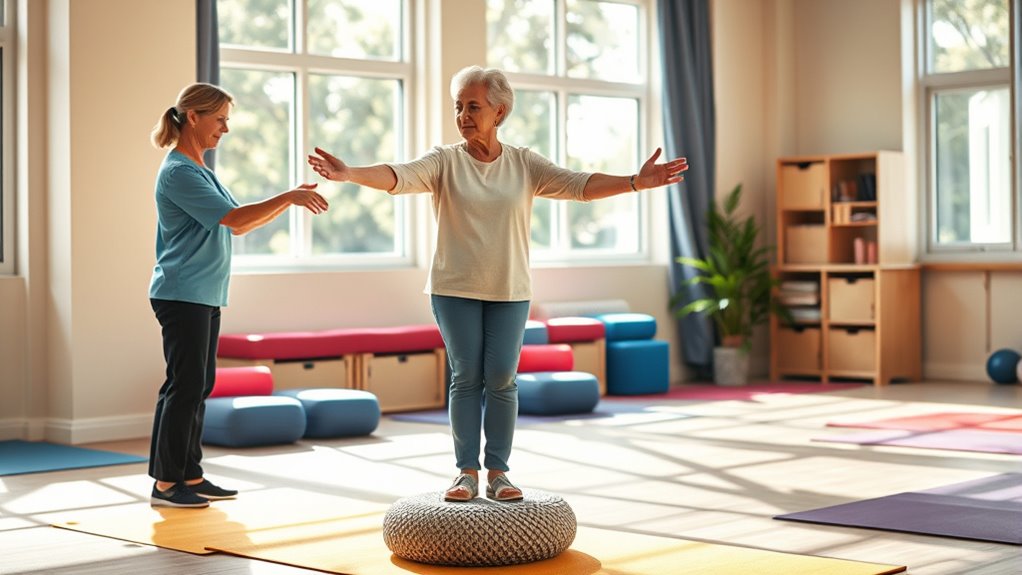
Maintaining good balance is essential for preventing falls, especially as you age or recover from injury. One key aspect of balance is dynamic stability—the ability to maintain control of your body while moving or reacting to unexpected shifts. Developing this skill helps you stay steady during everyday tasks like walking, reaching, or turning. To enhance dynamic stability, engaging in proprioceptive exercises is highly effective. These exercises challenge your body’s awareness of its position in space, improving your ability to adjust quickly and maintain balance under different conditions. For example, standing on one leg with eyes closed or using unstable surfaces like balance pads encourages your body to rely on sensory feedback, strengthening your proprioceptive system. Over time, this boosts your confidence in movement and reduces the likelihood of falls.
Incorporating proprioceptive exercises into your routine not only improves balance but also enhances coordination and reaction time. These exercises help your nervous system better interpret signals from muscles and joints, enabling faster adjustments during sudden changes in your environment. When combined with activities that promote core strength, proprioceptive exercises become even more powerful. A strong core provides a stable foundation for the entire body, making it easier to recover from missteps or sudden shifts. Think of your core as the central hub that supports your movements; a weak core can lead to instability and increase fall risk.
To effectively integrate these elements, start with simple proprioceptive exercises like standing on one leg or using a wobble board. Add dynamic movements such as gentle lunges or step-overs to challenge your stability further. As your balance improves, incorporate core strengthening exercises like planks, bridges, and abdominal workouts to reinforce your body’s core stability. Consistency is key—regular practice enhances both proprioceptive skills and core strength, leading to better balance during daily activities and in unfamiliar environments. Remember, the goal is to create a seamless connection between your sensory feedback and muscular response, which ultimately improves your overall stability.

VOCIC Sit to Stand Lift, One-Step Stand Assist Lift for Elderly, Patient Lift Chair Transport Unit with Wheels, Fall Prevention & Muscle Building, AY03 2026 Upgraded
SMOOTH PATIENT TRANSFER & LIFT: Simplify daily transitions for seniors or patients with limited mobility. This stand assist...
As an affiliate, we earn on qualifying purchases.
Frequently Asked Questions
How Often Should I Do Balance Training Exercises Weekly?
You should aim for balance training exercises at least two to three times a week. These sessions help strengthen your mind-body connection and enhance proprioception, which improves your overall stability. Consistent practice boosts your awareness of body position and movement, reducing fall risk. Make sure to incorporate a variety of exercises to challenge your balance and maintain progress. Regular training is key to seeing lasting benefits in your coordination and confidence.
Can Balance Training Improve Athletic Performance?
Yes, balance training can improve your athletic performance by enhancing dynamic stability and proprioceptive training. When you focus on exercises that challenge your balance, you develop better coordination, reaction time, and muscle control. This translates to improved agility and performance in sports. Incorporate activities like single-leg drills or unstable surfaces regularly, and you’ll notice increased confidence and athletic ability, especially in sports requiring quick directional changes and precise movements.
Are There Specific Exercises for Elderly Fall Prevention?
Think of it as building your own Atlas—strengthening your foundation to carry life’s weight. You can do exercises like heel-to-toe walks, seated leg lifts, and gentle yoga poses to boost elderly mobility and reduce fall risk. These targeted movements improve balance and core strength, making everyday activities safer. Incorporating these into your routine helps you stay steady on your feet, just like a sturdy pillar supporting a grand structure.
How Long Does It Take to See Improvements in Balance?
You can typically see improvements in your balance within 4 to 6 weeks of consistent training. Neural adaptation and proprioception enhancement play key roles in this progress, helping your body respond better to balance challenges. As you continue, you’ll notice better stability and coordination. Keep practicing regularly, and patience is essential—your body’s nervous system needs time to adapt and strengthen these vital functions.
Is Balance Training Safe for People With Joint Issues?
Yes, balance training can be safe for people with joint issues if you focus on joint-friendly exercises and undergo a proper risk assessment. You should start with gentle, low-impact movements that don’t put too much stress on your joints. Always consult a healthcare professional or physical therapist beforehand to tailor the program to your needs, ensuring safety and effectiveness as you improve your balance.

Achairgo Patient Lift Transfer Chair - Electric Assist Lift Aid for Home Care Use - Portable Folding for Car - Transport Wheelchair for Seniors, Adults & Disabled
3-Year Guarantee eligibility: allowing customers to have the product reliability. Purchase now with confidence!
As an affiliate, we earn on qualifying purchases.
Conclusion
By consistently working on your balance and core strength, you’re taking vital steps to prevent falls. But remember, the real challenge isn’t just in the exercises—it’s in maintaining your commitment when no one’s watching. Will you let small missteps become bigger setbacks? The power to stay steady and safe is in your hands. Keep moving, stay focused, and discover just how much stronger you can become—before it’s too late.

Vive Electric Patient Lift for Home Use with Sling - Portable, Adjustable Medical Patient Lift for Home Use - Electric Sit to Stand Chair for Elderly, Adults & Handicap - Person Floor Transfer Assist
EFFORTLESS AND SAFE TRANSFERS: Elevate the care of patients and loved ones with the Vive Electric Patient Lift....
As an affiliate, we earn on qualifying purchases.

Vive Mobility Sit to Stand Patient Lift for Handicapped - Stand Assist Lift Aid for Home Care Use - Elderly Lift Assist Transfer Device - Transport Chair Stand Assist for Seniors, Adults & Disabled
EASILY TRANSFER & LIFT PATIENTS: Designed to help transfer patients who can stand enough to support 60-70% of...
As an affiliate, we earn on qualifying purchases.