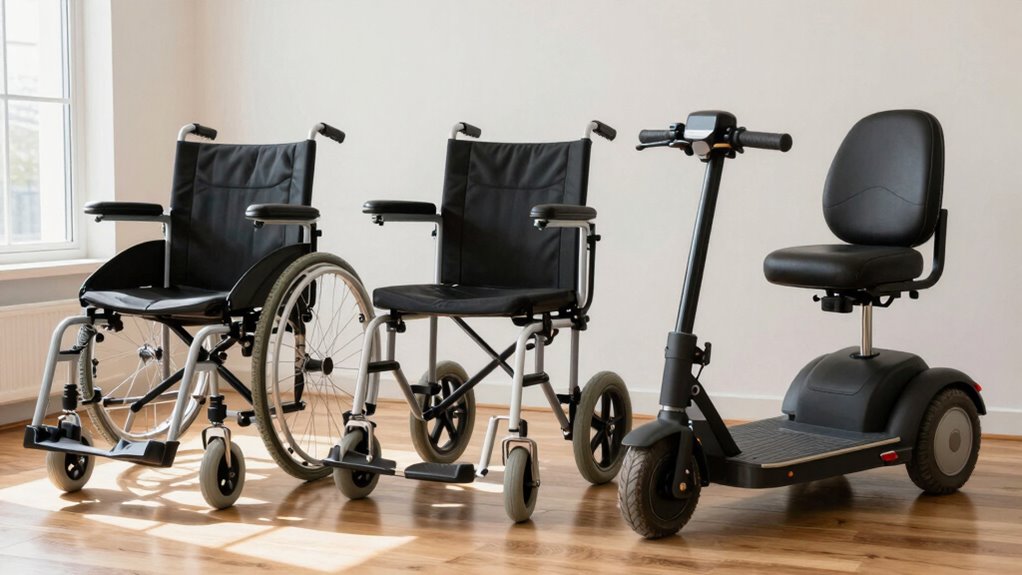

To choose the best option, consider your environment, daily routine, and accessibility needs. Manual wheelchairs are customizable and great for indoor use, while lightweight transport chairs are easy to carry for brief trips. Power scooters and wheelchairs offer motorized assistance for longer distances, especially outdoors or on uneven terrain. Think about battery life, portability, and convenience. Want to find the perfect fit? Keep exploring to discover how each option suits different lifestyles and terrains.

Get health and wellness essentials delivered free — and shop member deals
- Fast, free delivery on millions of items
- Access to Prime Big Deal Days deals on October 6–7
- Prime Video, Amazon Music and more included
Key Takeaways
- Assess your environment and terrain to determine if indoor, outdoor, or uneven surfaces influence your choice.
- Consider your mobility needs, such as manual versus powered assistance, based on strength and independence.
- Evaluate battery life and portability for longer trips or frequent travel requirements.
- Match the device’s features like accessibility and comfort with your daily routine and lifestyle.
- Choose a lightweight transport chair for short trips and convenience, or a power wheelchair/scooter for extended use and independence.

Are you unsure whether a wheelchair, transport chair, or scooter is the right mobility aid for your needs? Making the right choice depends on understanding how each option fits your lifestyle, environment, and physical requirements. One of the key factors to evaluate is accessibility features. Wheelchairs, especially manual ones, are simple but highly customizable, with options like adjustable footrests, armrests, and cushions that enhance comfort. Power wheelchairs often come with advanced accessibility features like tilt, recline, and joystick controls, making navigation easier for those with limited upper body strength. Transport chairs are lightweight and portable, designed for short distances and quick trips, but they typically lack advanced accessibility features, focusing more on convenience and ease of transport.
Battery life is another critical factor, especially if you’re leaning toward electric options like power wheelchairs or scooters. If you plan on using your device frequently or over longer distances, you want a model with a reliable, long-lasting battery. Some scooters and power wheelchairs can operate for 15-30 miles on a single charge, but this varies widely across brands and models. Shorter battery life might mean needing more frequent charges, which can be inconvenient if you’re out all day or don’t have easy access to charging stations. On the other hand, manual wheelchairs and transport chairs don’t rely on batteries, so they’re ideal if you’re concerned about maintenance or if your mobility needs are limited to indoor or short outdoor trips.
Your environment also plays a role in your decision. If you mostly stay indoors or in smooth, paved areas, a manual wheelchair or lightweight transport chair might be sufficient, especially if portability is a priority. For outdoor use, particularly on uneven terrain or hilly areas, a scooter with sturdy tires and good suspension could provide better stability and independence. Consider how easily you can access the places you frequent—ramp access, door widths, and terrain can influence which mobility aid will serve you best.
Ultimately, your choice hinges on balancing accessibility features, battery life, convenience, and your daily routine. Think about how often you’ll use your device, where you’ll go, and what features will make your life easier. Testing different models and consulting with healthcare professionals can help you find the perfect fit. The right mobility aid should empower you to move comfortably and confidently, no matter where life takes you.
manual wheelchair with adjustable footrests
As an affiliate, we earn on qualifying purchases.
As an affiliate, we earn on qualifying purchases.
Frequently Asked Questions
What Are the Cost Differences Among Wheelchairs, Transport Chairs, and Scooters?
You’ll find significant pricing differences among wheelchairs, transport chairs, and scooters. Wheelchairs generally cost between $100 and $1,000, while transport chairs are often more affordable, typically $50 to $300. Scooters tend to be pricier, ranging from $600 to over $2,000. Consider a pricing comparison and check your insurance coverage, as some plans may partially or fully cover certain mobility devices, helping to reduce your out-of-pocket expenses.
How Do Storage Needs Vary for Each Mobility Device?
Think of each device as a different-sized suitcase. Wheelchairs often fold, making them easier to store in tight spaces or closets, so their storage considerations are flexible. Transport chairs are lightweight and compact but still need some room. Scooters are bulkier, requiring more space for storage, often needing a garage or large closet. Your space requirements depend on the device’s size and how often you need to access it.
Are There Specific Environments Best Suited for Each Device Type?
You’ll find wheelchairs ideal for indoor use because of their maneuverability in tight spaces. Transport chairs are great for short outdoor trips, like going to a park or a store. Scooters excel on outdoor terrain, especially uneven surfaces or longer distances, thanks to their stability and motor power. Consider your typical environment to pick the device that best suits your needs, ensuring comfort and safety wherever you go.
What Maintenance Is Required for Wheelchairs, Transport Chairs, and Scooters?
Did you know regular maintenance extends your device’s lifespan by up to 30%? For wheelchairs, transport chairs, and scooters, focus on battery life and tire care. Keep batteries charged but avoid overcharging, and check for corrosion. Regularly inspect tires for proper inflation and wear. Cleaning the frame and moving parts with a damp cloth also prevents rust and damage, ensuring your device stays reliable and safe for everyday use.
Can These Devices Be Easily Transported in a Vehicle?
Yes, these devices can be easily transported in most vehicles, enhancing your travel convenience. Wheelchairs and transport chairs are typically lightweight and foldable, making them compatible with car trunks or back seats. Scooters often come with removable batteries and foldable frames for better portability. Always check your vehicle’s compatibility, but generally, these mobility aids are designed to fit comfortably, ensuring smooth transportation and greater independence during your travels.
lightweight transport chair for short trips
As an affiliate, we earn on qualifying purchases.
As an affiliate, we earn on qualifying purchases.
Conclusion
While it might seem like a simple choice, the truth is, selecting the right mobility device isn’t just about convenience—it’s about enhancing your independence and safety. Many believe scooters are only for outdoor use, but recent innovations prove they’re versatile enough for both. So, don’t rely on outdated ideas. Assess your needs carefully, explore your options, and choose the device that truly empowers you to move confidently through your day.
power wheelchair with long battery life
As an affiliate, we earn on qualifying purchases.
As an affiliate, we earn on qualifying purchases.
off-road mobility scooter with suspension
As an affiliate, we earn on qualifying purchases.
As an affiliate, we earn on qualifying purchases.
Fall Picks
fall essentials
As an affiliate, we earn on qualifying purchases.