To teach children and grandchildren about caregiving, lead by example by demonstrating patience, kindness, and responsibility in your actions. Engage in open conversations during everyday moments, sharing stories and discussing the importance of caring for others. Incorporate caregiving into daily routines and involve them in caring tasks, so they see it as a natural, compassionate part of life. Continuing your efforts will help deepen their understanding and values around caregiving.
Key Takeaways
- Model caregiving behaviors consistently through actions like helping others and demonstrating patience to set a positive example.
- Engage in open family conversations about caregiving to provide context, share stories, and answer children’s questions.
- Incorporate caregiving activities into daily routines, such as assisting relatives or volunteering, to reinforce learned values.
- Emphasize emotional well-being and mental health awareness alongside physical care to promote holistic understanding.
- Create a safe space for children to discuss caregiving topics, fostering empathy, responsibility, and compassionate attitudes.
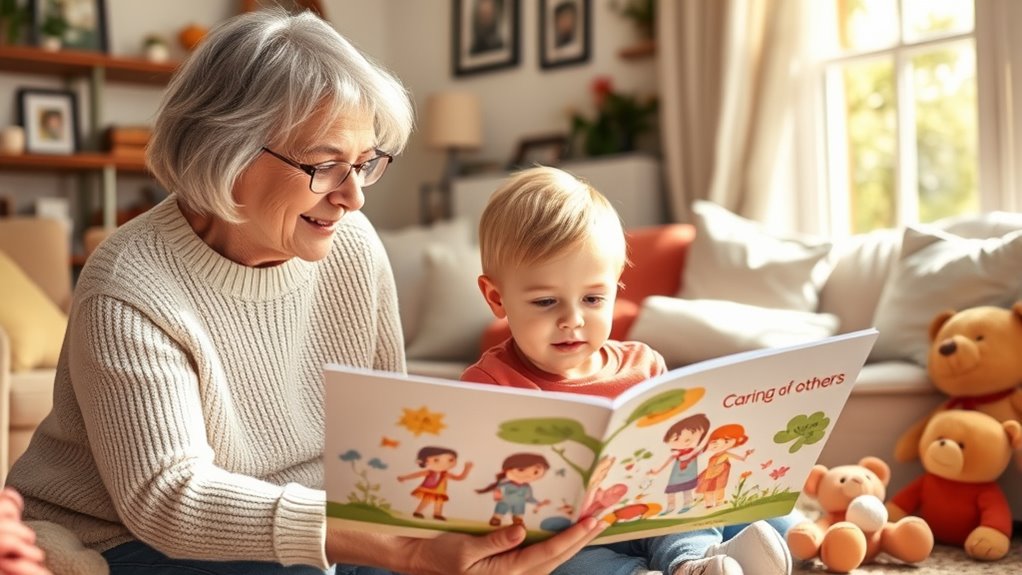
Have you ever wondered how to teach children and grandchildren about caregiving in a way that’s meaningful and engaging? One of the most effective methods is through role modeling. Kids learn a lot by watching how adults handle responsibilities, show compassion, and navigate challenges. When you demonstrate patience, kindness, and a genuine willingness to help others, your actions speak louder than words. They see firsthand what caregiving looks like in everyday life, and this naturally instills values of empathy and service. Consistently showing these behaviors creates a powerful example that children will want to imitate.
In addition to role modeling, family conversations serve as a vital tool in this educational process. When you openly discuss caregiving topics, you provide context and understanding that mere observation can’t offer. Talk about your experiences, share stories of people you’ve helped, or discuss the importance of caring for loved ones. These conversations help demystify caregiving, making it less intimidating and more relatable. They also create a safe space for children to ask questions, express their feelings, and develop their own understanding of what it means to care for others.
Creating opportunities for family conversations doesn’t require elaborate planning. It can be as simple as during dinner, on car rides, or when helping a family member. Use these moments to highlight the values behind caregiving, emphasizing patience, respect, and responsibility. When children see you actively engaging in caregiving roles—whether assisting an aging parent or volunteering—you reinforce the message through lived experience. This consistency helps them internalize the importance of caring for others, not just as a duty but as a natural part of being a compassionate person. Incorporating mental health services into caregiving discussions can also help children understand the importance of emotional well-being alongside physical care.
Frequently Asked Questions
When Is the Right Age to Start Teaching Children About Caregiving?
You can start teaching children about caregiving as early as age 3, focusing on age-appropriate concepts. Early exposure helps them understand empathy and responsibility gradually. As they grow older, you can introduce more detailed tasks and discussions. Watching you care for others provides a natural learning opportunity. Tailor the lessons to their developmental stage, ensuring they’re engaged and understanding without feeling overwhelmed.
How Can I Make Caregiving Lessons Engaging for Young Children?
You can make caregiving lessons engaging for young children by using interactive activities like role-playing or caring for stuffed animals. Incorporate storytelling techniques to bring lessons to life, making them relatable and memorable. Ask questions and encourage kids to share their experiences. Keep lessons fun, hands-on, and age-appropriate, so they stay interested and learn important caregiving skills naturally through play and storytelling.
What Are Common Mistakes to Avoid When Educating Grandchildren?
You should avoid overgeneralization and setting inappropriate expectations, which can be like building on shaky ground. When educating grandchildren, don’t assume they understand everything or expect perfect responses. Be clear and patient, tailoring lessons to their age and curiosity. Overloading them with info or expecting instant mastery creates frustration. Instead, foster a positive learning environment where questions are encouraged, and growth happens naturally, like a garden blooming in its own time.
How Do I Address Children’s Fears About Caregiving Responsibilities?
To address your children’s fears about caregiving responsibilities, provide emotional reassurance by openly discussing their concerns and validating their feelings. Use role modeling by demonstrating patience and compassion, showing them what effective caregiving looks like. Encourage questions and offer gentle guidance, making the experience feel manageable and safe. This approach helps build their confidence and understanding, easing their worries while reinforcing positive caregiving behaviors.
What Resources Are Available for Teaching Children About Elder Care?
You can use interactive activities and storytelling techniques to teach children about elder care effectively. Look for resources like caregiver storybooks designed for kids, online educational games, and local workshops that focus on empathy and responsibility. These tools make learning engaging and relatable, helping children understand the importance of caregiving while developing compassion. Incorporate role-playing and real-life scenarios to deepen their understanding and foster a caring attitude.
Conclusion
By teaching children and grandchildren about caregiving, you’re planting seeds that will grow into a sturdy tree of compassion and responsibility. Remember, guiding them now helps shape a future where empathy blossoms and support becomes second nature. Embrace these lessons as a bridge connecting generations, ensuring they carry the torch of kindness forward. With your guidance, they’ll learn that caring for others is the heart’s most beautiful song, echoing through generations like a timeless melody.