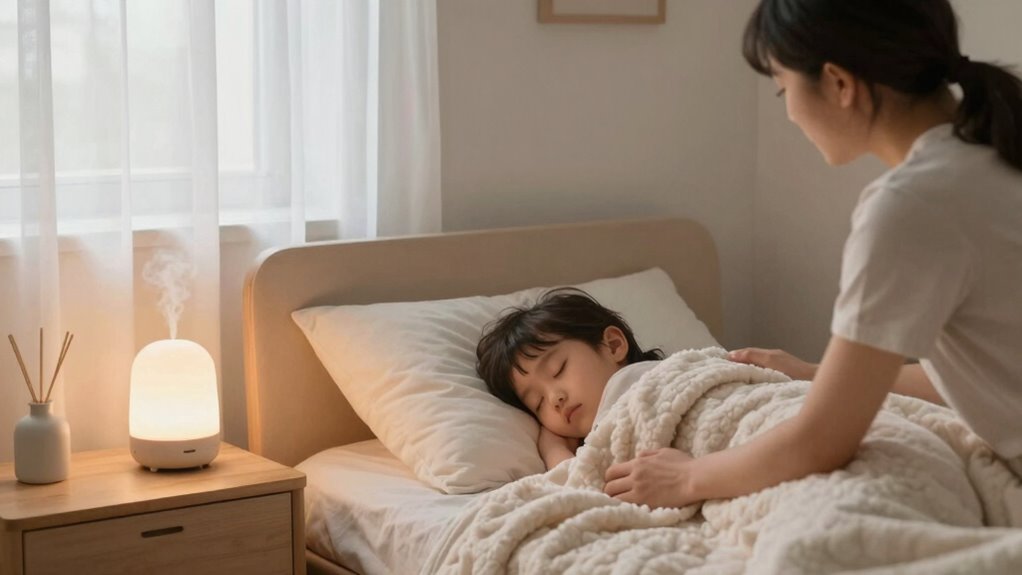

During stressful seasons, prioritize your sleep by establishing consistent routines and creating a comfortable sleep environment. Practice relaxation techniques like deep breathing or gentle stretching before bed, and avoid screens an hour beforehand. Manage your time wisely to include rest and recognize early signs of sleep deprivation to address issues promptly. Using these strategies helps you stay resilient and effective in caregiving. Keep exploring for more tips on maintaining restful sleep amidst stress.
Key Takeaways
- Prioritize consistent sleep schedules and set aside dedicated rest time daily.
- Practice relaxation techniques like deep breathing and gentle stretching before bed.
- Minimize screen time and use blue light filters to enhance melatonin production.
- Recognize early signs of sleep deprivation and address them proactively.
- Optimize your environment by adjusting temperature and reducing noise for better sleep quality.
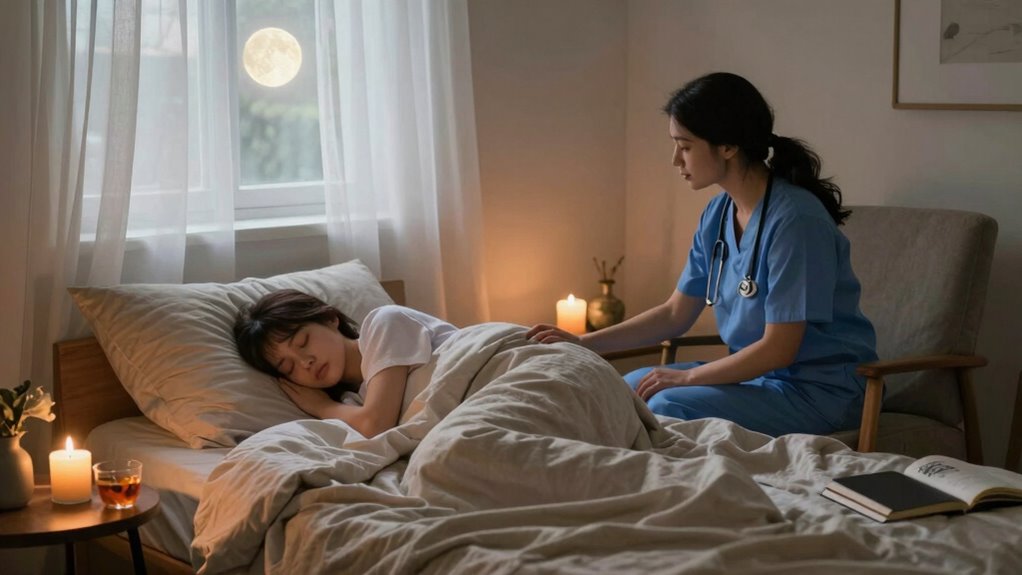
During stressful seasons, caregivers often neglect their own sleep, even though it’s essential for maintaining their strength and resilience. When you’re constantly giving your energy to others, it’s easy to forget that rest isn’t a luxury—it’s a necessity. Prioritizing your sleep helps you stay sharp, patient, and better equipped to handle daily challenges. To protect your sleep, you need to adopt practical strategies, starting with relaxation techniques. Engaging in activities like deep breathing, meditation, or gentle stretching before bed can calm your mind and body, signaling to your brain that it’s time to wind down. Avoid screens at least an hour before bedtime, as the blue light from devices can interfere with melatonin production, making it harder to fall asleep. Instead, opt for relaxing routines that foster tranquility and prepare you for restful sleep. Incorporating digital concepts into your bedtime routine—such as reducing screen time and using blue light filters—can significantly improve sleep quality. Additionally, understanding home environment factors that influence sleep, like room temperature and noise levels, can help create a more conducive setting for rest. Recognizing the importance of self-awareness can also help you notice signs of sleep deprivation early, so you can take proactive steps to address them before stress worsens.
Time management is another crucial factor. When your schedule is packed, it’s tempting to sacrifice sleep to get more done, but this approach backfires. Create a realistic daily plan that includes dedicated sleep time, and stick to it as much as possible. Setting a consistent bedtime and waking time helps regulate your internal clock, making it easier to fall asleep and wake up refreshed. Break tasks into manageable chunks throughout the day so you don’t end up working late into the night. Prioritize essential activities and learn to say no to non-urgent commitments that can wait. By organizing your day effectively, you free up mental space and reduce stress, making it easier to unwind at night.
blue light blocking glasses for sleep
As an affiliate, we earn on qualifying purchases.
As an affiliate, we earn on qualifying purchases.
Frequently Asked Questions
How Can Caregivers Manage Their Own Stress Effectively?
You can manage your stress effectively by establishing consistent self-care routines, like regular exercise, mindfulness, or hobbies that help you unwind. Incorporate stress management strategies such as deep breathing, journaling, or taking short breaks throughout the day. Prioritizing your well-being allows you to recharge, stay resilient, and maintain better sleep, ensuring you’re better equipped to handle caregiving challenges with patience and clarity.
What Are Quick Relaxation Techniques for Busy Caregivers?
Imagine your stress as a storm clouds gathering overhead. To clear the skies quickly, try breathing exercises—deep breaths that act like gentle rain, calming the mind. Guided imagery is like a peaceful sunset, guiding your thoughts away from chaos. Take a few minutes to close your eyes, breathe deeply, and visualize a serene scene. These quick relaxation techniques help you regain calm amidst your busy caregiving day.
How Does Diet Impact Sleep During Stressful Times?
Your diet considerably impacts sleep during stressful times by influencing hormones and nutrient levels. Consuming balanced meals rich in magnesium, B vitamins, and omega-3s promotes better hormone regulation, helping you fall asleep faster. Conversely, nutrient deficiencies, like lack of magnesium or iron, can disrupt sleep patterns. Avoid heavy, sugary foods before bed, as they can cause energy spikes. Prioritizing nutritious, balanced meals helps stabilize hormones and supports restful sleep during stressful seasons.
Are There Specific Sleep Aids Recommended for Caregivers?
You might consider medication options like melatonin or consult a healthcare provider for short-term sleep aids. Herbal supplements such as valerian root or chamomile tea can also promote relaxation and better sleep. However, it’s essential to talk to your doctor before starting any new medication or supplement, especially during stressful seasons. These options can help you relax, but they should complement good sleep habits and stress management techniques.
How to Balance Caregiving Duties and Personal Rest?
Think of your energy as a delicate candle flame; if you don’t protect it, burnout and compassion fatigue can extinguish it. To balance caregiving and personal rest, set boundaries like a steady wind that keeps your flame burning bright. Prioritize sleep, delegate tasks, and carve out small moments for yourself. This way, you nurture your well-being, preventing burnout, and ensuring your light continues to shine for those you care for.

Magicteam Sound White Noise Machine with 20 Non Looping Natural Soothing Sounds and Memory Function 32 Levels of Volume Powered by AC or USB and Sleep Sound Timer Therapy for Baby Kids Adults
- 20 Non-Looping Soothing Sounds: Includes white, pink, brown, blue noise, and nature sounds
- Adjustable Volume and Timer: 32 volume levels and multiple timer options
- Portable and Compact Design: Small size for home, office, or travel use
As an affiliate, we earn on qualifying purchases.
As an affiliate, we earn on qualifying purchases.
Conclusion
So, as you navigate the chaos of stressful seasons, remember that protecting your sleep isn’t just a luxury—it’s your secret weapon. Ironically, the more you try to stay alert and on top of everything, the more you risk losing precious rest. But if you prioritize your sleep, you’ll find yourself better equipped to handle the chaos. It’s funny how sometimes, the best way to care for others is to first care for yourself—by sleeping soundly through the storm.
sleep environment temperature control
As an affiliate, we earn on qualifying purchases.
As an affiliate, we earn on qualifying purchases.
relaxation and meditation sleep aids
As an affiliate, we earn on qualifying purchases.
As an affiliate, we earn on qualifying purchases.