

To manage midnight waking and stress, focus on gentle self-care techniques like deep breathing, progressive muscle relaxation, or calming phrases to ease your mind. Avoid looking at screens or clock-watching, which can increase anxiety. Maintain a relaxed mindset and use relaxation exercises to return to sleep more easily. Creating a soothing environment and sticking to consistent sleep habits can also help. Keep exploring these strategies to discover even more effective ways to improve your sleep and reduce stress.
Key Takeaways
- Practice deep breathing or calming phrases to reduce anxiety and promote relaxation during nighttime awakenings.
- Avoid checking electronic devices to prevent stimulation that can hinder falling back asleep.
- Use progressive muscle relaxation or gentle stretching to release physical tension and ease into sleep.
- Maintain a consistent sleep routine and environment to support better sleep continuity over time.
- Cultivate a relaxing pre-sleep routine, such as reading or meditation, to reduce stress and improve sleep quality.
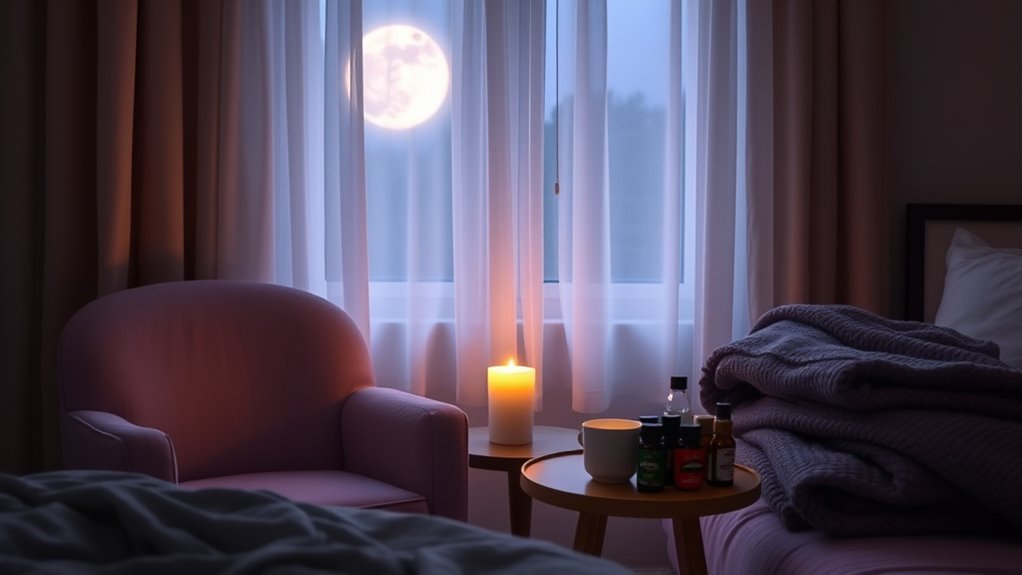
Have you ever wondered how small daily habits can boost your well-being? One of the most effective ways to improve your overall health and reduce nighttime awakenings is by paying attention to your sleep hygiene. Sleep hygiene involves creating a routine and environment that promote restful sleep. Start by establishing a consistent sleep schedule, going to bed and waking up at the same time every day—even on weekends. This consistency helps regulate your body’s internal clock, making it easier to fall asleep and stay asleep through the night. Make sure your bedroom is cool, dark, and quiet, removing any distractions like electronic devices or bright lights that can interfere with your sleep cycle. Avoid caffeine or heavy meals close to bedtime, as these can disrupt your ability to drift off peacefully. Incorporating relaxation exercises before bed can also considerably improve your sleep quality. Techniques such as deep breathing, progressive muscle relaxation, or gentle stretching help calm your nervous system, making it easier to transition into sleep. Deep breathing, in particular, is simple and effective: inhale slowly through your nose, hold for a few seconds, then exhale gently through your mouth. Repeat this several times, focusing on your breath to clear your mind of racing thoughts. Progressive muscle relaxation involves tensing and then relaxing muscle groups, starting from your toes and working up to your head, which releases physical tension accumulated during the day. These relaxation exercises not only ease your body into sleep but also reduce stress levels that might cause you to wake up during the night. When combined with good sleep hygiene practices, they create a powerful foundation for uninterrupted rest. If you wake up in the middle of the night and find yourself unable to fall back asleep, avoid looking at the clock or checking your phone, as this can heighten anxiety. Instead, focus on your breath or silently repeat a calming phrase. Remember, sleep hygiene is key—making these routines a regular part of your evening can dramatically improve your sleep quality over time. By paying attention to sleep hygiene and practicing relaxation exercises, you’re actively reducing the chances of midnight waking and setting yourself up for more restorative sleep. It’s a simple yet effective way to take control of your nights, helping you wake up feeling refreshed and less stressed. Small adjustments to your nightly habits can have a profound impact on your well-being, making each night’s sleep more peaceful and restorative.
Frequently Asked Questions
Can Dietary Changes Help Reduce Midnight Waking?
Dietary adjustments and nutritional strategies can definitely help reduce midnight waking. You should focus on avoiding heavy, spicy, or caffeine-rich foods before bed, as they can disrupt sleep. Incorporate magnesium-rich foods like nuts and leafy greens, which promote relaxation. Maintaining a consistent meal schedule and staying hydrated also support better sleep patterns. By making these dietary changes, you can improve your sleep quality and minimize waking during the night.
Are There Specific Sleep Aids Recommended for Stress-Induced Waking?
When stress wakes you at night, consider medication options like short-term sleep aids or herbal supplements such as valerian root or melatonin. These can help ease your mind and promote restful sleep. Be mindful to consult with a healthcare professional before trying new options. Sometimes, a combination of gentle herbal remedies and relaxation techniques can create a calming rhythm, helping you drift back to sleep naturally.
How Does Exercise Impact Nighttime Stress and Waking Episodes?
Exercise benefits your sleep by reducing stress, which can help you stay asleep longer and wake less during the night. When you engage in regular physical activity, your body releases endorphins, easing tension and calming your mind. This stress reduction can lead to fewer nighttime waking episodes, making it easier to fall back asleep if you do wake. Incorporate moderate exercise into your routine to improve overall sleep quality and manage stress effectively.
Is It Beneficial to Track Sleep Patterns for Better Self-Care?
Yes, tracking your sleep patterns can be highly beneficial for better self-care. Using sleep journaling helps you notice trends and identify factors that affect your sleep quality. Habit tracking allows you to monitor behaviors that influence your rest, such as caffeine intake or screen time. By consistently recording these details, you gain insights that empower you to make targeted changes, improving your overall sleep and reducing stress during the night.
Can Mindfulness Practices Improve Overall Sleep Quality?
Have you considered that mindfulness practices can truly enhance your sleep quality? Meditation benefits include calming your mind and reducing stress, making it easier to fall asleep and stay asleep. Relaxation techniques like deep breathing or guided imagery help regulate your nervous system, promoting restful sleep. By incorporating these practices into your nightly routine, you can experience more restorative sleep and wake up feeling refreshed and energized.
Conclusion
Remember, taking care of yourself is the most powerful tool you have against midnight wake-ups and stress. These techniques can transform your nights from restless chaos into peaceful serenity—almost like flipping a switch. By prioritizing self-care, you’re not just improving your sleep; you’re reclaiming your energy, mood, and overall well-being. Embrace these strategies today, and watch your nights become the sanctuary you deserve—because you are truly worth it.