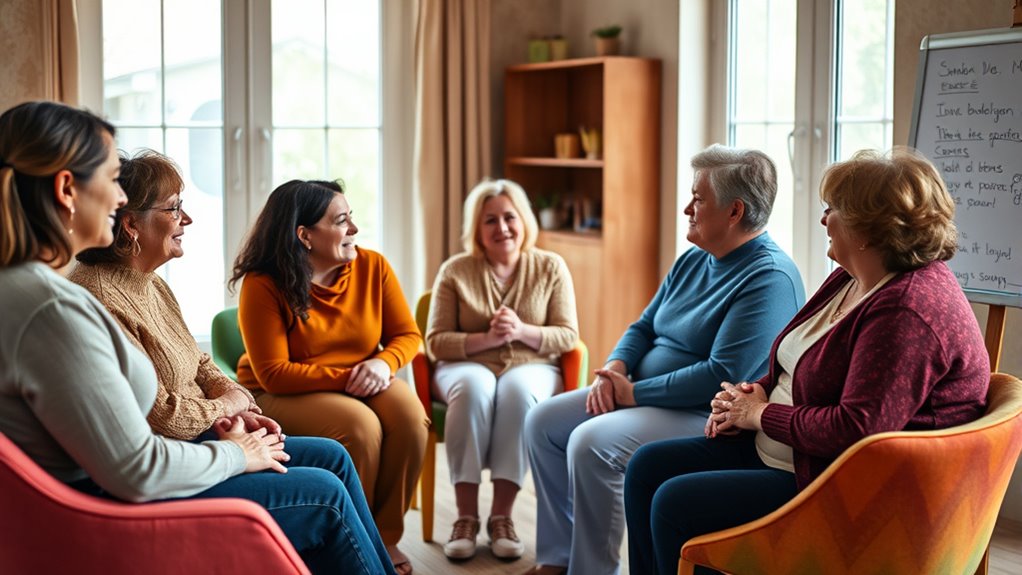

Joining caregiver groups can give you much-needed peer support, practical resources, and emotional strength. Sharing stories with others facing similar challenges helps you feel less isolated and more understood. These groups also provide tips on local services, respite care, and ways to cope better. Plus, connecting with others boosts your confidence and resilience. If you keep exploring, you’ll find even more ways these groups can empower and support you on your caregiving journey.
Key Takeaways
- Joining caregiver groups creates a sense of community, reducing feelings of isolation through shared experiences.
- Group participation enhances emotional resilience by learning coping strategies and gaining new perspectives.
- Caregiver groups facilitate practical resource sharing, providing access to local services, tools, and support networks.
- Being part of a group offers emotional support, encouragement, and a space to vent, celebrate, and ask questions.
- Caregiver groups empower members with advocacy skills and knowledge to better support themselves and their loved ones.

Have you ever wondered how connecting with others who face similar challenges can make a difference? When you join a caregiver group, you open yourself up to a community that understands your struggles firsthand. These groups aren’t just about sharing stories; they’re about building emotional resilience. As you listen to others’ experiences, you realize you’re not alone in your feelings—whether it’s frustration, exhaustion, or hope. This shared understanding helps you develop inner strength, allowing you to better manage the emotional rollercoaster that caregiving often brings. Emotional resilience grows as you learn coping strategies from your peers, gaining new perspectives that help you bounce back from setbacks with greater ease. Over time, you’ll notice that this support isn’t just emotional—it’s practical, too. Resource sharing becomes a key benefit of being part of a caregiver group. You exchange information about local services, respite care options, or helpful tools that you might not have discovered on your own. This sharing of resources saves you time and energy, making your caregiving journey more manageable. When you’re overwhelmed, hearing about how others navigated similar situations can spark ideas for solutions you hadn’t considered. The collective wisdom of the group becomes a valuable resource. Plus, these groups often connect you to additional support networks, from professional counseling to community programs, broadening your options for help. Being part of a caregiver group also reminds you that you don’t have to carry all the weight alone. The camaraderie and encouragement you find there can lift you during tough times and give you a sense of belonging. As you share your own experiences, you’ll discover that your stories resonate with others, creating a bond that can turn strangers into allies. This sense of community can be incredibly uplifting, especially when caregiving feels isolating. It’s a space where you can vent, ask questions, and celebrate small victories, knowing you’re supported. Over time, this connection can boost your emotional resilience, helping you approach caregiving with renewed strength and hope. The act of resource sharing also empowers you, giving you tools and knowledge to advocate for yourself and your loved ones more effectively. Additionally, understanding emotional support can help you recognize the importance of addressing your feelings to maintain overall well-being. So, joining a caregiver group isn’t just about seeking help; it’s about becoming part of a collective effort to face challenges together. It’s about realizing that, while caregiving is demanding, you don’t have to do it alone—and that shared strength and resourcefulness can make all the difference in your journey.

VOCIC Sit to Stand Lift, One-Step Stand Assist Lift for Elderly, Patient Lift Chair Transport Unit with Wheels, Fall Prevention & Muscle Building, AY03 2026 Upgraded
SMOOTH PATIENT TRANSFER & LIFT: Simplify daily transitions for seniors or patients with limited mobility. This stand assist...
As an affiliate, we earn on qualifying purchases.
Frequently Asked Questions
How Do I Find a Local Caregiver Support Group Near Me?
To find a local caregiver support group near you, start by exploring local resources like community centers, hospitals, or libraries. You can also check online group directories such as CaringBridge or Meetup, which list caregiver groups in your area. Reach out to local healthcare providers or social services for additional recommendations. Using these tools, you’ll quickly connect with groups that offer support, understanding, and valuable advice tailored to your needs.
Are Online Caregiver Groups as Effective as In-Person Meetings?
Online caregiver groups can be just as effective as in-person meetings because they foster virtual interactions, build emotional connections, and provide valuable support. You can share experiences, seek advice, and find comfort without leaving home. While in-person meetings offer face-to-face contact, virtual interactions allow flexibility and accessibility, making it easier to connect regularly. Both options serve your needs, helping you feel supported, understood, and less isolated in your caregiving journey.
What Should I Expect During My First Support Group Meeting?
During your first support group meeting, you can expect a welcoming environment where meeting etiquette is important. Share only what you’re comfortable with, respecting group confidentiality. The facilitator will likely introduce the group’s purpose and guidelines. You may listen more at first, but feel free to participate when ready. Remember, everyone understands your feelings, and confidentiality guarantees a safe space for honest sharing.
How Can Peer Support Groups Help Prevent Caregiver Burnout?
Peer support groups help prevent caregiver burnout by boosting your emotional resilience and teaching stress management techniques. When you share your experiences, you realize you’re not alone, which reduces feelings of isolation. Listening to others’ coping strategies can inspire new approaches, making caregiving less overwhelming. Regularly connecting with peers provides emotional relief and practical advice, helping you stay balanced and maintain your well-being amid caregiving challenges.
Are There Age-Specific or Condition-Specific Caregiver Groups Available?
Yes, there are age-specific and condition-specific caregiver groups available, offering specialized resources tailored to your needs. These groups use age-specific strategies to address unique challenges, whether you’re caring for a child, an elderly parent, or someone with a particular condition. Joining such groups helps you connect with others who understand your situation, providing targeted support and practical advice that can make caregiving more manageable and less isolating.

Achairgo Patient Lift Transfer Chair - Electric Assist Lift Aid for Home Care Use - Portable Folding for Car - Transport Wheelchair for Seniors, Adults & Disabled
3-Year Guarantee eligibility: allowing customers to have the product reliability. Purchase now with confidence!
As an affiliate, we earn on qualifying purchases.
Conclusion
Joining a caregiver support group can make a real difference. Imagine Sarah, who felt overwhelmed caring for her mother until she joined a local group. Sharing her struggles and hearing others’ stories gave her strength and hope. You might find the same comfort and connection, realizing you’re not alone. Embrace the support around you—it’s a powerful step toward caring for yourself as well as your loved ones.

Vive Mobility Sit to Stand Patient Lift for Handicapped - Stand Assist Lift Aid for Home Care Use - Elderly Lift Assist Transfer Device - Transport Chair Stand Assist for Seniors, Adults & Disabled
EASILY TRANSFER & LIFT PATIENTS: Designed to help transfer patients who can stand enough to support 60-70% of...
As an affiliate, we earn on qualifying purchases.

Vive Electric Patient Lift for Home Use with Sling - Portable, Adjustable Medical Patient Lift for Home Use - Electric Sit to Stand Chair for Elderly, Adults & Handicap - Person Floor Transfer Assist
EFFORTLESS AND SAFE TRANSFERS: Elevate the care of patients and loved ones with the Vive Electric Patient Lift....
As an affiliate, we earn on qualifying purchases.