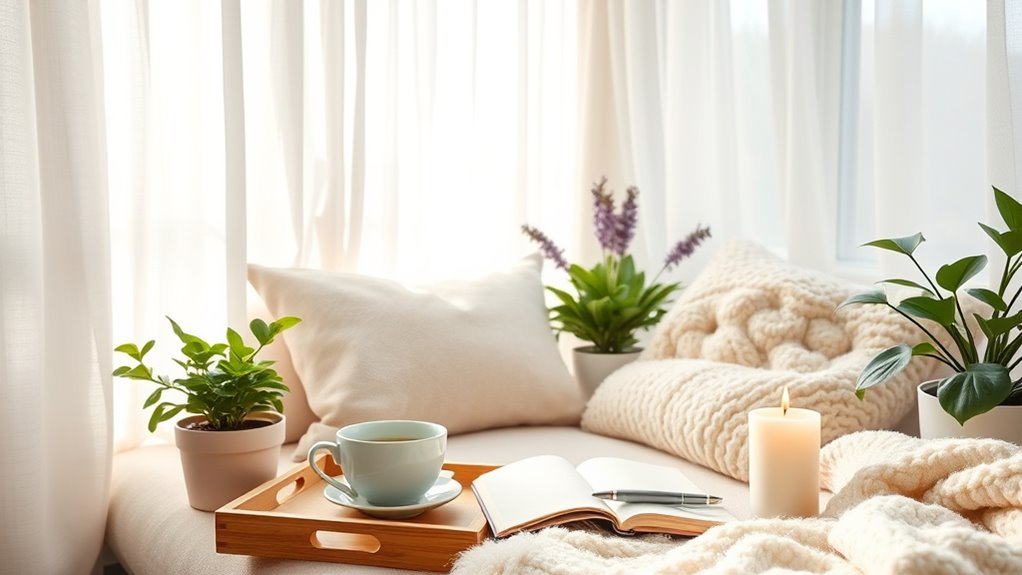

Creating a self-care retreat at home for caregivers is a wonderful way to recharge without leaving your routine. Set up a cozy space with calming scents like lavender or chamomile, use aromatherapy, and incorporate mindful journaling to reflect on your feelings. Gentle movement, breathing exercises, and establishing daily routines can build resilience and calm. small, consistent acts help you regain control and peace. Keep going, and you’ll discover simple ways to make these retreats a sustainable part of your life.
Key Takeaways
- Designate a cozy, sensory-rich corner in your home as a personal retreat space.
- Incorporate calming elements like aromatherapy, soft lighting, and soothing sounds to create a relaxing ambiance.
- Practice mindful journaling to reflect on feelings, set intentions, and promote emotional clarity.
- Include gentle self-care activities such as stretching, meditation, or short walks to reduce stress.
- Establish a consistent routine with small, manageable self-care acts to build resilience and sustainability.
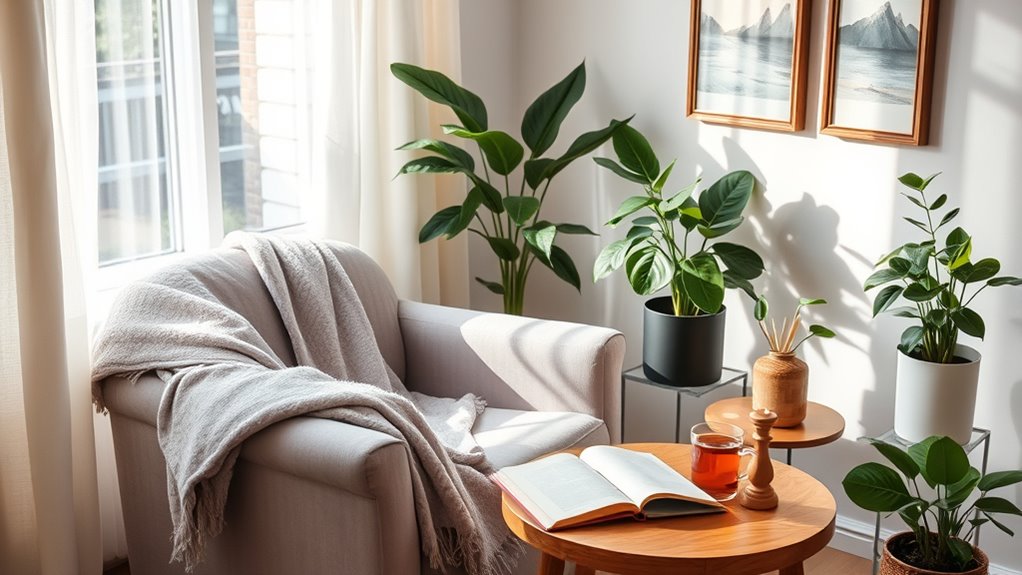
Ever feel like you’re running on empty? As a caregiver, your days are filled with endless responsibilities, leaving little time for yourself. That’s where creating a self-care retreat at home can make a significant difference. You don’t need a getaway; just a dedicated space and a few mindful techniques to recharge your body and mind. One powerful way to start is with mindful journaling. It allows you to reflect on your feelings, acknowledge your stress, and set intentions for self-care. Grab a quiet corner, a cozy notebook, and write honestly about your experiences. Focus on what’s weighing on you and what brings you moments of peace. This practice helps clear mental clutter, making space for calm and clarity. Pair that with aromatherapy relaxation—light a lavender or chamomile diffuser, or use essential oils on your skin. These scents have soothing properties that promote relaxation and reduce anxiety. As you breathe in these calming aromas, let them remind you that self-care isn’t selfish; it’s essential. Incorporate deep, intentional breaths to enhance the calming effect, and allow yourself to feel grounded in the present moment. Creating a sensory environment like this can turn your space into a sanctuary, even if it’s just a small corner of your home. Additionally, practicing emotional support techniques can help you manage feelings of stress and overwhelm more effectively.
In your self-care retreat, prioritize activities that nurture your well-being. Consider setting aside time each day for gentle movement, such as stretching or yoga, which can help release physical tension. Combine this with mindful journaling to track your progress and emotions, making adjustments as needed. Don’t forget to include moments of aromatherapy relaxation—perhaps a quick inhale of your favorite scent during a break—to reset your mood and boost your energy. Remember, the goal isn’t perfection but consistency. Even a few minutes of dedicated self-care can build a sense of control and calm amidst chaos. As a caregiver, your well-being directly impacts your ability to support others, so treat yourself with the same kindness you extend to those in your care. Create routines that are sustainable, and don’t hesitate to adapt them as your needs evolve. Whether it’s a morning meditation with aromatherapy, an evening journaling session, or a midday walk with mindful breathing, these small acts combine to form a powerful retreat—right in your home. By making time for yourself, you’ll find your resilience grows, and your capacity to care for others becomes stronger. Remember, self-care isn’t a luxury; it’s a essential part of maintaining your health and happiness.
Frequently Asked Questions
How Can Caregivers Involve Family Members in Self-Care Retreats?
You can involve family members in self-care retreats by encouraging their participation in shared activities like meditation, yoga, or relaxing walks. Invite them to contribute ideas for activities, creating a sense of teamwork. Assign roles or simple tasks to make everyone feel involved and responsible. This not only fosters family participation but also strengthens bonds, making the retreat more enjoyable and effective for everyone’s well-being.
What Are Budget-Friendly DIY Ideas for Creating a Retreat?
You can create a budget-friendly DIY retreat by making simple decor like candles, fairy lights, or calming art from supplies you already have. Incorporate budget exercises such as guided meditation or gentle stretching in your routine. Use natural elements like plants or stones to enhance your space. These easy DIY decor ideas and budget exercises help you craft a soothing retreat without spending much, giving you a restful escape at home.
How Often Should Caregivers Schedule Home Retreats for Maximum Benefit?
Have you ever wondered how often you should plan a home retreat for the best results? Generally, scheduling a retreat every 4 to 6 weeks helps you recharge without feeling overwhelmed. Keep retreat duration manageable—around 1 to 2 days—so you stay motivated and energized. By regularly planning these moments, you prioritize your well-being and create a sustainable self-care routine that keeps you balanced and resilient.
Are There Any Specific Mindfulness Techniques Recommended for Caregivers?
You should try mindfulness meditation and breathing exercises regularly to help manage stress. Set aside a few minutes each day to focus on your breath, inhaling slowly and exhaling deeply, or practice mindfulness meditation to stay present. These techniques can boost your mental clarity, reduce anxiety, and improve your overall well-being. Incorporate them into your daily routine for maximum benefit and a sense of calm amidst caregiving challenges.
How Can Caregivers Measure the Effectiveness of Their Self-Care Retreats?
You can measure your retreat’s effectiveness by tracking changes in stress reduction and sleep quality. Studies show caregivers who prioritize self-care report a 30% decrease in stress levels. Keep a journal to note daily mood and sleep patterns, and use relaxation or sleep quality apps for measurable feedback. If you notice improvements in energy, patience, or overall well-being, your retreat is likely making a positive impact.
Conclusion
Remember, caring for yourself is like filling a cup—you can’t pour from an empty one. When you carve out these self-care retreats at home, you’re replenishing your strength and resilience. I once heard of a caregiver who transformed her chaos into calm by dedicating just ten minutes daily to herself; that small act became her sanctuary. Prioritize your well-being—your caregivers’ spirit needs nurturing too, so you can continue to give with love and grace.