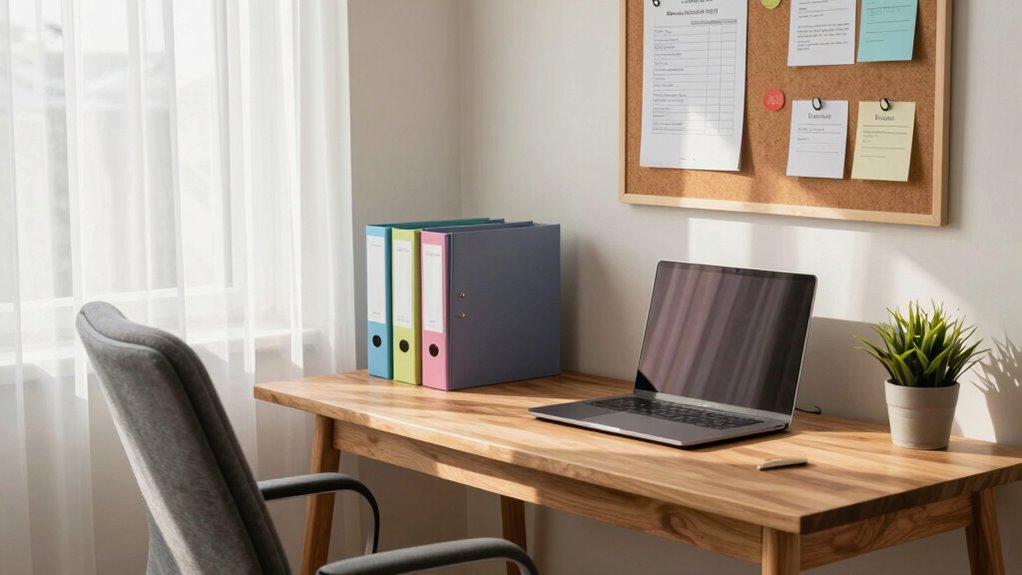
Create a dedicated space with labeled folders or a digital system for all caregiving documents. Use clear categories like medical records, bills, and legal papers, and update them regularly. File everything immediately to prevent clutter, and consider color coding for quick identification. Involve trusted family or a professional organizer to keep stress low. By setting up an efficient system, you’ll feel more in control. Keep going to discover practical tips for maintaining your organized caregiving environment.
Key Takeaways
- Designate a single, labeled space for all caregiving documents to prevent clutter and ensure quick access.
- Use a consistent, color-coded filing system categorized by document type for easy organization.
- Establish routine times for sorting and updating paperwork to maintain order and prevent backlog.
- Incorporate digital storage solutions alongside physical files for faster retrieval and backup.
- Involve trusted family members or professionals to support organization efforts and reduce caregiver stress.
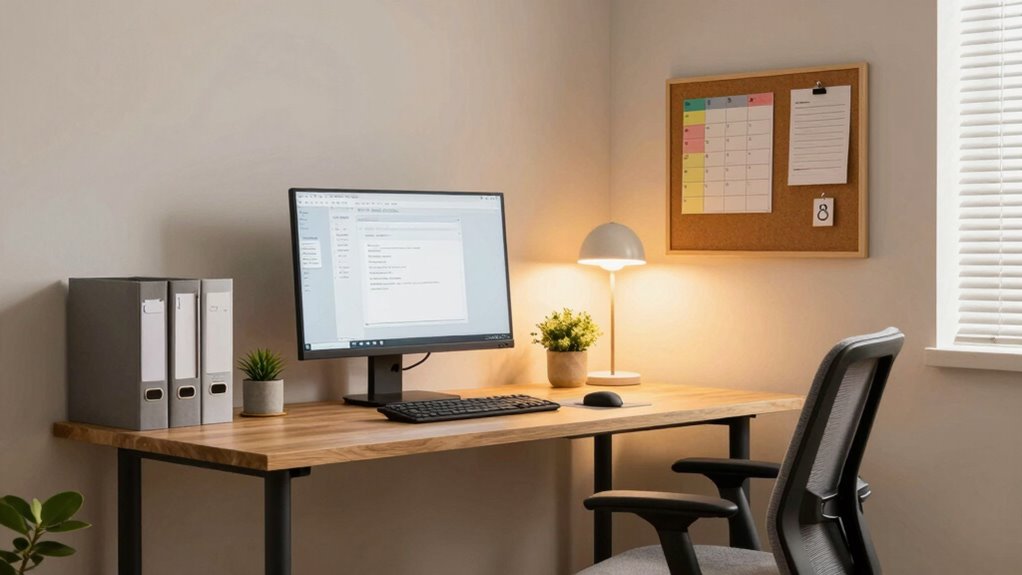
Have you ever felt overwhelmed by the amount of paperwork required for caregiving? It’s a common experience, and setting up your home to handle this paperwork efficiently can make a huge difference. When you prioritize caregiver organization and streamline paperwork management, you’ll find it easier to access what you need quickly and reduce unnecessary stress. The first step is creating a designated space that’s solely for your caregiving documents. Whether it’s a filing cabinet, a set of labeled folders, or a digital system, having a specific spot prevents clutter from piling up and keeps everything in one place. Keep important documents—like medical records, insurance policies, medication lists, and emergency contacts—separate and clearly labeled so you can locate them in seconds.
Next, consider implementing a consistent filing system. Use categories that make sense for your situation, such as “Medical Records,” “Bills & Payments,” “Legal Documents,” and “Appointments.” Label each folder or section clearly, and update them regularly. Incorporating a reliable organization method can help you maintain order and ensure your files stay current. Using color-coded folders can also help you identify categories at a glance, saving you time during busy moments. Incorporating color accuracy principles from home cinema projectors can improve your digital photo organization and make visual identification even quicker. Additionally, aligning your system with a structured approach can boost its effectiveness and help you stay consistent over time.
Another helpful tip is to establish a routine for managing paperwork. Set a specific place and time for handling incoming documents—immediately sorting or filing them prevents piles from forming. Keep a small trash bin nearby to dispose of unnecessary papers right away. This routine minimizes the chances of important documents getting lost or overlooked. Additionally, utilizing streamlined systems can further reduce the effort needed to stay organized and ensure that all documents are accounted for.
Finally, don’t hesitate to ask for help if needed. Whether it’s instructing a trusted family member on your system or hiring a professional organizer, support can ease your burden. Remember, a well-organized setup isn’t just about tidiness; it’s about creating a stress-reducing environment where caregiving paperwork becomes manageable rather than overwhelming. When you establish clear caregiver organization and effective paperwork management, you’ll feel more in control and be better prepared for whatever comes your way.
labeled filing cabinet for documents
As an affiliate, we earn on qualifying purchases.
As an affiliate, we earn on qualifying purchases.
Frequently Asked Questions
How Should I Organize Digital Versus Physical Caregiver Documents?
You should establish clear organizational systems for your caregiver paperwork, separating digital and physical documents efficiently. Use digital folders with consistent naming conventions for easy Paperwork categorization, and invest in a secure cloud storage solution for quick access. For physical documents, use labeled binders or filing cabinets sorted by categories like medical info, legal papers, and appointments. Regularly review and update both systems to keep everything current and stress-free.
What Security Measures Are Recommended for Sensitive Caregiver Paperwork?
Did you know that 60% of data breaches involve sensitive information? To protect your caregiver paperwork, implement strong security measures like data encryption and access controls. Data encryption safeguards your digital documents, making them unreadable to unauthorized users. Access controls limit who can view or modify sensitive files, reducing risks. By combining these strategies, you guarantee your paperwork stays secure, giving you peace of mind and minimizing stress.
How Often Should Caregiver Paperwork Be Reviewed or Updated?
You should review your caregiver paperwork at least every six months to guarantee accuracy and compliance. Incorporate time management into your routine by setting reminders for these reviews. This way, you stay organized without stress. Additionally, update documents promptly when changes occur. Remember, maintaining current paperwork provides emotional support by reducing worry, knowing everything is in order, and helps you handle unexpected situations confidently.
Are There Any Specific Tools or Apps for Managing Caregiver Records?
Imagine a sleek app like CareZone or MyMedRec, effortlessly organizing caregiver records amidst busy routines. These tools integrate caregiver training schedules and emotional support notes, making management simple. You can set reminders for updates, securely store documents, and access information anytime. Using such apps streamlines paperwork, reduces stress, and keeps you focused on providing compassionate care, ensuring everything stays up-to-date without feeling overwhelmed.
How Can I Create a Backup System for Important Documents?
You can create a backup system for important documents by using clear document labeling and effective storage solutions. Start by organizing files into labeled folders or digital categories for easy access. Use cloud storage services for digital backups, ensuring your files are secure and accessible from anywhere. Additionally, keep physical copies in a fireproof safe or a dedicated filing cabinet, regularly updating and reviewing your backups to prevent data loss.
color-coded file folders set
As an affiliate, we earn on qualifying purchases.
As an affiliate, we earn on qualifying purchases.
Conclusion
Creating an organized home setup for caregiver paperwork is like planting seeds in fertile soil—you’ll watch your stress shrink and productivity bloom. With everything in its right place, you’ll breeze through tasks instead of feeling overwhelmed. Remember, a well-structured space isn’t just a convenience; it’s your foundation for peace of mind. So, take a moment to arrange your paperwork sanctuary—you’ll thank yourself every time you find what you need, right when you need it.
digital document storage system
As an affiliate, we earn on qualifying purchases.
As an affiliate, we earn on qualifying purchases.
home filing system organizer
As an affiliate, we earn on qualifying purchases.
As an affiliate, we earn on qualifying purchases.