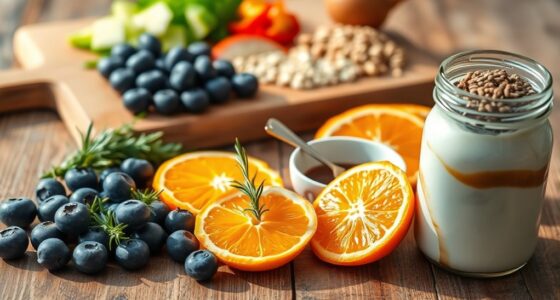
To cook for hydration and electrolytes, incorporate plenty of water-rich fruits like watermelon, oranges, and strawberries, as well as vegetables like cucumbers, spinach, and celery into your meals. Add nuts, seeds, eggs, and dairy for magnesium and calcium, and try homemade electrolyte drinks or broths to boost sodium levels. Use infused waters and nutrient-dense breakfasts like oatmeal with bananas and chia seeds. If you keep exploring, you’ll discover more tasty ways to support your hydration naturally.

Get health and wellness essentials delivered free with Prime
- Fast, free delivery on millions of items
- Prime Video, Amazon Music and more included
- Member-only deals all year
Key Takeaways
- Incorporate water-rich fruits like watermelon, oranges, and strawberries into dishes for natural hydration and electrolyte boost.
- Use vegetables such as cucumbers, spinach, and celery in salads and wraps to enhance water content and mineral intake.
- Add nuts and seeds to meals or snacks to increase magnesium and calcium levels supporting electrolyte balance.
- Prepare homemade electrolyte beverages with citrus, mint, or cucumber to replenish minerals without added sugars.
- Include broth-based soups and oatmeal topped with bananas and chia seeds to promote hydration and mineral replenishment.
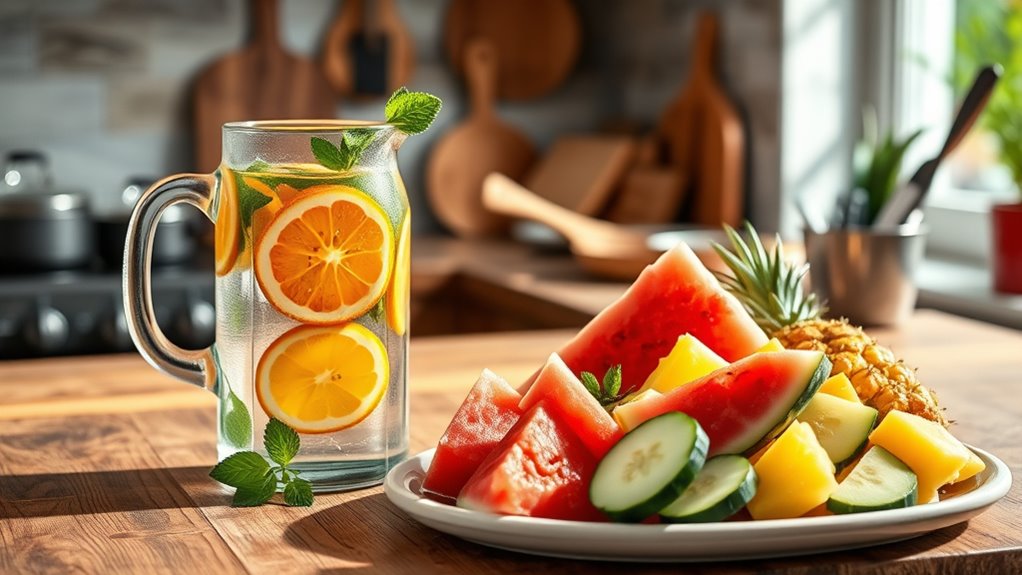
Staying properly hydrated is essential for overall health, especially when your body loses fluids through exercise, heat, or illness. To support this, it’s important to include electrolyte-rich ingredients in your meals. Electrolytes like sodium, potassium, magnesium, and calcium help maintain fluid balance, nerve function, and muscle contractions. Incorporating these nutrients into your diet can make a noticeable difference in how well you stay hydrated and energized throughout the day.
Proper hydration depends on electrolyte-rich ingredients supporting fluid balance and muscle function.
One of the easiest ways to boost your electrolyte intake is by choosing hydrating meal ideas that naturally contain these important minerals. For example, fresh fruits like watermelon, oranges, and strawberries are excellent sources of potassium and hydration. They’re not only invigorating but also easy to incorporate into smoothies, salads, or snacks. Similarly, vegetables such as cucumbers, spinach, and celery are high in water content and electrolytes, making them perfect additions to salads or light wraps. You can prepare a cucumber and spinach salad topped with feta cheese and a lemon vinaigrette to get a good dose of hydration and electrolytes in a single dish.
Eggs, nuts, and seeds are also rich in magnesium and calcium, which play essential roles in maintaining electrolyte balance. Incorporating these into your meals—like adding seeds to yogurt or nuts to a salad—can help support hydration. For more substantial options, consider broths and soups made with bone broth or vegetable stock. These are rich in sodium and other electrolytes, providing both nourishment and hydration, especially during times when you’re recovering from illness or feeling dehydrated.
Don’t forget about beverages—natural electrolyte drinks or infused waters can also be part of your hydration strategy. You can make your own by adding slices of citrus, cucumber, or mint to water. These hydrate you while delivering necessary electrolytes without added sugars or artificial ingredients. For breakfast, consider oatmeal topped with bananas and a sprinkle of chia seeds, which provides potassium, magnesium, and hydration-enhancing fiber.
As an affiliate, we earn on qualifying purchases.
Frequently Asked Questions
Which Herbs Enhance Electrolyte Absorption During Cooking?
Herbal mineral enhancers like basil, parsley, and dill can boost electrolyte absorption during cooking. Incorporate these herbs into your cooking herb combinations to maximize mineral intake and support hydration. By adding them to soups, stews, or salads, you help your body absorb essential electrolytes like potassium and magnesium more effectively. These herbs not only enhance flavor but also work as natural mineral boosters, helping you stay balanced and well-hydrated.
How Does Cooking Affect the Mineral Content of Fruits and Vegetables?
Cooking can decrease the mineral content of fruits and vegetables through mineral leaching, especially if you boil or overcook them. Using gentler cooking methods like steaming or roasting helps retain more minerals. When you boil produce, minerals often leach into the cooking water, so using minimal water or reusing it in soups preserves those electrolytes. Adjust your cooking techniques to maximize mineral retention and boost your electrolyte intake naturally.
Are There Specific Cooking Methods That Preserve Hydration Properties?
Think of your vegetables as sponges; gentle methods preserve their essence. Steam cooking and blanching techniques are your best allies for maintaining hydration properties. These methods use minimal water and quick heat, locking in electrolytes and moisture. By avoiding boiling, you prevent nutrient leaching, ensuring you get maximum hydration benefits. So, opt for steaming or blanching to keep your produce juicy and electrolyte-rich, just as nature intended.
Can Adding Salt Improve Hydration in Cooked Meals Effectively?
Adding salt can improve hydration in cooked meals effectively. Salt supplementation helps your body retain fluids and maintain electrolyte balance, especially during intense activity or heat. Plus, it enhances flavor, making your meals more enjoyable. Just be mindful not to overdo it; a moderate amount balances hydration benefits with taste. Incorporating salt thoughtfully can boost both the hydration properties and overall flavor of your dishes.
What Are the Best Storage Tips to Retain Electrolyte Levels in Prepared Foods?
To retain electrolyte levels in prepared foods, focus on proper food preservation and meal prep techniques. Store meals in airtight containers to minimize nutrient loss and keep them refrigerated at the right temperature. Avoid prolonged storage, as electrolytes can degrade over time. Consider adding a pinch of salt just before eating to boost electrolyte content. By following these tips, you help preserve the nutrients and maintain ideal hydration benefits.
water-rich fruit and vegetable basket
As an affiliate, we earn on qualifying purchases.
As an affiliate, we earn on qualifying purchases.
Conclusion
Think of your body as a thriving garden that needs the right nourishment to flourish. By choosing hydrating ingredients and balancing electrolytes in your cooking, you’re watering your garden from within. Every sip and bite helps keep your energy flowing and your body thriving. So, get creative in the kitchen and turn your meals into a revitalizing oasis. Hydration isn’t just a habit — it’s the sunshine that helps you bloom every day.
As an affiliate, we earn on qualifying purchases.
As an affiliate, we earn on qualifying purchases.
Cold & flu season Picks
humidifiers
As an affiliate, we earn on qualifying purchases.