
When cooking for both diabetes and heart health, focus on low-sodium, nutrient-rich ingredients like whole grains, lean proteins, and plenty of vegetables. Use flavorful spice blends with garlic, turmeric, and herbs instead of salt to enhance taste while supporting your health. Portion meals carefully and prep ahead to stay consistent. Incorporate healthy fats and avoid processed foods. You can create delicious, balanced dishes that meet both needs—keep exploring to discover more tips for success.
Key Takeaways
- Use low-sodium, spice-rich seasonings to enhance flavor without increasing blood pressure or blood sugar levels.
- Prioritize whole grains, lean proteins, and vegetables for balanced, heart- and blood sugar-friendly meals.
- Plan and batch-cook meals to control portions, reduce impulsive eating, and ensure consistent healthy choices.
- Incorporate herbs and spice blends like garlic, turmeric, and cumin to add flavor and anti-inflammatory benefits.
- Limit processed foods and sugary snacks, focusing on fresh, nutrient-dense ingredients to support both conditions.

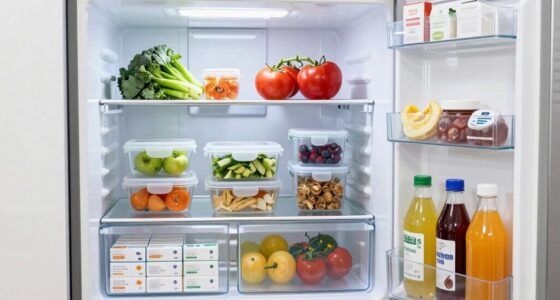
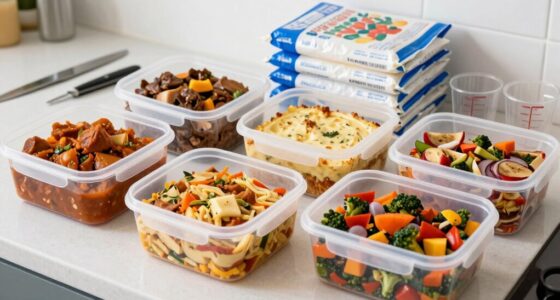
Managing both diabetes and heart conditions requires careful attention to your diet, but you don’t have to choose between your health goals. One effective way to stay on track is through thoughtful meal prep. Planning your meals ahead of time allows you to control portion sizes, balance nutrients, and avoid impulsive choices that could spike your blood sugar or harm your heart. When you dedicate time to meal prep, you can batch-cook healthy ingredients, ensuring that you always have nutritious options ready. Focus on incorporating whole grains, lean proteins, and plenty of vegetables, which help manage blood sugar levels and support cardiovascular health. By pre-portioning your meals, you also reduce the temptation to indulge in less healthy snacks or oversized portions.
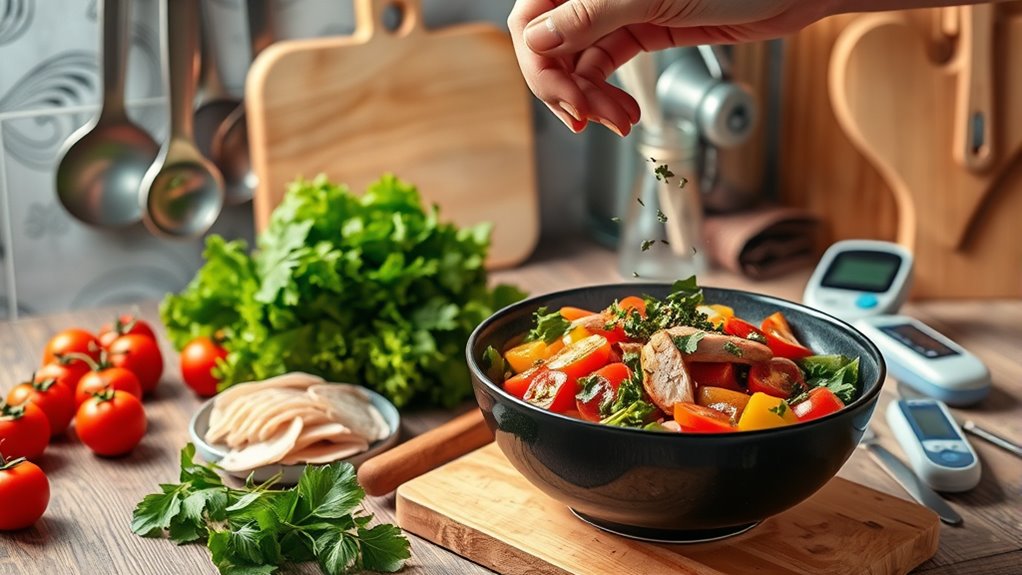
Spice blending plays a vital role in making your meals both flavorful and heart-healthy. Instead of relying on salt, which can elevate blood pressure and strain your heart, experiment with herbs and spices to enhance taste. Combining ingredients like garlic, turmeric, cumin, paprika, and fresh herbs can add vibrant flavor without the extra sodium. These spices not only boost flavor but also come with health benefits—garlic, for instance, can help lower blood pressure, while turmeric has anti-inflammatory properties. When you prepare your spice blends in advance, you streamline your cooking process and guarantee each meal is consistently flavorful and health-conscious. Keep a variety of spice mixes on hand, so you can easily season your dishes without resorting to processed sauces or salty condiments.
As you develop your meal prep routine, consider creating spice blends tailored to your taste and health needs. You might mix garlic powder, black pepper, paprika, and oregano for a versatile seasoning, or blend cumin, coriander, and cinnamon for a warm, aromatic touch. These blends can be stored in small jars or containers, making it simple to sprinkle them onto roasted vegetables, lean meats, or whole grains. This not only makes your cooking quicker but also helps you maintain a low-sodium, nutrient-rich diet. Incorporating cold-pressed vegetable juices into your routine can further support your health goals by providing concentrated nutrients without added sugars or preservatives.
Ultimately, managing diabetes and heart health through your diet involves consistency and creativity. Meal prep gives you control over what goes into your food, while spice blending guarantees your meals stay flavorful without compromising your health. By integrating these strategies into your routine, you’ll find it easier to stick to your dietary goals, enjoy delicious meals, and support your overall well-being. Remember, small steps like planning ahead and experimenting with spices can make a significant difference in your health journey.

Badia Complete Seasoning Salt-Free, 4.25 oz – All-Purpose Spice Blend of Garlic, Onion, Pepper, Herbs & Spices – Savory Signature Blend (with No Salt)
- All-Purpose Seasoning: Enhance meats, vegetables, and soups
- Flavorful Blend: Garlic, onion, herbs, spices without salt
- Kitchen Staple: Ideal for grilling, roasting, sautéing
As an affiliate, we earn on qualifying purchases.
As an affiliate, we earn on qualifying purchases.
Frequently Asked Questions
Can I Use Sugar Substitutes in Heart-Healthy Diabetic Recipes?
Yes, you can use artificial sweeteners or natural alternatives in heart-healthy diabetic recipes. These options help you cut down on sugar without sacrificing sweetness, making your meals safer for your condition. Just check the labels and choose options with no added sugars or unhealthy ingredients. Remember, moderation is key, and combining artificial sweeteners with natural alternatives like stevia or monk fruit can give you variety while keeping your recipes heart-friendly and suitable for diabetes.
Are Specific Cooking Oils Better for Both Conditions?
Did you know that about 75% of heart disease cases could be prevented with healthier lifestyle choices? When choosing cooking oils, opt for heart-healthy fats like olive oil, avocado oil, or canola oil. These oils are rich in monounsaturated and polyunsaturated fats, which can help improve your cholesterol levels and support your heart health while also managing blood sugar. Avoid trans fats and limit saturated fats for better overall health.
How Do I Balance Sodium and Sugar in Meal Planning?
To balance sodium and sugar in meal planning, focus on salt reduction by using herbs and spices for flavor enhancement instead of salt. Read labels carefully to avoid hidden sugars and opt for natural sweeteners like stevia or small amounts of honey. Incorporate fresh fruits and vegetables to naturally satisfy sweet cravings while keeping sodium low. This approach helps you enjoy flavorful meals without compromising your health.
What Are Quick Meal Ideas for Managing Both Conditions?
You can manage both conditions with quick, healthy meal ideas by focusing on meal prep and ingredient swaps. Prepare balanced salads with leafy greens, lean proteins, and heart-healthy fats, adding a dash of olive oil and lemon. Swap refined carbs for whole grains, like quinoa or brown rice, and choose fresh vegetables. These simple swaps and pre-prepped ingredients make it easy to stay on track and save time.
Can I Eat Out While Following These Dietary Guidelines?
Think of restaurant dining as traversing a delicate garden maze. You can enjoy eating out, but you need to steer carefully with portion control, choosing dishes that align with your dietary needs. Look for grilled, steamed, or baked options, and ask for sauces or dressings on the side. By making mindful choices, you maintain your health while still savoring the social joy of dining out.

Great Grains Raisins, Dates & Pecans Breakfast Cereal, 19 oz Box
- Package Size: 19 oz box of cereal
- Main Ingredients: Raisins, dates, pecans, whole grains
- Health Benefits: Good source of fiber, heart healthy
As an affiliate, we earn on qualifying purchases.
As an affiliate, we earn on qualifying purchases.
Conclusion
Balancing flavors while managing both diabetes and heart health might seem challenging, but it’s rewarding. Imagine savoring a meal that’s as vibrant and satisfying as it is gentle on your body—like a symphony where each note plays in harmony. With thoughtful choices, you can enjoy delicious dishes without sacrificing health. So, embrace these recipes; they’re your bridge between indulgence and well-being, proving that caring for your heart and blood sugar can be a truly enjoyable journey.

The Complete GLP-1 High Protein Cookbook for Weight Loss: Reduce Side Effects, Preserve Lean Muscle, and Feel Full Longer with Easy, Gut-Friendly Recipes | 60-Day Meal Plan
As an affiliate, we earn on qualifying purchases.
As an affiliate, we earn on qualifying purchases.

GoodCook Meal Prep Containers, Single Compartment 10-Pack
- Set Includes 10 Containers and Lids: Reusable meal prep containers for lunches
- Labeled Single Compartment: Embossed with 4 cup volume measurements
- Dishwasher, Freezer, Microwave Safe: Durable and versatile for storage and reheating
As an affiliate, we earn on qualifying purchases.
As an affiliate, we earn on qualifying purchases.