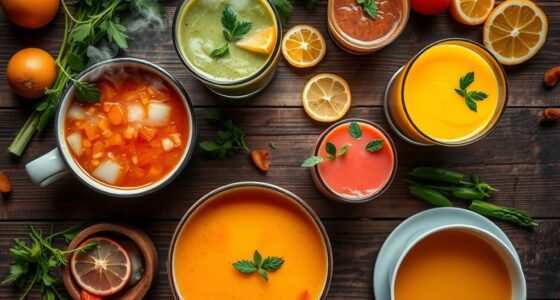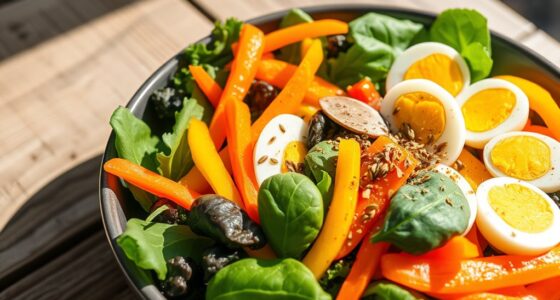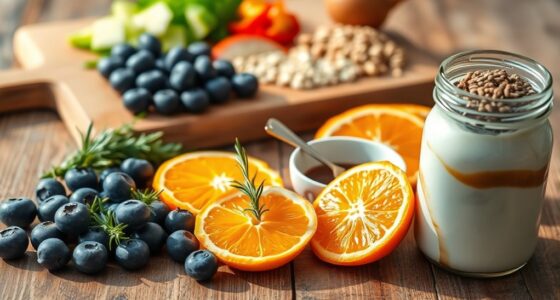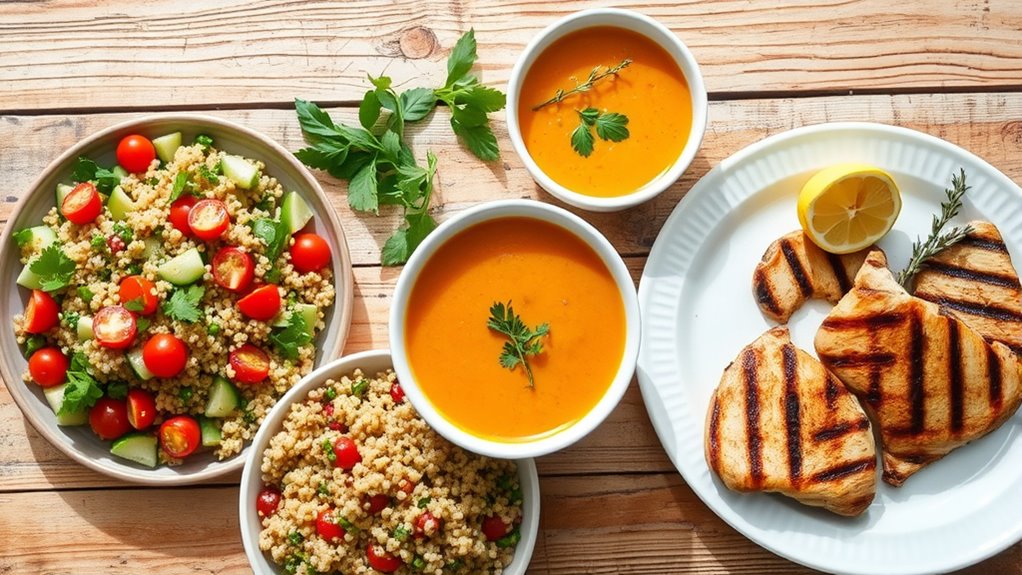

To create low-sodium and low-sugar meals for chronic conditions, focus on herbs, spices, and acids like lemon juice and vinegar to boost flavor without added salt or sugar. Use natural sweeteners such as honey or maple syrup in moderation and cook methods like grilling and steaming to preserve taste. Choosing fresh, whole foods and avoiding processed items helps minimize hidden sodium and sugar. Keep exploring these flavorful strategies to enjoy tasty, health-supportive dishes.
Key Takeaways
- Use herbs, spices, and acids like lemon juice or vinegar to enhance flavor without adding salt or sugar.
- Incorporate natural sweeteners such as honey or maple syrup in moderation to satisfy cravings healthily.
- Prepare foods with grilling, steaming, or roasting to boost natural flavors and reduce the need for sodium and sugar.
- Choose fresh, whole foods and read labels carefully to avoid hidden sodium and sugar in processed products.
- Employ simple cooking techniques and ingredient swaps to create flavorful, health-supportive meals for chronic condition management.
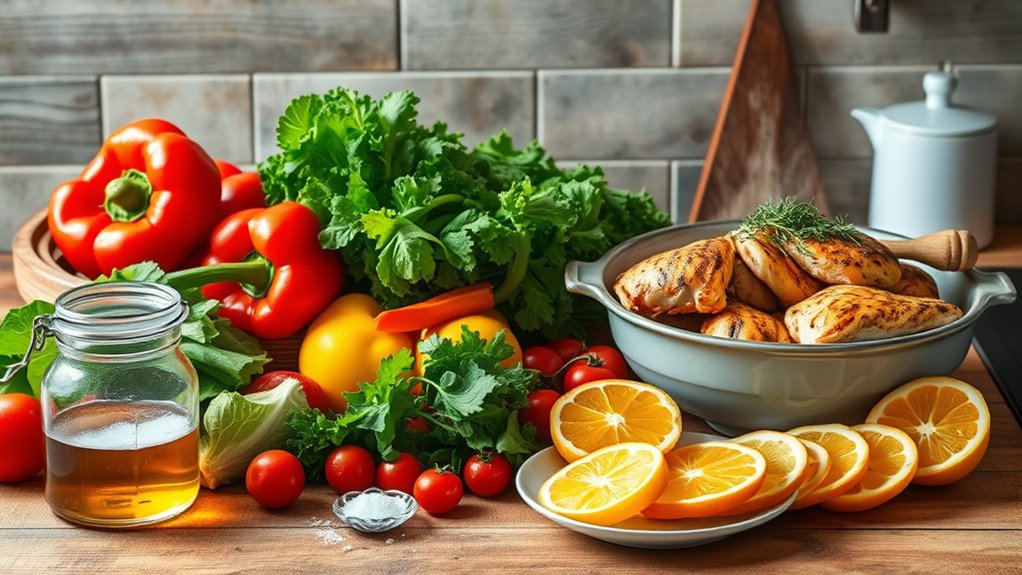
Discovering delicious ways to enjoy your favorite meals without excess sodium and sugar is easier than you think. Many people believe that cutting back on salt and sugar means sacrificing flavor, but there are plenty of ways to elevate your dishes while keeping them heart-healthy. One effective strategy is to explore salt alternatives that provide flavor without the negative health impacts. Herbs and spices like garlic, onion powder, paprika, cumin, and fresh herbs such as basil, thyme, or cilantro can add depth and richness to your meals. Using these natural flavor enhancers allows you to reduce or eliminate salt while still enjoying savory, satisfying dishes. Additionally, lemon juice or vinegar can brighten flavors and add a tangy punch without relying on salt or sugar.
Explore herbs, spices, lemon, and vinegar to boost flavor naturally without excess salt or sugar.
When it comes to sweetening your recipes, natural sweeteners are your best friends. Honey, maple syrup, agave nectar, and coconut sugar offer sweetness with more nutrients and fewer artificial additives. These options can be used in moderation to satisfy your sweet tooth without spiking your blood sugar levels. For baking, you might find that reducing the amount of sugar called for in recipes and substituting with natural sweeteners still yields delicious results. Remember, the goal isn’t to eliminate sweetness entirely but to find a balanced, flavorful alternative that supports your health.
Cooking methods also play an essential role in maintaining low sodium and sugar content. Grilling, roasting, steaming, or sautéing vegetables and lean proteins can enhance natural flavors without extra salt or sugar. Marinate your proteins with herbs, citrus, or vinegar-based sauces to infuse flavor without added sodium. When preparing grains like rice or quinoa, consider cooking them in broth made from herbs and spices instead of salt-laden varieties to boost taste. Choosing fresh, whole foods over processed options further helps to minimize hidden sodium and sugar intake, supporting overall health.
Meal planning and ingredient choices make a big difference. Opt for fresh, whole foods over processed options, which often contain hidden sodium and sugar. Reading labels carefully helps you avoid packaged foods loaded with preservatives and additives that can sabotage your health goals. Incorporate plenty of colorful vegetables, lean proteins, and whole grains to create balanced meals that are satisfying and aligned with your dietary needs.
Incorporating these simple swaps and mindful cooking techniques allows you to enjoy flavorful, satisfying meals while managing your sodium and sugar intake effectively. With a little creativity and awareness, you can maintain a healthy diet that supports your overall well-being without sacrificing taste.
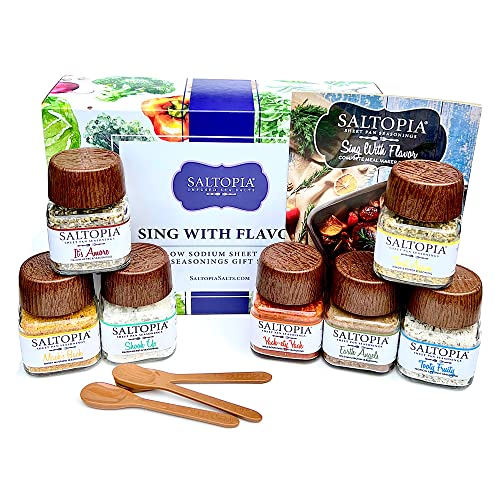
SALTOPIA LOW-SODIUM SEASONINGS Set, All Natural, Variety Set of 7 Low Sodium Seasonings for One-Pan Meal Making. Includes Recipe Book. 3.4oz Jars (7 jar gift set)
This low sodium SALTOPIA seasonings set includes 7 different flavors ranch, southwestern blend, honey mustard, roasted garlic, Italian…
As an affiliate, we earn on qualifying purchases.
As an affiliate, we earn on qualifying purchases.
Frequently Asked Questions
Can These Recipes Be Adapted for Vegan Diets?
Yes, you can adapt these recipes for vegan diets by using vegan substitutions and plant-based adaptations. Swap animal-based ingredients with plant-based options like tofu, tempeh, or legumes. Use herbs, spices, and plant-based oils to maintain flavor without added sodium or sugar. With a few simple changes, these recipes become suitable for vegans while still supporting your health goals and dietary restrictions.
How Long Do Low-Sodium and Low-Sugar Meals Last in the Fridge?
You’ll want to consume low-sodium and low-sugar meals within 3-4 days of refrigeration, striking a balance between freshness and safety. Proper storage duration and refrigeration guidelines are essential to prevent spoilage and maintain nutrients. Keep dishes in airtight containers, and always check for signs of spoilage before eating. If in doubt, it’s safer to discard leftovers than risk foodborne illness.
Are There Quick Snack Options Within These Recipes?
Yes, you can find healthy snacks with quick prep within these recipes. For example, you might prepare veggie sticks with hummus, yogurt with fresh fruit, or whole-grain crackers with nut butter. These options require minimal time and effort, making them perfect for busy moments. They’re not only satisfying but also align with your low-sodium and low-sugar goals, helping you stay on track with your health plan effortlessly.
Can Children Enjoy These Low-Sodium and Low-Sugar Dishes?
Yes, children can enjoy these low-sodium and low-sugar dishes. You should consider their taste preferences to make the meals appealing, using natural flavors and gentle seasonings. Focus on maintaining nutritional balance by including a variety of food groups, like fruits, vegetables, and lean proteins. With some adjustments, you can create dishes that are both healthy and enjoyable, helping kids develop healthy eating habits early on.
Are There Specific Cooking Tools Recommended for These Recipes?
You should use specific kitchen gadgets like a vegetable steamer, non-stick pans, and measuring tools to guarantee precise control of sodium and sugar levels. Focus on healthy cooking techniques such as steaming, baking, and grilling to preserve nutrients and flavor without added salt or sugar. These tools and methods help you prepare low-sodium, low-sugar dishes effectively, making healthier meals more enjoyable and easier to manage for your dietary needs.

Splenda Multi-Use Allulose Syrup, Zero Calorie, Sugar Free Substitute for Maple Syrup, Honey, Agave and Brown Sugar, 8oz Bottle
MULTI-USE SYRUP AND ZERO CALORIE SWEETENER – Substitute for maple syrup, honey, and brown sugar
As an affiliate, we earn on qualifying purchases.
As an affiliate, we earn on qualifying purchases.
Conclusion
By choosing low-sodium and low-sugar recipes, you’re taking control of your health, just like Sarah did after her diagnosis of hypertension. She swapped her usual salty snacks for flavorful herbs and enjoyed homemade smoothies with no added sugar. Now, she feels more energized and confident managing her condition. Remember, small changes in your meals can lead to big improvements—so start experimenting today and see how delicious healthy living can be!

Tuscanini 100% Sicilian Lemon Juice, Not from Concentrate, 6.7oz Lemon Shaped Convenient Squeeze Bottle | No Water Added | Product of Italy | Certified Kosher (Including Passover)
🍋 No Added Water – Each bottle of the Tuscanini Real Lemon Juice is made with freshly squeezed…
As an affiliate, we earn on qualifying purchases.
As an affiliate, we earn on qualifying purchases.

Chefbee Stainless Steel Steamer Pot – 3.2QT Steamer for Cooking with Food Basket, Steaming Cooking Pot Kitchen Cookware for Vegetable, Food, Dumplings, Soup
Equipped with a Steamer Basket: Ideal for 2-4 people, this steamer for cooking excels at stewing, boiling, and…
As an affiliate, we earn on qualifying purchases.
As an affiliate, we earn on qualifying purchases.