

Using art and music allows you to express complex emotions that are hard to articulate with words. Engaging in creative activities like drawing, painting, or playing instruments offers a safe space for emotional release and self-discovery. These methods can help you manage stress, process trauma, and build emotional resilience over time. If you explore deeper, you’ll discover more ways that creative expression can support your emotional well-being and growth.
Key Takeaways
- Art and music provide a safe space for emotional exploration and release.
- Creating visual or musical expressions reveals subconscious feelings difficult to verbalize.
- Activities like drawing or improvising help manage stress and process overwhelming emotions.
- Engaging in creative practices fosters self-awareness and emotional resilience over time.
- No artistic skill is necessary; focus is on emotional expression for healing and growth.
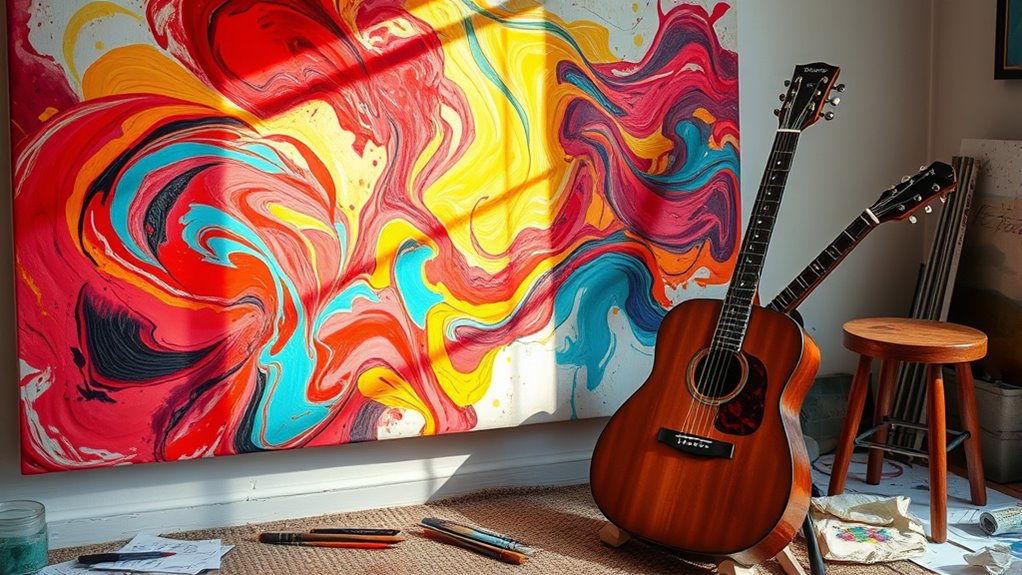
Have you ever felt overwhelmed by strong emotions and wondered how to cope? It’s a common experience, and finding healthy outlets for those feelings can make a big difference. One effective way is through emotional expression, which allows you to process what you’re feeling instead of bottling it up. Using art or music as tools for this purpose isn’t just about creating pretty pictures or melodies; it’s a form of creative therapy that helps you access and understand your inner emotional landscape. When you engage with these creative outlets, you’re giving yourself permission to explore your feelings in a safe, non-judgmental space.
Express your feelings through art and music to process emotions safely and creatively.
Creative therapy, which includes art and music, taps into your subconscious, revealing emotions that might be hard to articulate through words alone. For example, if you’re feeling angry or sad, painting or drawing can serve as a powerful channel to express those complex emotions without the need for verbal explanation. Similarly, playing an instrument, singing, or even listening to music that resonates with your mood can help you release pent-up feelings and find relief. This process isn’t about producing a masterpiece or a hit song; it’s about connection—connecting with your emotions and letting them flow through your chosen medium.
Engaging in artistic or musical activities regularly can foster emotional resilience. When you create, you’re actively processing your experiences, making sense of them, and sometimes gaining perspective. For instance, sketching your feelings in a journal or composing a song about a recent event can help you clarify what’s going on inside. This approach not only alleviates emotional distress but also promotes self-awareness and self-acceptance. Over time, you’ll notice that expressing yourself through art or music can become an essential part of your emotional self-care routine, helping you navigate life’s challenges with greater ease.
Moreover, the act of creating doesn’t require special talent or training—just the willingness to explore your feelings. Whether you’re doodling in a notebook, painting on a canvas, or improvising on a piano, the focus is on emotional expression rather than perfection. This mindset helps you release tension and gain insight into your emotional state. If you’re unsure where to start, guided activities like art therapy classes or music workshops can provide structure and support. Recognizing that emotional expression can be a powerful tool in managing stress and trauma is an important aspect of emotional health. Ultimately, using art or music as a form of creative therapy offers a meaningful way to process emotions, heal, and grow. It transforms raw feelings into something tangible, empowering you to face your emotional world with honesty and courage.

Art Therapy Cards, 42 Guided Drawing & Reflection Journal Prompts for Adults, Art Therapy Supplies, Emotional Regulation & Mental Health Gift
- Discover Emotions Through Art: Guided doodling and journaling prompts
- Simple 3-Step Process: Choose, doodle, reflect with color-coded themes
- Versatile Self-Care Tool: Suitable for daily routines and professional use
As an affiliate, we earn on qualifying purchases.
As an affiliate, we earn on qualifying purchases.
Frequently Asked Questions
Can Children Effectively Use Art or Music to Process Emotions?
Yes, children can effectively use art and music to process emotions. These forms of creative expression help boost their emotional literacy, allowing them to identify and understand feelings better. When children create or listen to art and music, they learn to express what they might not otherwise verbalize. This process supports emotional regulation and resilience, giving kids a healthy outlet to explore and manage their emotions confidently.
Are Certain Art or Music Forms Better for Specific Emotions?
You’ll find that different art and music forms often suit specific feelings. Art therapy, with its gentle brushstrokes, helps you explore calmness or sadness, while musical expression—like lively tunes—can lift your spirits or release energy. Trust your instincts; some colors or melodies resonate more deeply with certain emotions. Experimenting with various forms lets you discover what helps you process each feeling best, making emotional healing more enjoyable and effective.
How Do I Know if My Emotional Processing Through Art or Music Is Successful?
You’ll know your emotional processing through art or music is successful when you notice increased emotional awareness and a sense of relief or clarity afterward. Pay attention to how you feel during and after your creative expression—if it helps you understand or release emotions, it’s working. Trust your instincts; if it fosters a deeper connection to your feelings and provides catharsis, you’re on the right track.
Can Art or Music Therapy Replace Traditional Psychological Treatment?
Think of art and music therapy as a bridge, guiding you across emotional rivers. While expressive therapy helps you explore feelings, it can’t fully replace traditional psychological treatment. These art forms serve as valuable tools for emotional expression, but for all-encompassing mental health support, combining them with professional therapy is best. Relying solely on creative outlets might leave some emotional needs unmet, like a bridge that doesn’t lead to the other side.
What Are Common Challenges Faced When Using Art or Music for Emotional Healing?
When using art or music for emotional healing, you often face challenges like creative blocks that hinder self-expression. Emotional overwhelm can make it hard to start or continue, causing frustration. You might also struggle to interpret your feelings accurately or feel vulnerable sharing your work. These obstacles can slow progress, but with patience and support, you can overcome them and find meaningful relief through your creative outlets.

Zorveiio 8 Key Mini Kalimba Thumb Piano, 2.75" Oval
- Ethereal Relaxing Sound: Soft, bell-like tones for relaxation
- Compact and Portable: Measures 2.75" x 2.05" x 0.98" with lanyard
- Easy to Carry: Includes lanyard for hanging on bags or keys
As an affiliate, we earn on qualifying purchases.
As an affiliate, we earn on qualifying purchases.
Conclusion
As you pick up a brush or let melodies wash over you, you create a sanctuary where emotions flow freely, like colors blending on a canvas or notes weaving through the air. Through art and music, you transform overwhelming feelings into something tangible and beautiful, offering clarity amid chaos. Embrace these creative outlets as your refuge—each stroke and chord guiding you toward healing, where your inner landscape becomes a vibrant masterpiece of resilience and self-discovery.

Art Therapy Journal for Adults: Inspiring Creative Prompts for Addressing Stress, Depression, Anxiety, and Life Transitions, Art Therapy for Enhanced Relaxation, Self-Expression, and Personal Insight.
As an affiliate, we earn on qualifying purchases.
As an affiliate, we earn on qualifying purchases.
Art Therapy Cards, 42 Guided Drawing & Reflection Journal Prompts for Adults, Art Therapy Supplies, Emotional Regulation & Mental Health Gift
- Discover Emotions Through Art: Guided doodling and journaling prompts
- Simple 3-Step Process: Choose, doodle, reflect with color-coded themes
- Versatile Self-Care Tool: Suitable for daily routines and professional use
As an affiliate, we earn on qualifying purchases.
As an affiliate, we earn on qualifying purchases.