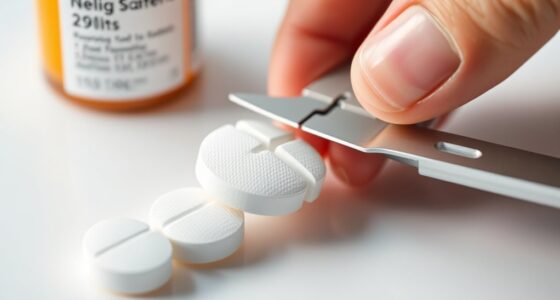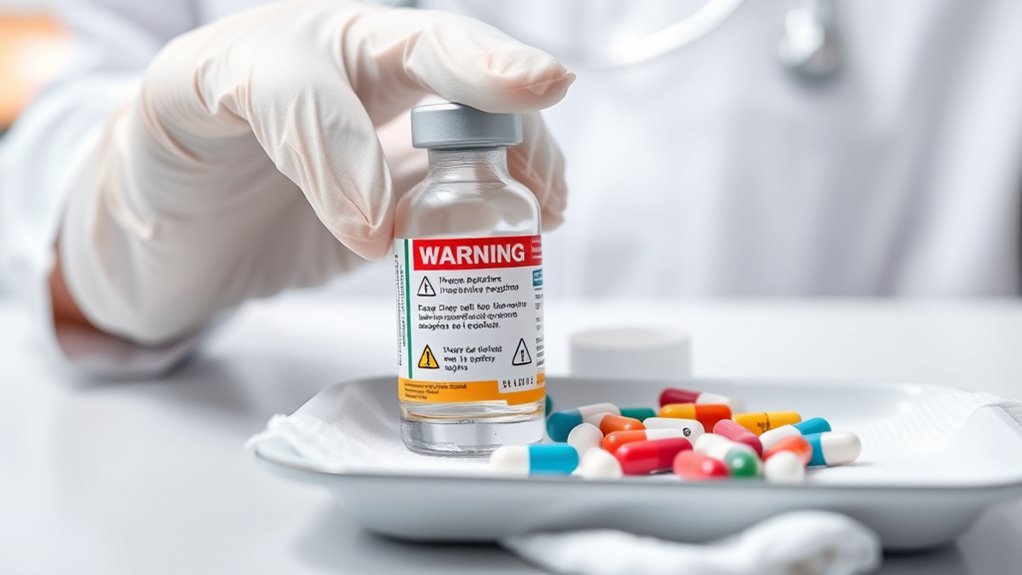

To recognize and handle adverse drug reactions, stay alert for unusual symptoms like rashes, swelling, nausea, or mental changes, and report them promptly to your healthcare provider. Regular monitoring through check-ups, blood tests, and symptom observations helps catch issues early. Always follow your prescribed instructions, keep a list of all medications and supplements, and discuss any concerns with your healthcare team. Continuing this approach will empower you to manage reactions effectively and stay safe with your medications.
Key Takeaways
- Be alert for unusual symptoms like rashes, swelling, or mental changes and report them promptly to healthcare providers.
- Regular monitoring through tests and assessments helps detect ADRs early and ensures medication safety.
- Maintain an updated medication list, including OTC drugs and supplements, to identify potential interactions.
- Follow prescribed instructions carefully and communicate any concerns or side effects to your healthcare team.
- Early recognition and prompt reporting of adverse reactions prevent escalation and ensure effective management.
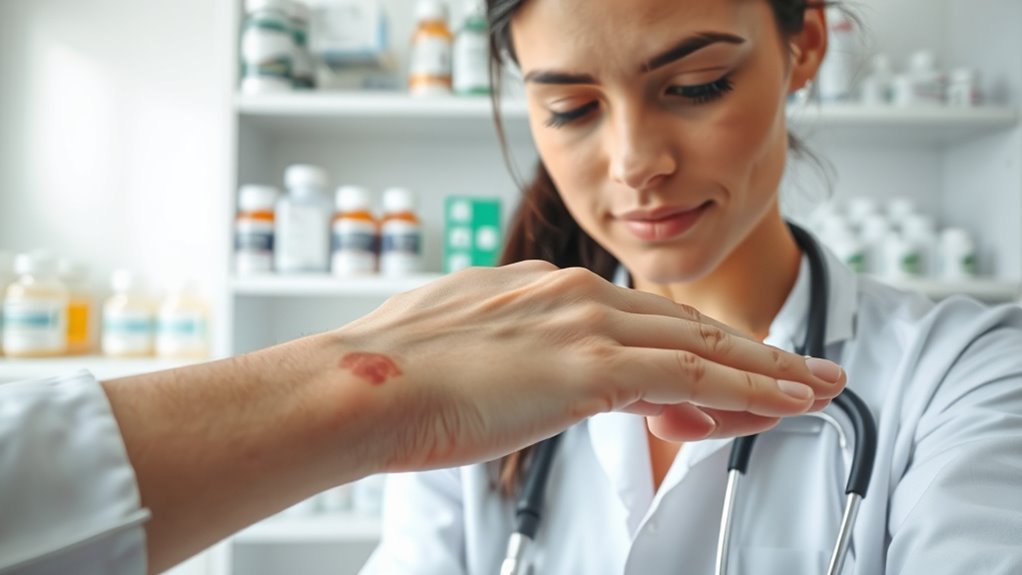
Adverse drug reactions (ADRs) are unwanted or harmful effects that occur when you take medications as prescribed. Recognizing these reactions early is essential because they can range from mild discomfort to severe health complications. One common cause of ADRs is drug interaction, which happens when your prescribed medication interacts with other drugs, supplements, or even certain foods. These interactions can amplify side effects or reduce the effectiveness of your treatment. For instance, combining a blood thinner with certain pain relievers can increase bleeding risk, making it critical to be aware of potential interactions. To minimize this risk, your healthcare provider must consider all medications, including over-the-counter drugs and supplements, to prevent harmful interactions.
Patient monitoring plays a pivotal role in catching ADRs before they escalate. Regular check-ins with your healthcare provider allow them to observe how your body responds to medication. Monitoring can involve blood tests, physical assessments, or symptom checks, depending on the drug involved. If you notice unusual symptoms—such as rashes, swelling, persistent nausea, or changes in mental state—it’s important to report these promptly. Monitoring isn’t just about catching side effects; it also helps guarantee your medication is working as intended. For example, blood tests can determine if a drug’s levels are within the therapeutic range, reducing the risk of toxicity or ineffectiveness.
Understanding the significance of patient monitoring and drug interaction awareness empowers you to take an active role in your healthcare. Always follow your prescribed instructions carefully and keep an open line of communication with your healthcare team. If you’re starting a new medication, ask about possible interactions with what you’re already taking. Keep a detailed list of all your medications and share it during appointments. This helps your provider make informed decisions and adjust your treatment plan if needed. Be vigilant about any new or worsening symptoms, and don’t hesitate to seek medical advice if something feels off.
adverse drug reaction monitoring kit
As an affiliate, we earn on qualifying purchases.
As an affiliate, we earn on qualifying purchases.
Frequently Asked Questions
How Can Patients Report Adverse Drug Reactions Effectively?
You can report adverse drug reactions effectively by providing clear patient feedback through established reporting platforms. Make sure to include detailed information about your symptoms, the medication taken, and timing. Use official reporting platforms like national databases or online forms to guarantee your feedback reaches healthcare professionals quickly. Being specific and prompt helps them identify patterns and improve patient safety, so don’t hesitate to share your experience thoroughly.
Are There Specific Risk Factors Increasing ADR Likelihood?
Did you know that about 10% of adverse drug reactions are linked to genetic predispositions? You’re at higher risk if you have genetic factors that affect drug metabolism or if you’re taking multiple medications that interact. Medication interactions can amplify ADR chances, especially in older adults. Being aware of your genetic makeup and informing your healthcare provider about all medicines you take can help reduce your risk of adverse reactions.
What Role Do Genetics Play in Adverse Reactions?
Genetics play a significant role in adverse reactions because your genetic predisposition can influence how you metabolize medications. Pharmacogenomics testing helps identify these genetic factors, allowing you to tailor drug choices and dosages more safely. By understanding your genetic makeup, you and your healthcare provider can reduce the risk of adverse reactions, ensuring that the medications you take are both effective and safe based on your unique genetic profile.
How Do Healthcare Providers Differentiate ADRS From Other Conditions?
You can differentiate ADRs from other conditions by actively monitoring symptoms and noting any new or unusual signs after medication use. Because diagnostic challenges exist, you should consider timing, medication history, and symptom patterns. Healthcare providers often rule out other causes through careful assessment, labs, or trial adjustments. Staying vigilant helps identify ADRs early, ensuring timely management and reducing the risk of complications.
Can ADRS Develop After Long-Term Medication Use?
Yes, adverse drug reactions can develop after long-term medication use. You might notice chronic effects or a delayed onset of symptoms even after years of taking the medication. It’s essential to stay alert for new or worsening symptoms, as these could signal an ADR. Regular monitoring and communication with your healthcare provider help catch delayed reactions early, ensuring safe management of your ongoing treatment.
medication side effects alert device
As an affiliate, we earn on qualifying purchases.
As an affiliate, we earn on qualifying purchases.
Conclusion
By staying vigilant and promptly recognizing adverse drug reactions, you can prevent serious health complications. It’s understandable to worry about missing signs, but your awareness and quick action make all the difference. Don’t let fear hold you back—your attentiveness could save a life, including your own. Trust yourself to notice the warning signs, ask questions, and seek help when needed. Your proactive approach protects you and those around you, creating safer medication experiences for everyone.
As an affiliate, we earn on qualifying purchases.
patient medication tracking journal
As an affiliate, we earn on qualifying purchases.
As an affiliate, we earn on qualifying purchases.