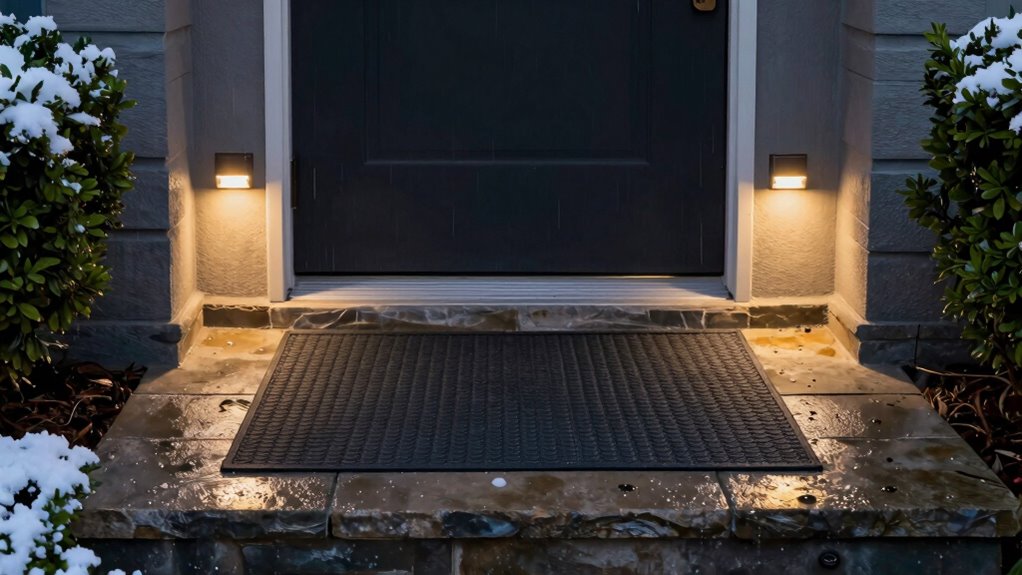

To improve your entryway safety during rain, snow, and darkness, focus on good lighting, keeping the area clutter-free, and maintaining non-slip surfaces. Regularly check and replace outdoor lights, clean dirt or debris blocking illumination, and consider motion-sensor lights. Use non-slip mats and secure outdoor rugs to prevent slips. Clear snow and ice promptly, repair uneven surfaces, and use salt or sand for better traction. These simple steps can make a big difference in safety—learn more to keep your entryway secure year-round.
Key Takeaways
- Install motion-sensor and outdoor lighting for better visibility in darkness and poor weather conditions.
- Use non-slip mats and heated surfaces to prevent slips on wet, icy, or snowy entryways.
- Keep pathways clear of snow, ice, and debris to ensure safe, unobstructed access.
- Organize outdoor items to reduce clutter, minimizing trip hazards during adverse weather.
- Regularly inspect and maintain surfaces, lighting, and drainage to prevent hazards year-round.
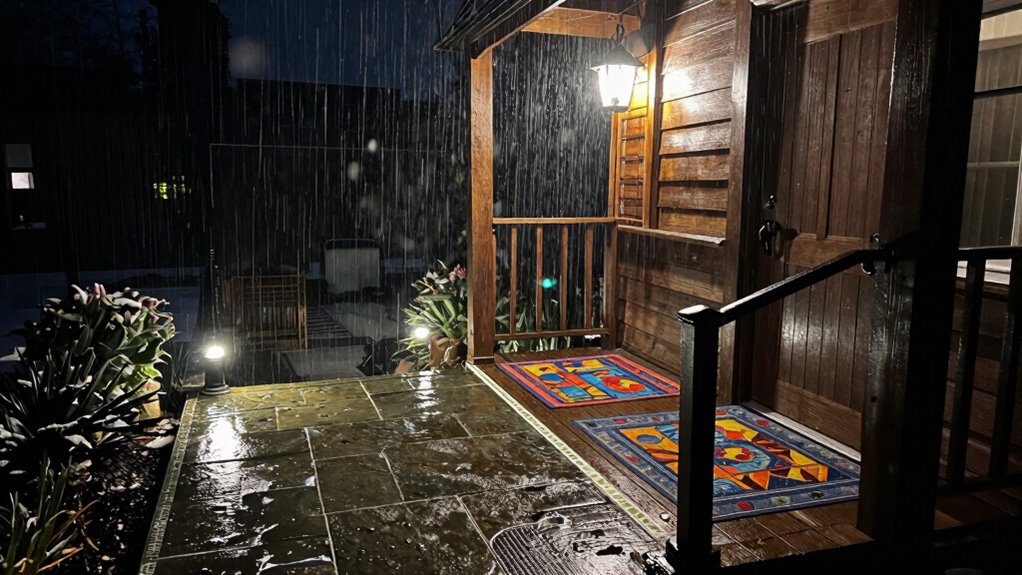
Managing your entryway can be hazardous during rain, snow, and darkness, making safety a top priority. When weather conditions worsen, the risk of slips, trips, and falls increases considerably. To reduce these dangers, start with lighting maintenance. Proper lighting ensures you can see clearly when it’s dark outside, helping you identify potential hazards like icy patches or cluttered areas. Regularly check your outdoor lights to guarantee they’re functioning correctly, replacing bulbs as needed and cleaning any dirt or debris that may block the light. Consider installing motion-sensor lights that turn on automatically when you approach, providing illumination exactly when you need it most. Bright, consistent lighting not only improves visibility but also deters intruders, adding an extra layer of security.
Ensure your entryway is well-lit and clear of hazards during bad weather for safety and security.
Next, focus on keeping your entryway clutter-free. During bad weather, clutter can quickly become a tripping hazard. Shoes, umbrellas, and outdoor gear left scattered around the entrance can cause you or visitors to stumble, especially in low-light conditions. Make it a habit to regularly tidy up your entryway, using hooks, shelves, or storage benches to organize items neatly. Keep a designated spot for wet umbrellas and muddy shoes to prevent water and dirt from spreading across the doorway. This organized approach minimizes hazards and ensures you have a clear path when entering or leaving your home, even in inclement weather. Additionally, entryway organization can help prevent accidents caused by clutter and improve overall safety.
In addition to lighting and clutter management, consider adding non-slip mats or rugs at your entryway. These mats can provide extra traction on wet or icy surfaces, reducing the likelihood of slipping. Make sure they’re securely anchored and in good condition, replacing them if they become worn or slippery. If you live in an area with frequent snow and ice, think about investing in heated mats or applying ice melt to your steps regularly. These measures, combined with proper lighting and clutter control, create a safer environment during challenging weather conditions.
Finally, pay attention to your outdoor surfaces. Repair any cracks, uneven patches, or loose paving stones that could cause falls. Clear snow and ice promptly and use salt or sand to improve traction. Keep pathways well-maintained and easily accessible, especially during winter months. Additionally, outdoor surface maintenance plays a crucial role in prevention, ensuring your pathways remain safe and hazard-free throughout the year. By taking these proactive steps—maintaining lighting, organizing entryway clutter, and ensuring your outdoor surfaces are safe—you greatly reduce the risk of accidents. Your focus on these details turns your entryway into a secure, welcoming space, no matter what the weather throws at you.
outdoor motion sensor security lights
As an affiliate, we earn on qualifying purchases.
As an affiliate, we earn on qualifying purchases.
Frequently Asked Questions
How Can I Prevent Ice Buildup on My Entryway?
You can prevent ice buildup by regularly removing snow from your entryway using shovels or snow blowers. After clearing, apply salt or salt alternatives like calcium magnesium acetate or sand to melt existing ice and provide traction. Make sure to keep up with frequent snow removal during storms and reapply de-icing materials as needed. This proactive approach helps maintain a safe, slip-free entryway even in harsh winter conditions.
What Lighting Options Are Best for Dark Evenings?
Lighting your entryway for dark evenings is a walk in the park when you use solar lanterns and motion sensors. Solar lanterns soak up sunlight during the day, providing eco-friendly illumination at night. Motion sensors turn on lights automatically when you approach, ensuring safety without fumbling for switches. This combo brightens your path and keeps your entryway secure, making every evening a smooth stroll rather than a stumble.
How Often Should I Replace Entryway Mats?
You should replace entryway mats when they become worn, stained, or lose their grip, typically every 6 to 12 months. Pay attention to mat material—rubber or coir mats tend to wear differently—and guarantee proper mat placement to trap moisture and dirt effectively. Regularly inspect your mats, and replace them as needed to maintain safety and cleanliness, especially during rainy or snowy seasons when the risk of slips increases.
Are There Eco-Friendly Ways to Melt Snow?
Think of it as fighting fire with water—eco-friendly snow melting options exist. You can use biodegradable deicers and recycled snow melt, which break down naturally and reduce environmental harm. These alternatives are safe for pets and plants, unlike traditional chemicals. By choosing biodegradable deicers and recycled snow melt, you’re making a responsible choice that keeps your entryway safe without harming the planet. It’s truly a win-win situation.
How Can I Improve Traction on Icy Steps?
To improve traction on icy steps, apply slip-resistant coatings designed for icy surfaces, which create a textured layer to prevent slips. Make sure your footwear has good traction by choosing boots with slip-resistant soles, especially those with deep treads or rubber outsoles. Regularly check and clean your steps to remove ice buildup, and consider adding removable traction cleats to your footwear during icy conditions for extra grip.
As an affiliate, we earn on qualifying purchases.
Conclusion
To keep your entryway safe during rain, snow, and darkness, make certain to regularly clear ice, add non-slip mats, and install proper lighting. Did you know that falls at entryways account for nearly 50% of winter injuries? By taking simple steps, you can greatly reduce this risk and guarantee your family’s safety. Stay vigilant and prepared—your home’s entrance should be a secure and welcoming space, no matter the weather.
heated outdoor mats for snow and ice
As an affiliate, we earn on qualifying purchases.
As an affiliate, we earn on qualifying purchases.
As an affiliate, we earn on qualifying purchases.