
To improve outdoor safety around steps, paths, and entrances, regularly inspect and maintain surfaces, fixing cracks and loose fixtures promptly. Keep walkways clear of debris, snow, or ice, and apply anti-slip treatments where needed. Make certain handrails are sturdy and visible, adding reflective tape to edges for added support and visibility. Proper lighting is essential—check fixtures and replace bulbs promptly. Taking these steps now helps prevent accidents, and you’ll discover more tips to make outdoor spaces safer as you explore further.

Get health and wellness essentials delivered free with Prime
- Fast, free delivery on millions of items
- Prime Video, Amazon Music and more included
- Member-only deals all year
Key Takeaways
- Ensure proper lighting to illuminate steps, paths, and entrances, reducing visibility-related hazards.
- Regularly inspect and repair cracks, loose fixtures, and uneven surfaces to prevent trips and falls.
- Apply anti-slip treatments, strips, or tape on steps and ramps for added traction.
- Keep walkways clear of debris, snow, and ice, and use salt or sand during winter for safety.
- Install sturdy handrails with reflective tape and contrasting edge markings to enhance visibility and support.
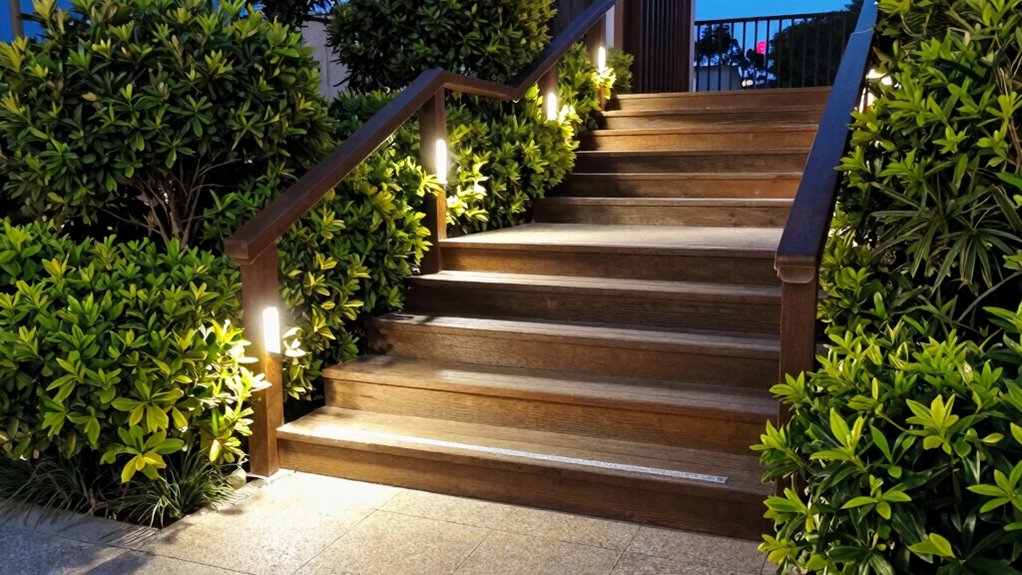
Planning to spend time outdoors? Ensuring your steps, paths, and entrances are safe is essential for a worry-free experience. One of the most effective ways to improve outdoor safety is focusing on lighting maintenance. Well-lit areas help you see potential hazards clearly, especially during evening hours when shadows can hide uneven surfaces or obstacles. Regularly check your outdoor lighting fixtures, replacing burnt-out bulbs and cleaning fixtures to maximize brightness. This simple step can notably reduce the risk of trips and falls, making your outdoor space safer for everyone.
Regularly maintain outdoor lighting to prevent trips and falls, ensuring safe, well-lit spaces for everyone.
Beyond lighting, slip prevention plays a key role in outdoor safety. Wet or icy surfaces pose a serious threat, especially on steps and pathways. To minimize this risk, keep your walkways clear of debris, leaves, and snow, which can create slippery surfaces. Use sand, salt, or ice melt during winter to improve traction on icy patches. Applying anti-slip treatments or strips to steps and ramps offers extra grip, helping you and others maintain footing even in adverse weather conditions. Always be mindful of changes in weather and take prompt action to address slippery surfaces before anyone gets hurt. Regularly inspecting your outdoor surfaces can help identify potential hazards early. Additionally, installing proper drainage can prevent water accumulation, reducing the likelihood of icy patches forming after rain or snow.
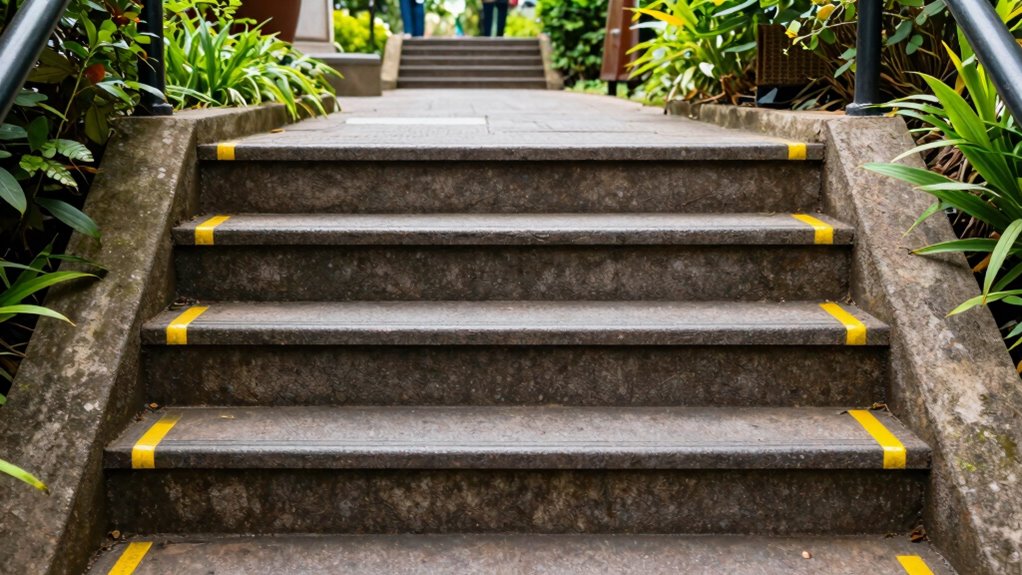
When it comes to steps and entrances, inspecting their condition regularly is essential. Cracks, loose handrails, or uneven surfaces can cause accidents. Repair or replace damaged sections promptly and ensure handrails are sturdy and securely attached. Handrails provide additional support, especially for those with limited mobility, so check that they’re at the right height and free of obstructions. Also, consider adding contrasting color strips or reflective tape to the edges of steps. These visual cues help you notice the edges more clearly, especially in low-light conditions, further reducing slip and trip risks. Proper lighting maintenance and visible markings can significantly enhance safety in these areas.
As an affiliate, we earn on qualifying purchases.
Frequently Asked Questions
How Can I Prevent Mold and Algae on Outdoor Steps?
To prevent mold and algae on outdoor steps, you should regularly clean the surfaces with a mixture of water and mild detergent, then scrub away any buildup. Use mold prevention and algae control treatments, especially in shady or damp areas. Guarantee proper drainage to avoid standing water, and keep the steps dry and well-ventilated. Regular maintenance and applying protective sealants also help reduce the chances of mold and algae growth.
What Lighting Options Are Best for Safety at Night?
Think of your outdoor space as a stage that needs perfect lighting. Solar lighting is your spotlight—affordable, eco-friendly, and easy to install—illuminating paths and steps with gentle, natural glow. Pair it with motion sensors that act as vigilant guards, activating lights only when needed, ensuring safety without wasting energy. Together, they create a well-lit environment, guiding visitors safely and reducing the risk of accidents after dark.
How Often Should Outdoor Safety Inspections Be Performed?
You should perform outdoor safety inspections at least quarterly, or every three months, to maintain ideal safety around steps, paths, and entrances. Regular inspections help identify hazards early, preventing accidents and ensuring compliance. Conduct a thorough safety audit during each inspection, checking for loose handrails, broken pavement, and adequate lighting. Increasing inspection frequency during adverse weather or high-traffic seasons is also wise, keeping safety measures up-to-date and effective year-round.
Are There Eco-Friendly Materials for Improving Outdoor Safety?
You can definitely use eco-friendly materials to enhance outdoor safety, like sustainable landscaping options such as permeable pavers and recycled rubber for pathways. These materials are durable, slip-resistant, and environmentally conscious. Combining eco-friendly signage with natural, sustainable landscaping not only guides visitors safely but also reduces environmental impact. Research confirms these options are effective and sustainable, making your outdoor space safer while supporting eco-conscious practices.
How Do I Fix Loose or Uneven Paving Stones?
To fix loose or uneven paving stones, start with proper paving maintenance. Remove any loose stones, then level the base with sand or gravel. Use a tamper to stabilize the area, ensuring evenness. For added stone stabilization, re-set the stones with a layer of joint sand, pressing down firmly. Regular inspections and maintenance prevent future issues, keeping your pathways safe and stable.
outdoor pathway lighting fixtures
As an affiliate, we earn on qualifying purchases.
As an affiliate, we earn on qualifying purchases.
Conclusion
By taking simple steps to improve outdoor safety, you create a haven of security around your home’s steps, paths, and entrances. Imagine a night where the glow of well-placed lights guides your way, contrasting the darkness that once hid potential hazards. Just as a sturdy handrail offers support, your efforts turn a risky walkway into a safe passage. Safety isn’t just about prevention; it’s about transforming your outdoor space into a welcoming, secure sanctuary.
As an affiliate, we earn on qualifying purchases.
outdoor handrails with reflective tape
As an affiliate, we earn on qualifying purchases.
As an affiliate, we earn on qualifying purchases.
Cold & flu season Picks
humidifiers
As an affiliate, we earn on qualifying purchases.