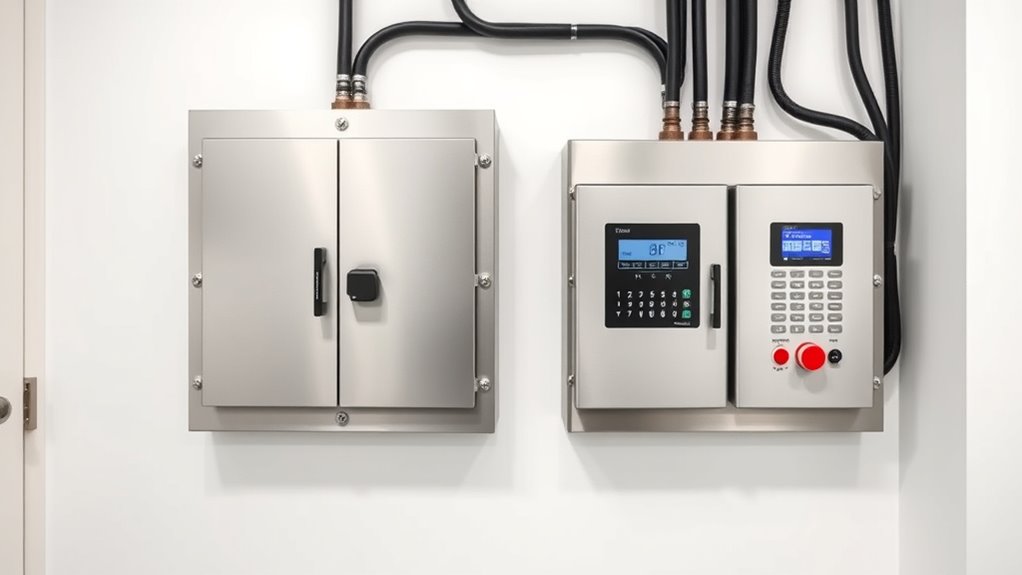

I see both manual and automatic transfer switches as great options, but they serve different needs. Manual switches let you control power transfers yourself and are simple to install, making them budget-friendly. Automatic switches detect outages and switch power seamlessly, offering hands-free convenience. Your choice depends on how much control, ease, and speed you want during outages. To find out which type fits your needs best, keep going to explore more details.
Key Takeaways
- Automatic transfer switches enable seamless, hands-free power switching during outages, while manual switches require user intervention.
- Automatic switches often include advanced safety features like surge protection and remote monitoring, unlike manual models.
- Manual switches are typically more affordable and simpler to install but rely on user operation during power changes.
- Automatic switches support quick transfer times (under a second), ideal for critical applications needing continuous power.
- Choosing between manual and automatic depends on budget, installation complexity, and desired convenience or automation level.

GenerLink Automatic Transfer Switch for Home Generator w/Surge, 30AMP
- Automatic Transfer Switch: 30 Amp, 240V compatible, seamless connection
- Weather-Resistant Design: UV-resistant, durable for outdoor use
- Supports Up to 200 Amp: Suitable for most residential electrical services
As an affiliate, we earn on qualifying purchases.
GenerLink Automatic Transfer Switch for Home Generator

If you’re looking for a reliable and easy-to-install transfer switch for your home generator, the GenerLink Automatic Transfer Switch is an excellent choice. It supports generators below 8,500 watts and connects directly to your electrical panel with a 20-foot cable, allowing automatic power transfer during outages. Designed for outdoor use, it’s weatherproof and built to withstand all climates. With advanced safety features like surge protection and back-feed prevention, it it guarantees safety for your home and utility workers. Quick to install and compatible with inverter and traditional generators, it provides seamless, hands-free backup power, giving you peace of mind when the power goes out.
Best For: homeowners seeking a reliable, outdoor-ready automatic transfer switch for seamless backup power during outages with generator support below 8,500 watts.
Pros:
- Easy and quick installation for homeowners and licensed electricians
- Weatherproof design ensures durability in all outdoor environments
- Advanced safety features, including surge protection and back-feed prevention
Cons:
- Supports only generators below 8,500 watts, limiting larger power needs
- Requires connection to a 200-amp electrical service, which may not suit very small homes
- Does not include a generator, only the transfer switch and cable

63A 110V Automatic/Manual Transfer Switch, DIN Rail Mount 110V for Generator Backup Power & Gas Furnace, 50/60Hz, LED Display, CE Certified
- Automatic and Manual Switching: Seamless power transfer with manual control
- Protection Features: Over-voltage, under-voltage, over-current protection
- LED Display: Real-time voltage and system status
As an affiliate, we earn on qualifying purchases.
63A 110V Transfer Switch with LED Display for Generator Backup Power
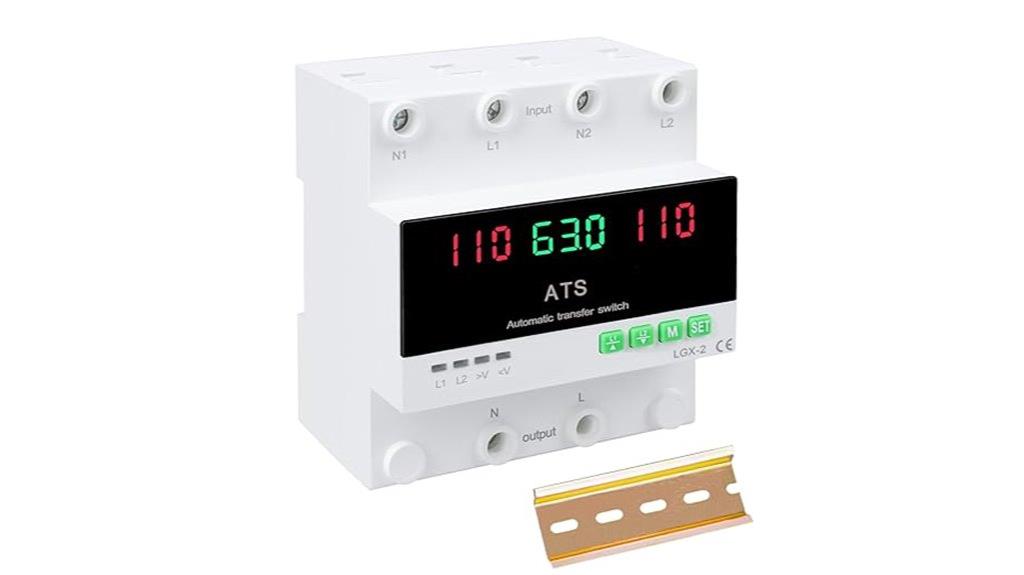
A 110V transfer switch with an LED display is an excellent choice for homeowners and small business owners seeking reliable generator backup power. It features a 63A capacity, supporting both automatic and manual transfer modes to guarantee seamless power switching during outages or voltage fluctuations. The high-definition LED display provides real-time voltage monitoring, keeping you informed about system status. Built-in safety features like overvoltage, undervoltage, and overcurrent protections shield your devices from electrical issues. Its compact design simplifies installation, making it ideal for various applications, including residential, commercial, and industrial settings where dependable backup power is essential.
Best For: homeowners and small business owners seeking reliable, seamless backup power with easy monitoring and safety features.
Pros:
- Supports both automatic and manual transfer modes for flexible power management
- High-definition LED display provides real-time voltage monitoring for better system awareness
- Compact, easy-to-install design suitable for various residential and commercial setups
Cons:
- Limited to 110V applications, not suitable for higher voltage systems
- May require professional installation for optimal setup and safety compliance
- Advanced features might be excessive for very basic backup power needs

2P Dual Power Automatic Transfer Switch Generator Changeover Switch AC110V 63A automatic transfer switch generator automatic transfer switch whole house transfer switch
- Material: Flame retardant PC with silver contacts
- Application: Suitable for homes, factories, labs, farms
- Functionality: Ensures continuous power supply
As an affiliate, we earn on qualifying purchases.
Dual Power Automatic Transfer Switch (63A, AC110V)
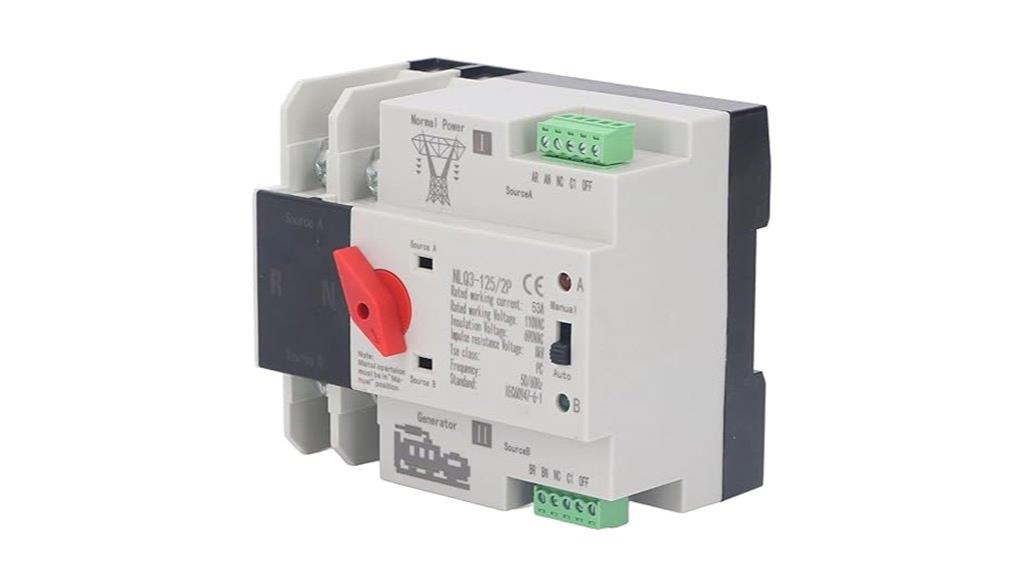
The Dual Power Automatic Transfer Switch (63A, AC110V) stands out for its reliable automatic switching capability, making it ideal for those seeking uninterrupted power in residential, commercial, or industrial settings. Constructed from flame-retardant PC material with silver contacts, it offers high insulation, temperature resistance, and longevity. It automatically switches to backup power during outages and reverts when normal power resumes, ensuring continuous supply. Suitable for PZ30 distribution boxes and mounted on a standard 35mm rail, it supports dual operation modes—automatic and manual—for flexible control. Its compact design emphasizes safety, reliability, and ease of installation, making it a practical choice for whole-house power transfer.
Best For: homeowners, business owners, and facility managers seeking reliable, automatic power transfer solutions for uninterrupted electricity supply.
Pros:
- Ensures continuous power by automatically switching to backup during outages
- Constructed from flame-retardant PC material with silver contacts for durability and safety
- Easy to install on standard 35mm rails with dual operation modes for flexibility
Cons:
- Limited to 63A capacity, which may not suit larger power needs
- Designed specifically for 110V AC systems, restricting use in higher voltage environments
- Requires proper setup and understanding of operation modes for optimal performance

100A Generator Transfer Switch,24000W General-Duty Double-Throw Safety Switch,120/240-Volt Transfer Switches,Stronger Stability Manual Transfer Switches,NEMA 3R Standards for Outdoor and Indoor
- Amperage Capacity: 100A maximum handling capacity
- Power Output: 24000W power capability
- Easy Power Switching: Simple lever for seamless transfer
As an affiliate, we earn on qualifying purchases.
100A Generator Transfer Switch, 24000W Double-Throw Safety Switch
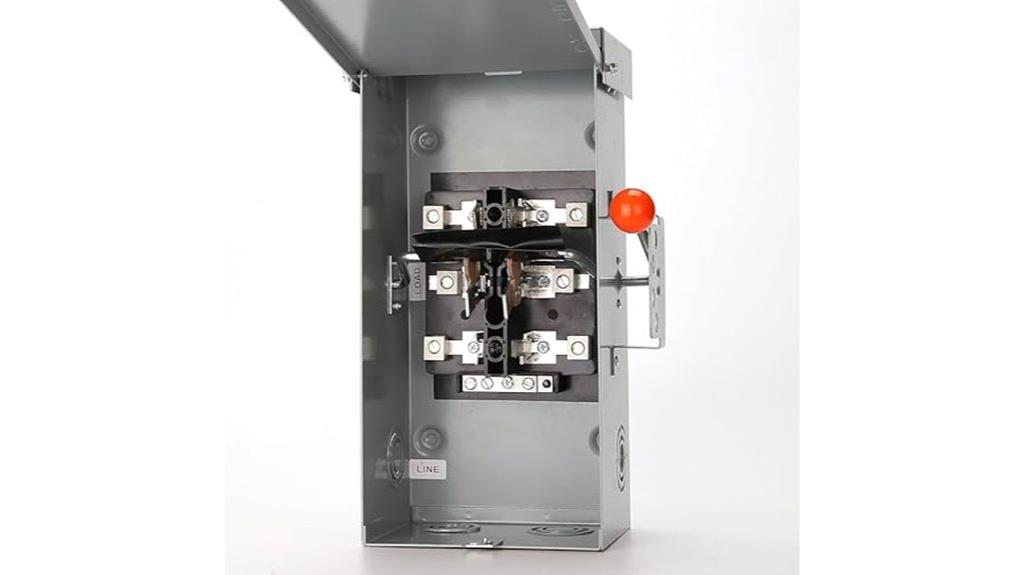
When selecting a transfer switch capable of handling the power demands of a whole household, the 100A Generator Transfer Switch with a 24,000W double-throw safety feature stands out. It efficiently switches power between the grid and auxiliary sources like a gas generator or solar, supporting high-demand appliances. Its straightforward manual operation and durable galvanized steel construction ensure long-term reliability. Safety is prioritized with a lock hole to prevent accidental shutdowns and internal grounding for added protection. Easy to install and weather-resistant per NEMA 3R standards, this switch offers a robust solution for reliable, safe, whole-house power transfer.
Best For: households seeking a reliable, high-capacity transfer switch to seamlessly switch power between the grid and auxiliary sources like generators or solar systems.
Pros:
- Handles up to 24,000W and 100A, suitable for entire household power needs
- Durable galvanized steel construction with weather resistance per NEMA 3R standards
- Features a lock hole and internal grounding for enhanced safety and protection
Cons:
- Installation is recommended to be performed by a professional electrician, which may add to initial costs
- Manual operation requires user intervention during switching, which may be less convenient than automatic systems
- Limited electronic components may reduce advanced automation or remote operation options
Upgraded Automatic Transfer Switch for Generator (100 Amp, 3P, 120/240V)
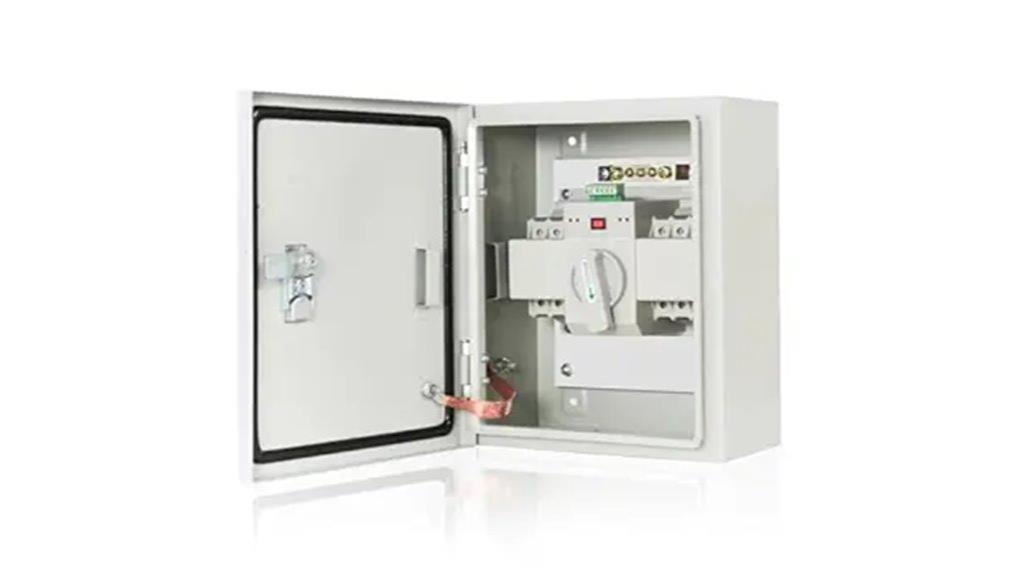
If you’re looking for a reliable transfer switch that seamlessly switches between utility power and a generator during outages, this upgraded 100 Amp, 3-phase automatic transfer switch is an excellent choice. It supports 120/240V power and features both automatic and manual modes, with real-time status indicators for easy monitoring. The smart control system automatically detects power sources and includes a one-touch reset for convenience. Its durable enclosure simplifies installation, and the lightweight design makes maintenance straightforward. With thorough wiring diagrams and lifetime technical support, this switch ensures safe, continuous power and reliable operation for residential, commercial, or industrial applications.
Best For: residential, commercial, and industrial users seeking a reliable, seamless power transfer solution during outages with easy operation and maintenance.
Pros:
- Supports both automatic and manual operation modes for versatile use
- Real-time status indicators facilitate easy monitoring of power sources
- Durable enclosure and lightweight design simplify installation and maintenance
Cons:
- Requires proper wiring and setup, which may need professional installation
- Limited to 100 Amp capacity, potentially insufficient for high-demand applications
- May involve a learning curve for users unfamiliar with transfer switch operation
Generac Guardian 24kW Home Standby Generator
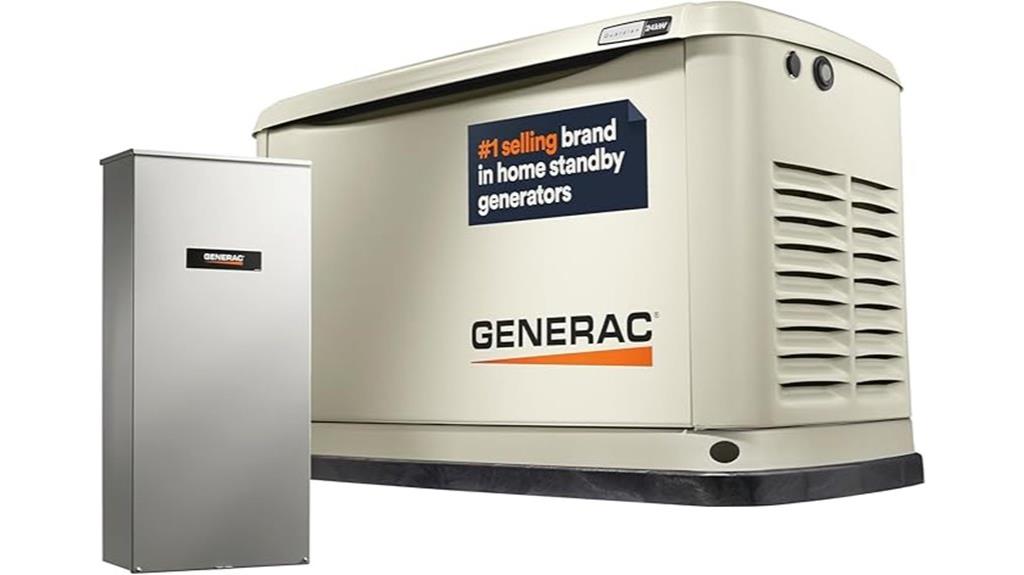
For homeowners seeking reliable whole-house backup during storms or outages, the Generac Guardian 24kW Home Standby Generator stands out thanks to its impressive 24,000-watt power output and advanced True Power Technology, which guarantees clean, stable electricity with minimal harmonic distortion. It’s designed for seamless, low-maintenance operation, compatible with natural gas or propane, and features quiet, fuel-efficient engines. With remote monitoring via Wi-Fi, I can check performance and receive alerts anytime. The included 200 Amp transfer switch ensures full-home protection, and its durable aluminum enclosure is built for outdoor use. Backed by a 5-year warranty, it offers peace of mind and long-term reliability.
Best For: homeowners seeking a reliable, whole-house backup generator with remote monitoring capabilities during storms and outages.
Pros:
- Provides a powerful 24,000-watt output with clean, stable power thanks to True Power Technology
- Equipped with Wi-Fi connectivity for real-time remote monitoring and maintenance alerts
- Durable aluminum enclosure and USA-engineered G-Force engine ensure long-term reliability and outdoor durability
Cons:
- Installation requires a certified electrician, which can add to initial setup costs
- The size and weight of the generator may require significant space and professional handling for installation
- Higher upfront investment compared to smaller or portable backup options
200 Amp Manual Transfer Switch
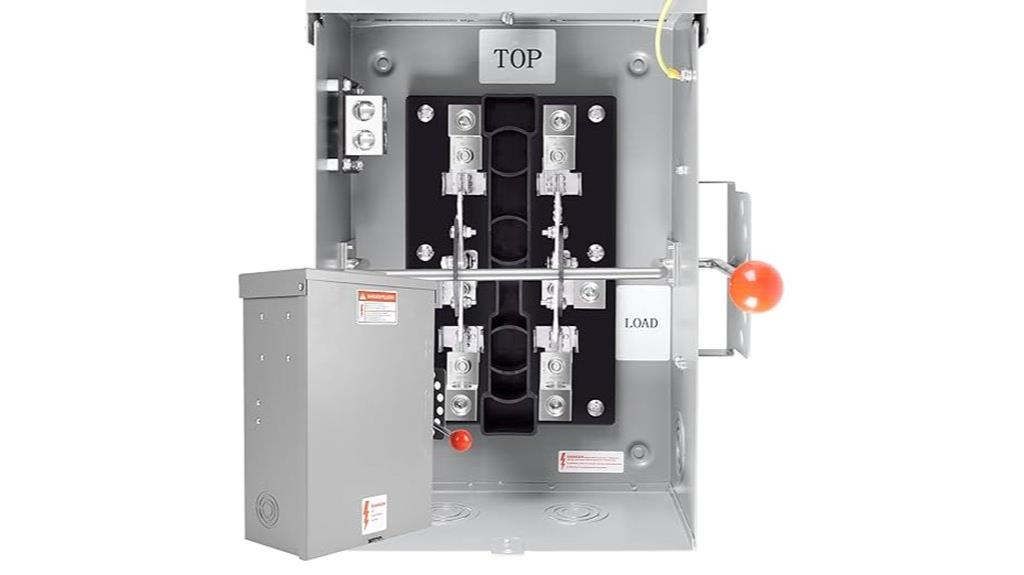
A 200 Amp manual transfer switch is the ideal choice for homeowners seeking a reliable and heavy-duty solution to switch between the grid and backup power sources. It can handle up to 200 amps and 48,000 watts, making it suitable for powering entire homes, including high-demand appliances like stoves and dryers. Its straightforward lever mechanism guarantees easy, dependable operation. Built with a galvanized steel enclosure that resists weather, corrosion, and rust, it’s designed for durability outdoors or indoors. Safety features, such as lock holes and internal grounding, protect users during installation and operation. Overall, it’s a robust, reliable option for seamless power transfer.
Best For: homeowners needing a durable, high-capacity transfer switch for seamless power transfer between grid and backup sources.
Pros:
- Handles up to 200A and 48,000W, suitable for entire homes and high-demand appliances
- Heavy-duty galvanized steel enclosure resistant to weather, rust, and corrosion
- Easy to install with internal space supporting wires up to 3 AWG and safety features like lock holes and grounding
Cons:
- Professional installation recommended to ensure safety and proper setup
- Manual operation may require user intervention during power transfer
- Larger size and weight may require sufficient space for installation
Mini ATS AC Automatic/Manual Transfer Switch 2P 63A 220V
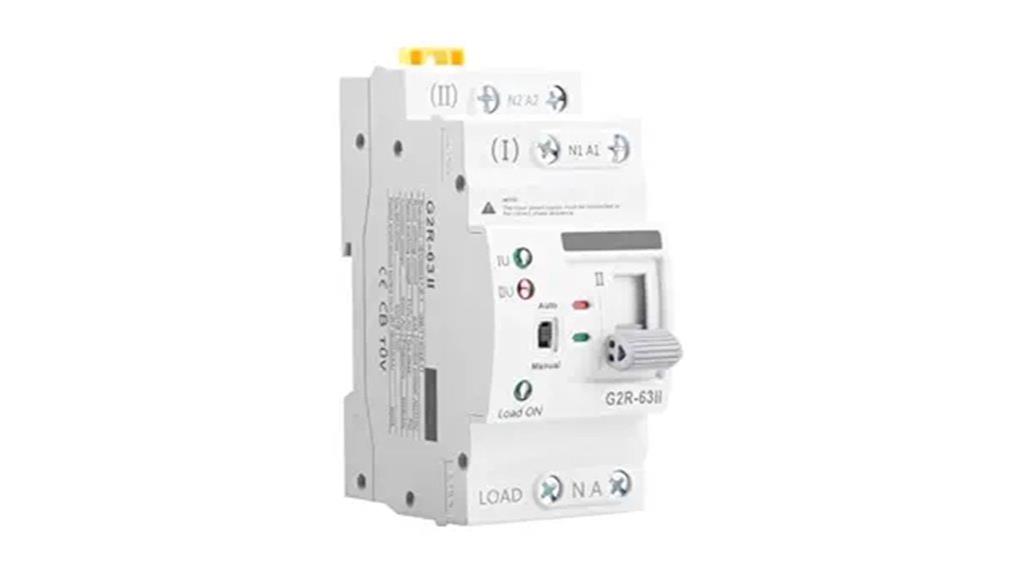
The Mini ATS AC Automatic/Manual Transfer Switch 2P 63A 220V stands out as an ideal choice for homeowners and small businesses seeking reliable power backup solutions. It seamlessly switches between main and backup power sources, with a rapid 0.05-second transfer time to prevent outages. In automatic mode, it detects power failures and switches automatically, while manual mode allows for easy, manual control. Its durable design supports 220V systems and includes protections against over- and under-voltage. Perfect for indoor or outdoor setups, it guarantees continuous, safe power, making it a versatile and dependable option for critical applications.
Best For: homeowners and small businesses seeking a reliable, rapid power backup solution to ensure uninterrupted power supply during outages.
Pros:
- Rapid 0.05-second transfer time ensures minimal power interruption
- Automatic and manual modes provide flexible control options
- Durable construction with over- and under-voltage protections enhances safety and longevity
Cons:
- Limited to 63A current, may not suit larger power needs
- Designed primarily for indoor or outdoor generator setups, not for complex electrical systems
- Requires proper installation and setup, which may need professional assistance
110V Dual Power Automatic Transfer Switch
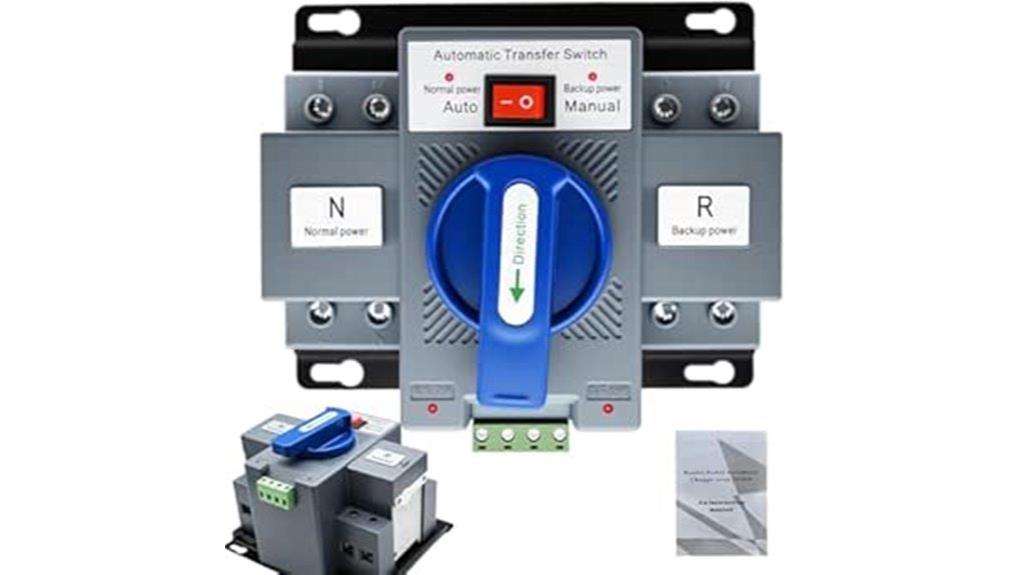
With its rapid 2-second transfer time, the V Dual Power Automatic Transfer Switch guarantees uninterrupted power in critical situations, making it ideal for homes, hospitals, and offices where seamless backup power is essential. It features 110V dual power support, 2P 63A capacity, and is CE certified, ensuring reliable performance. The switch offers both automatic and manual modes, monitoring phase A voltage to detect anomalies and switch sources accordingly. Its safety features protect against short circuits, overloads, and phase failures. The compact design and easy installation make it suitable for various environments, providing dependable power transfer when you need it most.
Best For: households, hospitals, and offices seeking reliable, seamless backup power with quick transfer capabilities.
Pros:
- Rapid 2-second transfer time ensures minimal power interruption during outages
- Supports both automatic and manual operation for flexible control
- CE certified with comprehensive safety features for enhanced protection
Cons:
- Limited to 110V systems, not suitable for higher voltage applications
- Installation may require some technical knowledge despite detailed instructions
- Designed primarily for smaller to medium power loads, may not support very large equipment
100Amp AC110V Automatic/Manual Transfer Switch
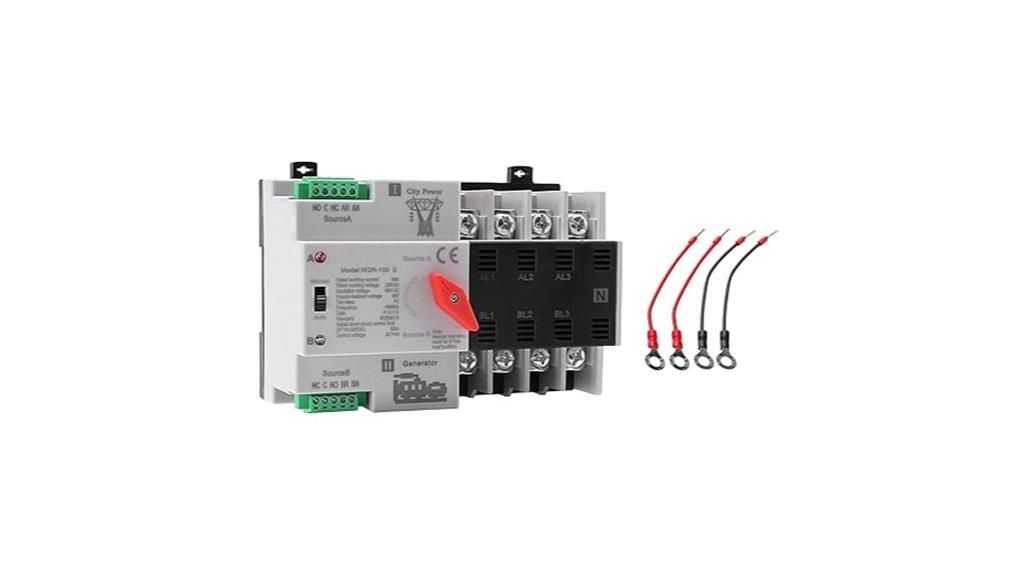
If you’re looking for a reliable transfer switch that seamlessly switches between power sources, the 100Amp AC110V Automatic/Manual Transfer Switch stands out as an excellent choice. It supports dual power inputs like mains, generators, and PV systems, ensuring continuous, safe power supply. With automatic mode, it switches within 0.05 seconds during outages, while manual mode allows easy user control. Built for 110V systems at 50/60Hz, it features over-voltage and under-voltage protection, supporting critical applications like hospitals and data centers. Made of durable high-quality materials, it’s designed for indoor and outdoor use, offering peace of mind with a 3-year warranty and excellent customer support.
Best For: users seeking a reliable, automatic/manual transfer switch for home, RV, or critical facilities to ensure continuous power from dual sources like mains, generators, or PV systems.
Pros:
- Supports automatic transfer within 0.05 seconds during power outages, ensuring minimal disruption.
- Compatible with various power sources including mains, generators, and photovoltaic systems, suitable for diverse applications.
- Made of durable high-quality materials with protection features against over-voltage and under-voltage.
Cons:
- Limited to 110V systems, not suitable for higher voltage applications.
- Requires proper installation on DIN rails, which may need technical expertise.
- May be overkill for small or non-critical power setups where simpler switches suffice.
ATS AC120V 20 Amp Auto Transfer Switch
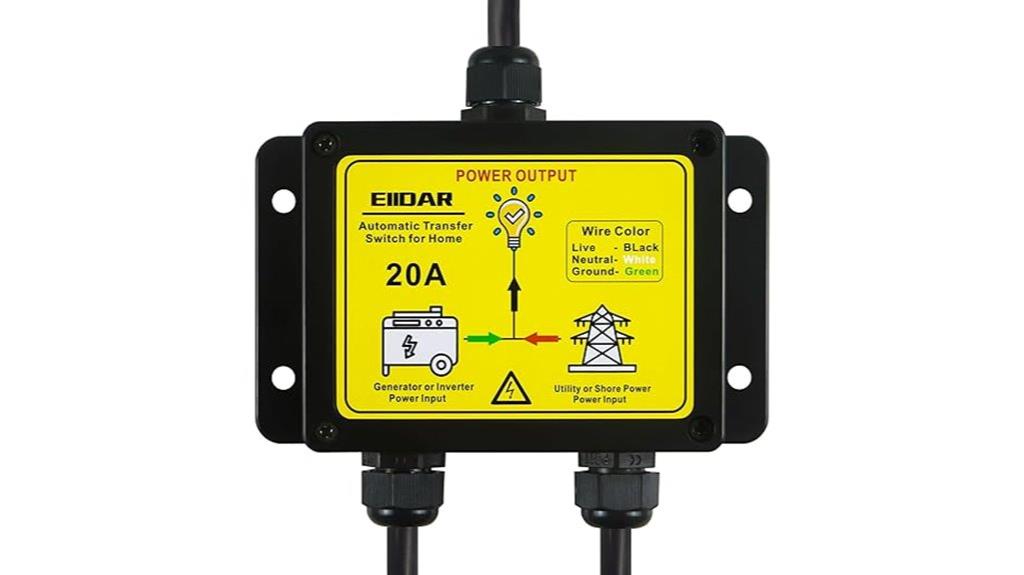
For homeowners seeking reliable, automatic backup power, the ATS AC120V 20 Amp Auto Transfer Switch stands out with its rapid switching capability—taking less than 30 milliseconds to transfer between utility and generator power. Its compatibility with standard cables makes installation straightforward, whether indoors or outdoors, thanks to IP65 protection and flame-retardant materials. This intelligent switch detects power fluctuations quickly, ensuring seamless transfer and preventing equipment damage. It provides stable, continuous power to essential appliances, reducing downtime and safeguarding household electronics. Overall, this transfer switch offers dependable, safe, and efficient backup power, making it an excellent choice for maintaining household stability during outages.
Best For: homeowners and small businesses seeking a reliable, automatic backup power solution that ensures seamless transfer and continuous operation during outages.
Pros:
- Rapid transfer time of less than 30 milliseconds minimizes power interruption.
- Compatible with standard cables and suitable for indoor and outdoor installation due to IP65 protection.
- Intelligent detection system provides stable power transfer and protects equipment from damage.
Cons:
- Installation may require some technical knowledge for optimal setup.
- Limited to 120V applications with a 20 Amp capacity, which may not suit larger power needs.
- Dependence on proper maintenance of relays and detection system to ensure consistent performance.
Automatic/Manual Transfer Switch 63Amp 110V for Home Generator

The Automatic/Manual Transfer Switch 63Amp 110V is an ideal choice for homeowners seeking reliable backup power solutions that seamlessly switch between main and generator sources. It features a mini ATS G2R that detects power failures and switches within 0.05 seconds, ensuring continuous power. The switch supports both automatic and manual modes, with indicator lights to show status. Its durable design, rated for 63Amp and compatible with 110V systems, makes it suitable for home generators, RVs, and outdoor applications. Easy to install on a DIN rail, it offers safety features like over- and under-voltage protections, providing peace of mind during outages.
Best For: homeowners, RV owners, and small businesses seeking reliable, automatic backup power switching solutions for home generators and outdoor applications.
Pros:
- Rapid 0.05-second switching ensures uninterrupted power supply during outages.
- Supports both automatic and manual modes for flexible operation.
- Durable and compact design with high-quality materials, suitable for indoor and outdoor use.
Cons:
- Requires proper installation on a DIN rail, possibly needing professional assistance.
- Limited to 63Amp and 110V systems, not suitable for higher voltage or current applications.
- Mechanical life over 5000 cycles may require replacement over extended use.
200 Amp Automatic Transfer Switch for Generac RXSW200A3, Indoor/Outdoor Power Management
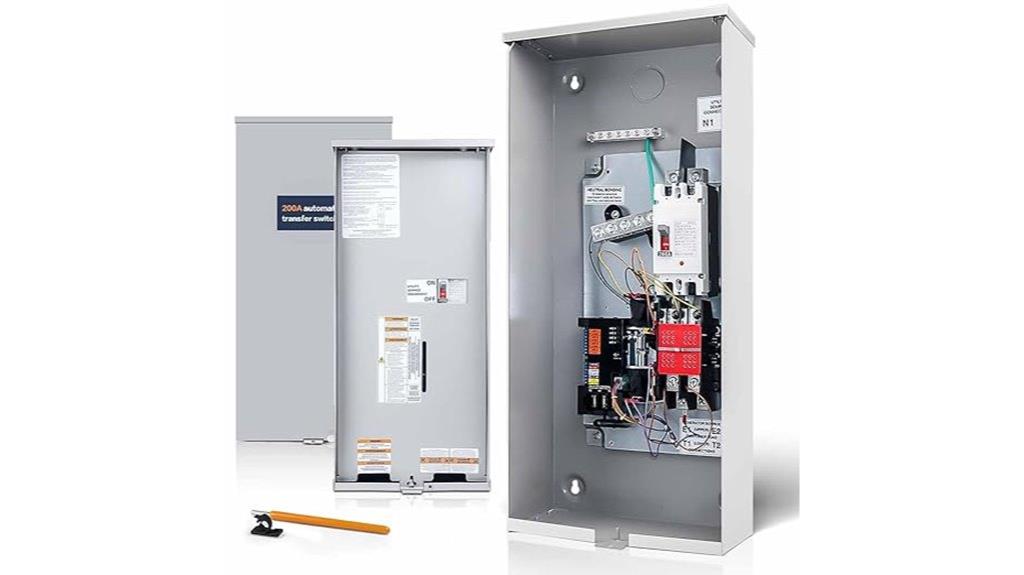
When selecting a transfer switch for your home, the 200 Amp Automatic Transfer Switch designed for Generac RXSW200A3 stands out because it seamlessly manages power during outages, whether installed indoors or outdoors. It’s compatible with 8-24 kW home standby generators and can power your entire household, including high-demand appliances. Its advanced digital power technology allows smart control of up to four HVAC loads without extra hardware. Built with a durable NEMA 3R aluminum enclosure, it resists rust and corrosion, ensuring reliable performance in various environments. Safety features and straightforward installation make it a practical, efficient choice for whole-house power management.
Best For: Homeowners seeking reliable, whole-house power management during outages with indoor/outdoor installation flexibility and advanced load control.
Pros:
- Seamless power transfer ensures reliable operation during outages
- Compatible with a wide range of home standby generators (8-24 kW)
- Advanced digital technology allows smart control of HVAC loads without additional hardware
Cons:
- Installation recommended to be performed by a professional electrician
- Dimensions and mounting requirements may require dedicated space and planning
- Limited to single-phase applications, not suitable for three-phase systems
AC120V 15Amp Automatic Transfer Switch
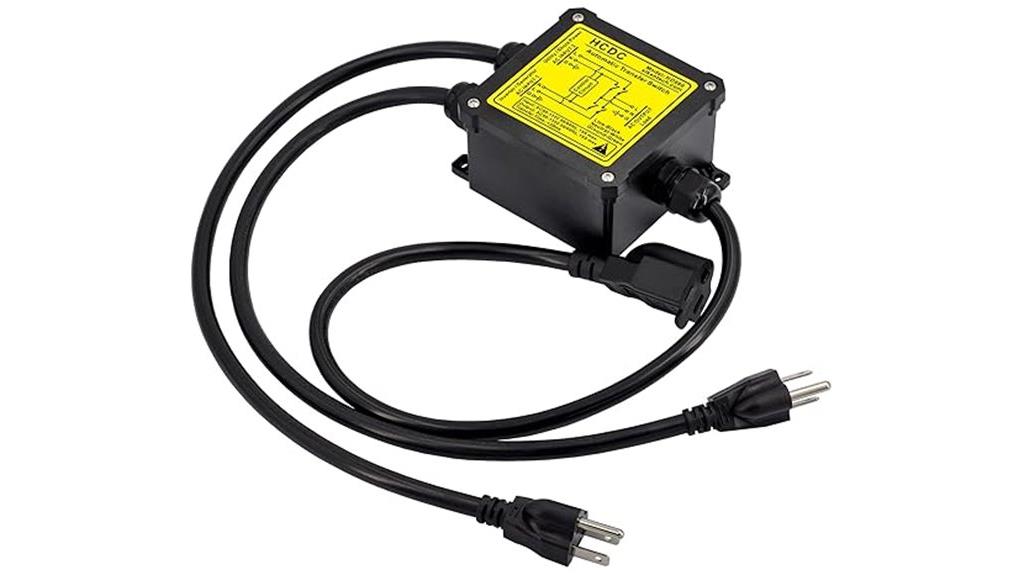
If you need a reliable transfer switch for smaller loads or backup power systems, the AC120V 15Amp Automatic Transfer Switch offers a compact and efficient solution. It seamlessly switches between two AC sources—like an inverter or generator and utility power—within 30 milliseconds, minimizing disruptions to your devices. Built with IP68 waterproof enclosure and durable materials, it’s suitable for indoor and outdoor use. Its internal relays prevent arcing, boosting longevity and reliability. With a maximum current of 15 amps and straightforward wiring, this switch guarantees safe, automatic power transfer, making it ideal for protecting sensitive electronics during power outages.
Best For: homeowners and small-scale backup power users seeking a reliable, compact transfer switch for indoor or outdoor use to seamlessly switch between inverter, generator, and utility power sources.
Pros:
- Fast transfer time of less than 30 milliseconds minimizes device disruption
- IP68 waterproof enclosure suitable for outdoor installation
- Durable construction with high-quality materials ensures long-term reliability
Cons:
- Limited to a maximum of 15 amps, not suitable for heavy loads
- 19-inch cable length may require additional wiring adjustments in some setups
- Designed primarily for smaller loads, less ideal for large appliances or industrial use
Factors to Consider When Choosing Whole House Transfer Switch Manual Vs Automatic
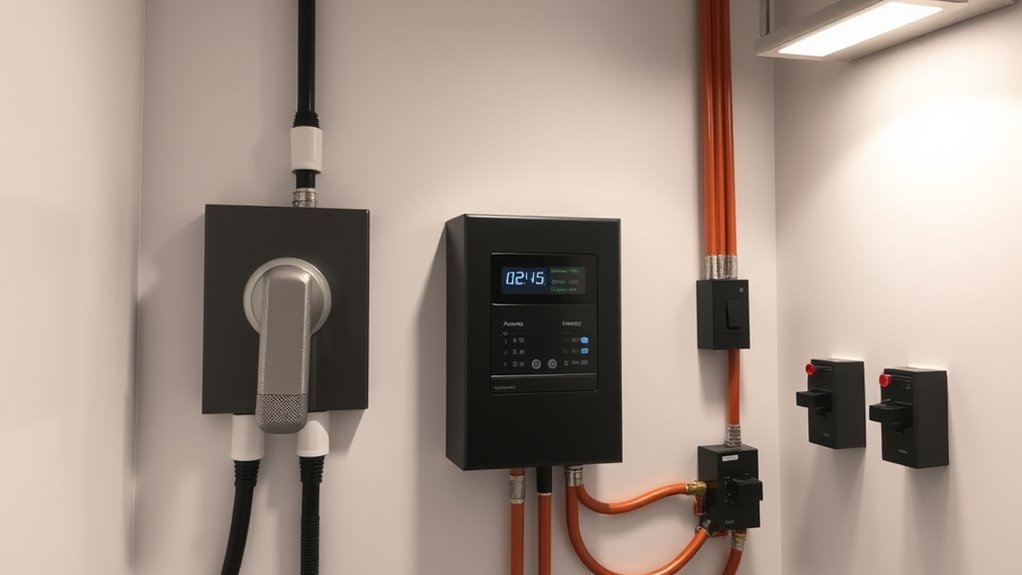
When choosing between manual and automatic transfer switches, I consider factors like installation complexity, cost, and overall safety. It’s important to weigh how easy maintenance is and how well each option manages power during outages. Understanding these points helps me pick the right switch for my home’s needs and budget.
Installation Complexity Level
Choosing between manual and automatic transfer switches hinges substantially on installation complexity, which can impact both cost and effort. Manual switches are simpler to install, often involving straightforward wiring directly to the main electrical panel, making them suitable for DIY projects if you have basic electrical knowledge. They typically require fewer wiring steps and less time, reducing chances of errors. Automatic transfer switches, however, are more complex, involving wiring for control circuits, sensors, and communication modules. This complexity usually necessitates professional installation, increasing labor costs and time. The technical difficulty of installing an automatic switch can be a significant factor, especially if you’re considering a do-it-yourself approach. Overall, manual switches are more accessible for homeowners, while automatic systems demand specialized skills and tools.
Cost and Budget Considerations
Cost and budget considerations play a essential role in selecting between manual and automatic transfer switches. Automatic switches typically cost between $1,000 and $3,000, while manual options are usually more affordable, ranging from $300 to $800. Although automatic switches require a higher initial investment, they can save money over time by reducing labor costs during installation and operation, and they help prevent costly downtime by ensuring quick power transfer. Budget constraints may make manual switches more attractive, as they have lower upfront costs but require manual operation during outages. It’s important to regard not only the purchase price but also installation, maintenance, and potential future upgrades or repairs to make a well-informed decision aligned with your financial plan.
Power Management Ease
Ever wondered how smoothly your household switchovers during a power outage? Automatic transfer switches make that process effortless by activating instantly, ensuring your power stays uninterrupted without any manual effort. They constantly monitor the power quality and switch to backup power automatically if an outage or fault occurs, providing seamless management. On the other hand, manual transfer switches require you to physically switch between sources, which can take several seconds or even minutes. This approach offers more control but depends on human action, risking delays or errors during emergencies. When considering power management ease, automatic switches clearly excel in convenience and speed, making them ideal for those who prioritize uninterrupted service. Manual switches demand more involvement but give you direct control over the transfer process.
Safety and Reliability Standards
When selecting a whole house transfer switch, safety and reliability standards play a vital role in guaranteeing the system operates safely during power transfers. Both manual and automatic switches must comply with safety standards like UL 1008 or NEMA 3R, which verify electrical safety and durability. Automatic switches typically include features like surge protection and fault detection, helping prevent hazards such as electrical fires or shocks. Manual switches depend on user operation but should still adhere to safety codes to avoid back-feeding or shock risks. Both types should incorporate safety mechanisms like lockout provisions and proper grounding to protect technicians and household wiring. Meeting these standards reduces the risk of injury, equipment damage, and guarantees peace of mind during power switching events.
Maintenance Requirements
Choosing between manual and automatic transfer switches involves understanding their maintenance needs, as each type requires different levels of attention to stay reliable. Automatic switches generally need less hands-on involvement but require periodic testing and software updates to ensure proper operation. They involve inspecting control modules, relays, and sensors, which can be more complex and time-consuming. Manual transfer switches, on the other hand, demand regular manual testing to confirm the transfer mechanism works correctly and safely. They have fewer electronic parts, making maintenance simpler and troubleshooting easier. Both types benefit from routine inspections of electrical connections, mounting stability, and corrosion prevention. Overall, manual switches are lower maintenance, while automatic switches involve more detailed inspections to maintain their advanced functionality.
Control Options Flexibility
Control options flexibility is a key factor in selecting the right whole house transfer switch, as it determines how your system responds during power outages. Manual switches require you to intervene and switch power sources yourself, giving you control but relying on your awareness and prompt action. Automatic transfer switches detect power loss instantly and switch to backup power within seconds, providing seamless operation without user input. This flexibility allows you to choose between a system that’s entirely user-driven or one that operates automatically for convenience. The choice depends on your preferences for control, reliability, and complexity. If you want to manage switching manually, a manual switch offers simplicity. For hands-free operation and enhanced reliability, an automatic switch provides peace of mind during outages.
Emergency Response Speed
Automatic transfer switches respond to power outages in less than 30 milliseconds, switching to backup power almost instantly. This rapid response minimizes downtime and protects sensitive electronics from power fluctuations. Manual transfer switches, on the other hand, require someone to intervene and operate the switch, which can cause delays. In an emergency, every second counts, and manual switches depend on the operator’s promptness and availability, risking longer outages. Automatic switches detect outages instantly and switch seamlessly, ensuring continuous power supply without human intervention. For critical systems or environments where rapid response is essential, automatic transfer switches offer a significant advantage. While manual switches might be suitable for less urgent situations, automatic options excel at providing swift, reliable power transfer during emergencies.
Frequently Asked Questions
How Long Does Installation of a Transfer Switch Typically Take?
Installation of a transfer switch usually takes about 4 to 8 hours, depending on the complexity of your system and the type of switch. I recommend hiring a licensed electrician, as they’ll handle the wiring safely and efficiently. If your electrical panel is easily accessible and the switch is straightforward, it might be quicker. Planning ahead and discussing your setup with the professional can help guarantee a smooth installation process.
What Maintenance Is Required for Automatic Transfer Switches?
Automatic transfer switches require minimal maintenance, but I make sure to regularly check for corrosion or dust buildup around the switch. I also inspect the control circuitry and test the system periodically to guarantee it functions correctly during power outages. Additionally, I keep an eye on battery backups, replacing them when needed, and follow the manufacturer’s guidelines for periodic testing and professional servicing to keep everything running smoothly.
Can Transfer Switches Be Installed Outdoors or Only Indoors?
I’ve installed transfer switches outdoors, and they work perfectly. For example, I know a homeowner who placed theirs under a covered porch, protecting it from the elements. You can install transfer switches outside if they’re weatherproof or housed in a suitable enclosure. Just make certain they’re rated for outdoor use to withstand rain, snow, and temperature changes. Proper installation and protection are key to keeping them functioning safely and reliably outside.
Are Manual Transfer Switches Suitable for All Generator Types?
Manual transfer switches are versatile and work well with most generator types, including portable and standby units. I’ve installed them with various models, and they’re reliable for switching power sources during outages. Keep in mind, manual switches require you to physically operate them when needed, so if you want automatic backup power, an automatic transfer switch might be better. But overall, manual switches are suitable for many generator setups.
What Safety Features Are Common in Modern Transfer Switches?
Imagine a safety net catching you from sudden electrical shocks—that’s what modern transfer switches do. Common features include automatic transfer, which prevents back-feeding, and integrated circuit breakers that shut off power during faults. Many also have alarm systems alerting you to issues, and lockout mechanisms ensuring safe operation. These features give me peace of mind, knowing my home’s power transfer is both efficient and secure.
Conclusion
Choosing between manual and automatic transfer switches is like picking the right tool for the job—each has its own strengths. If you want seamless backup power without lifting a finger, an automatic switch is your best friend. But if you prefer control and simplicity, a manual switch might suit you better. Either way, making an informed choice guarantees your home’s power stays on when it’s needed most—like a trusty lighthouse guiding you through the storm.