When selecting a display for photo editing, color accuracy is the top priority. The Calibrite Display Pro HL stands out as the best overall choice for its precise calibration capabilities and wide compatibility. For those on a budget, the Datacolor SpyderMonitor Calibrator offers solid performance at a lower price, though it may lack some advanced features. Content creators who need consistent color matching will find the Calibrite ColorChecker Studio invaluable for professional workflows. Balancing calibration accuracy, ease of use, and cost remains the key challenge in this category; continue reading for a detailed breakdown of each option.
Key Takeaways
- Top picks excel at balancing calibration precision with user-friendly interfaces, making them suitable for both pros and enthusiasts.
- Price differences often reflect the level of color management tools included, with premium options offering more comprehensive profiling features.
- Compatibility with various display types (LCD, OLED, Mini LED) is crucial for future-proofing your investment.
- Calibration tools with bundled color targets or spectrophotometers provide added accuracy for complex workflows.
- While more expensive options deliver higher accuracy, mid-range models often suffice for most professional photo editing needs.
| Calibrite Display 123 Monitor Calibration Colorimeter for Photo Editing and Color Accurate Viewing |  | Best Compact Calibration Tool for Dual Monitors | Connection: USB C | Body Dimensions: 34mm tall x 37mm diameter | Supports: 2 displays | VIEW ON AMAZON | See Our Full Breakdown |
| Datacolor Spyder Monitor Calibrator for Graphic Designers, Photographers, and Content Creators |  | Best Versatile Calibration for Diverse Display Types | Compatibility: OLED, mini-LED, Apple Liquid Retina XDR | Calibration Time: Approximately 90 seconds | Features: DevicePreview Beta, ambient light sensor, customizable profiles | VIEW ON AMAZON | See Our Full Breakdown |
| Calibrite Photo Kit with Display Pro HL Monitor Calibration Colorimeter and ColorChecker Passport Photo 2 |  | Best High-End Workflow Kit for Professional Photo Editing | Includes: Display Pro HL colorimeter, ColorChecker Passport Photo 2, Calibrite PROFILER software | Supports: Custom camera profiles for RAW workflows, calibration for mini LED OLED and Apple XDR | Features: White balance adjustment, exposure reference, customizable targets | VIEW ON AMAZON | See Our Full Breakdown |
| Calibrite ColorChecker Studio Spectrophotometer for Color Management with ColorChecker Classic Mini |  | Best Comprehensive Color Profiling for Multiple Devices | Device Type: Spectrophotometer | Supports: Display, projector, printer, scanner, camera profiling | Included Software: Calibrite PROFILER software | VIEW ON AMAZON | See Our Full Breakdown |
| Calibrite ColorChecker Display Pro (CCDIS3) |  | Best User-Friendly Calibration for Consistent Color | Compatibility: ccProfiler and i1Profiler software | Features: High repeatability, rotatable diffuser arm, tripod mount | Power: Powered by X-Rite | VIEW ON AMAZON | See Our Full Breakdown |
| Calibrite ColorChecker Digital SG Color Reference Target with Storage Sleeve, 140 Patch Chart for Camera Profiling, White Balance, and Color Analysis |  | Best for Professional Color Profiling and Camera Calibration | Patch Count: 140 | Size: 8 x 11.5 inches | Includes: Storage sleeve | VIEW ON AMAZON | See Our Full Breakdown |
| Datacolor SpyderPro Monitor Calibration Tool |  | Best for Accurate Monitor Calibration for Creative Professionals | Compatibility: Windows 10/11, macOS 10.14-14 | Display Support: Unlimited displays, USB-C | Calibration Features: Gamma, whitepoint, brightness, projector | VIEW ON AMAZON | See Our Full Breakdown |
| Calibrite Display Pro HL Monitor Calibration Colorimeter for LCD, Mini LED, and OLED Displays |  | Best for High-Luminance and Modern Display Calibration | Measurement Range: up to 3000 nits | Display Compatibility: LCD, Mini LED, OLED, Projectors | Software: Calibrite PROFILER for Mac and Windows | VIEW ON AMAZON | See Our Full Breakdown |
| coloraccurate displays for photo editing | Features |
|---|---|
| Calibrite Display 123 Monitor | Before and after check, adjustable counterweight |
| Datacolor Spyder Monitor Calib | DevicePreview Beta, ambient light sensor, customizable profiles |
| Calibrite Photo Kit with Displ | White balance adjustment, exposure reference, customizable targets |
| Calibrite ColorChecker Studio | Adaptive iterative profiling, ambient light measurement |
| Calibrite ColorChecker Display | High repeatability, rotatable diffuser arm, tripod mount |
| Calibrite ColorChecker Digital | — |
| Datacolor SpyderPro Monitor Ca | — |
| Calibrite Display Pro HL Monit | — |
More Details on Our Top Picks
Calibrite Display 123 Monitor Calibration Colorimeter for Photo Editing and Color Accurate Viewing
The Calibrite Display 123 stands out for its simplicity and ease of use, making it ideal for photographers who need quick, reliable calibration of up to two screens. Compared to the Calibrite ColorChecker Display Pro, it offers a more streamlined setup with a guided 1-2-3 workflow, but at the expense of supporting only two displays. Its built-in comparison view allows for fast verification, which is especially useful for those managing dual-monitor setups. However, the limited number of supported screens and reliance on USB C connections could be restrictive for users with larger multi-monitor environments or older devices.
Pros:- Easy to use with guided 1-2-3 calibration workflow
- Supports calibration of up to two monitors for consistent color
- Built-in comparison view for quick verification
Cons:- Limited to two displays, not suitable for larger multi-monitor setups
- Requires USB C connection, may need adapters for some devices
Best for: Photographers or creators with a dual-monitor setup seeking straightforward calibration without fuss.
Not ideal for: Professionals managing more than two displays or those needing extensive customization options.
- Connection:USB C
- Body Dimensions:34mm tall x 37mm diameter
- Supports:2 displays
- Brightness Target:Native or Photo
- Features:Before and after check, adjustable counterweight
Our verdict“This device is best for dual-monitor users who prioritize simplicity and quick verification over extensive customization.”
Datacolor Spyder Monitor Calibrator for Graphic Designers, Photographers, and Content Creators
The Datacolor Spyder makes a compelling choice for those who work across varied display technologies like OLED and mini-LED, offering a quick 90-second calibration process. Unlike the Calibrite Display 123, which is more limited in scope, the Spyder supports a broad range of screens, including high-end OLEDs, with an ambient light sensor that automatically adjusts for room lighting. This flexibility makes it suitable for both professionals and casual users. However, some may find its calibration settings somewhat limited without deeper customization, and the need for regular software updates could be inconvenient for those seeking a seamless experience.
Pros:- Quick calibration process (about 90 seconds)
- Works on a broad range of display types including OLED and mini-LED
- Ambient light sensor helps maintain accuracy in varying lighting conditions
Cons:- Calibration settings may be limited for advanced users
- Requires ongoing software updates for best performance
Best for: Content creators and photographers who need fast, reliable calibration across a variety of modern display types.
Not ideal for: Users requiring highly customizable calibration profiles or those with very specific color workflows demanding extensive control.
- Compatibility:OLED, mini-LED, Apple Liquid Retina XDR
- Calibration Time:Approximately 90 seconds
- Features:DevicePreview Beta, ambient light sensor, customizable profiles
Our verdict“Ideal for users seeking fast, adaptable calibration across diverse display technologies without complex setup.”
Calibrite Photo Kit with Display Pro HL Monitor Calibration Colorimeter and ColorChecker Passport Photo 2
The Calibrite Photo Kit offers a comprehensive suite for professional photographers who need precise color control across both monitors and cameras. Unlike the ColorChecker Display Pro, which focuses on display calibration, this kit combines a high luminance colorimeter with a ColorChecker Passport Photo 2, supporting advanced RAW workflows and custom camera profiling. It’s perfect for those demanding consistent color accuracy from capture to display, but its complexity and higher price tag make it less suitable for beginners or casual shooters. Setting up and mastering the included tools may require a learning curve.
Pros:- Supports modern high-end display technology (mini LED, OLED, Apple XDR)
- Includes tools for camera profiling and monitor calibration
- Enhances workflow reliability with consistent color and white balance
Cons:- Setup and use can be complex for beginners
- High cost may be prohibitive for casual users
Best for: Professional photographers managing high-end displays and needing detailed camera and monitor calibration for precise workflows.
Not ideal for: Casual photographers or hobbyists who do not require advanced camera profiling or comprehensive calibration tools.
- Includes:Display Pro HL colorimeter, ColorChecker Passport Photo 2, Calibrite PROFILER software
- Supports:Custom camera profiles for RAW workflows, calibration for mini LED OLED and Apple XDR
- Features:White balance adjustment, exposure reference, customizable targets
Our verdict“This kit is designed for professionals who need the highest level of color accuracy across both camera and display workflows.”
Calibrite ColorChecker Studio Spectrophotometer for Color Management with ColorChecker Classic Mini
The Calibrite ColorChecker Studio Spectrophotometer broadens the scope of color management, supporting calibration for displays, printers, scanners, and cameras. Compared to dedicated monitor calibrators like the ColorChecker Display Pro, it offers a more holistic approach, including the ColorChecker Classic Mini for accurate camera profiling, making it suitable for multi-device workflows. Its adaptive profiling feature improves consistency over multiple calibrations, but the setup process and hardware complexity can be intimidating for casual users. The higher price point reflects its professional-grade versatility.
Pros:- Supports comprehensive profiling of monitors, printers, scanners, and cameras
- Includes ColorChecker Mini for accurate camera profiling
- Adaptive profiling improves calibration accuracy over time
Cons:- Setup and calibration process can be complex
- Price may be high for non-professional users
Best for: Professionals managing complex workflows across multiple devices, including photographers and print labs.
Not ideal for: Casual hobbyists or those only needing basic monitor calibration without broader device management.
- Device Type:Spectrophotometer
- Supports:Display, projector, printer, scanner, camera profiling
- Included Software:Calibrite PROFILER software
- Included Accessories:USB cable, monitor profiling holder pouch, ColorChecker Mini
- Features:Adaptive iterative profiling, ambient light measurement
Our verdict“Best suited for users requiring a unified solution for managing color across multiple devices and workflows.”
Calibrite ColorChecker Display Pro (CCDIS3)
The ColorChecker Display Pro strikes a balance for those who want reliable, repeatable calibration on a range of displays. Its compatibility with ccProfiler and i1Profiler software makes it accessible for both hobbyists and professionals. The device’s high repeatability ensures consistent results, and the inclusion of a rotatable diffuser arm and tripod mount adds flexibility for different environments, including projector calibration. Still, its reliance on specific software and the higher price may deter casual users or those with minimal calibration needs.
Pros:- High repeatability for consistent results
- Compatible with ccProfiler and i1Profiler software
- Versatile features like rotatable diffuser arm and tripod mount
Cons:- Requires compatible calibration software to operate
- May be more suitable for professional use due to price
Best for: Photographers and designers seeking a straightforward, repeatable calibration device compatible with popular software tools.
Not ideal for: Beginners or hobbyists looking for a low-cost, simple calibration solution without the need for software compatibility or extra features.
- Compatibility:ccProfiler and i1Profiler software
- Features:High repeatability, rotatable diffuser arm, tripod mount
- Power:Powered by X-Rite
Our verdict“Perfect for users who want reliable, repeatable calibration results with flexible mounting options and software integration.”
Calibrite ColorChecker Digital SG Color Reference Target with Storage Sleeve, 140 Patch Chart for Camera Profiling, White Balance, and Color Analysis
The Calibrite ColorChecker Digital SG stands out for its comprehensive 140-patch chart, including expanded skin tone and grayscale references, making it ideal for detailed camera profiling and color analysis. Compared with the ColorChecker Display Pro, this target offers more patches for refined calibration, especially useful for photographers working with skin tones and subtle color nuances. Its durable storage sleeve ensures protection during transport, which is a plus for professional workflows. However, its professional-grade focus means it’s less suitable for casual photographers who don’t need this level of precision or are on a tight budget. The chart’s size (8 x 11.5 inches) is portable yet detailed enough for rigorous color work, but the higher cost might deter hobbyists. Overall, this target makes the most sense for professionals seeking accuracy across camera and video workflows, accepting the premium price for detailed, reliable results.
Pros:- Provides a highly detailed 140-patch color reference for accurate profiling
- Includes expanded skin tone and grayscale patches for natural rendering
- Durable storage sleeve for protection and portability
Cons:- Premium price may be prohibitive for casual users
- Designed primarily for professional workflows, not quick or simple setups
Best for: Professional photographers, videographers, and colorists needing precise camera profiling and color analysis.
Not ideal for: Casual hobbyists or those on a tight budget, as the price and professional focus may be overkill for simple editing needs.
- Patch Count:140
- Size:8 x 11.5 inches
- Includes:Storage sleeve
- Color Space Coverage:Expanded
Our verdict“This chart is best suited for professionals who require detailed, reliable color calibration for camera and video workflows.”
Datacolor SpyderPro Monitor Calibration Tool
The Datacolor SpyderPro offers reliable, user-friendly calibration for a wide range of monitors, making it a strong choice for photographers, designers, and video editors who need faithful color reproduction. When compared to the Calibrite Display Pro HL, the SpyderPro is easier for beginners to set up and use, but it may lack some of the advanced features like high luminance support or customizable profiling options. It supports multiple operating systems and an array of display types, including USB-C connections, adding flexibility for multi-monitor setups. However, it doesn’t specify the price publicly, which can make budgeting difficult, and the calibration process requires some technical familiarity to optimize results. Its interface is straightforward, but users seeking ultra-high luminance calibration or complex profiling might find it lacking. Overall, this tool is a solid fit for professionals who want dependable color accuracy without the complexity of high-end hardware.
Pros:- Ensures accurate color display across multiple monitor types
- Supports a wide range of operating systems and device connections
- User-friendly interface with multi-language support
Cons:- Lacks specific high-end features like luminance measurement above typical ranges
- Requires technical knowledge for optimal calibration setup
Best for: Photographers, designers, and editors who need consistent, accurate monitor calibration across multiple devices.
Not ideal for: Advanced users needing high luminance support or specialized calibration features, as the SpyderPro may fall short in those areas.
- Compatibility:Windows 10/11, macOS 10.14-14
- Display Support:Unlimited displays, USB-C
- Calibration Features:Gamma, whitepoint, brightness, projector
- Languages:English, Spanish, Chinese, Japanese
Our verdict“This calibration tool is ideal for creatives who need reliable, straightforward monitor calibration without complex setup.”
Calibrite Display Pro HL Monitor Calibration Colorimeter for LCD, Mini LED, and OLED Displays
The Calibrite Display Pro HL excels in measuring and calibrating bright displays with up to 3000 nits luminance, making it ideal for professionals working with OLED, Mini LED, and high-end LCD screens. Unlike the SpyderPro, which supports standard displays, the HL model targets high-brightness devices, providing more accurate profiles for HDR and modern tech. Its support for Mac and Windows, along with customizable profiling options, makes it flexible for multi-display setups. The inclusion of validation and uniformity tools enhances calibration precision, but the device’s complexity and price point might discourage casual users. The setup requires compatible software, and mastering its advanced features involves a learning curve. This pick is best suited for color professionals who need to maintain accuracy across high-brightness, high-dynamic-range displays and are comfortable with sophisticated calibration tools.
Pros:- Supports high luminance measurement up to 3000 nits for HDR content
- Compatible with LCD, Mini LED, OLED, and projectors
- Includes advanced validation and uniformity tools for precision
Cons:- Requires compatible software and hardware setup, adding complexity
- Higher cost may not justify needs for average users
Best for: Colorists and professional photographers working with HDR or high-luminance displays requiring precise calibration.
Not ideal for: Casual users or those with standard displays, as the cost and feature set exceed their needs and budget.
- Measurement Range:up to 3000 nits
- Display Compatibility:LCD, Mini LED, OLED, Projectors
- Software:Calibrite PROFILER for Mac and Windows
- Connection:USB-C with USB-A adapter
- Mounting:Built-in 1/4″ mount thread
- Included Accessories:Travel storage pouch
Our verdict“This device is best for professionals managing high-end, high-brightness displays that demand exacting calibration.”
How We Picked
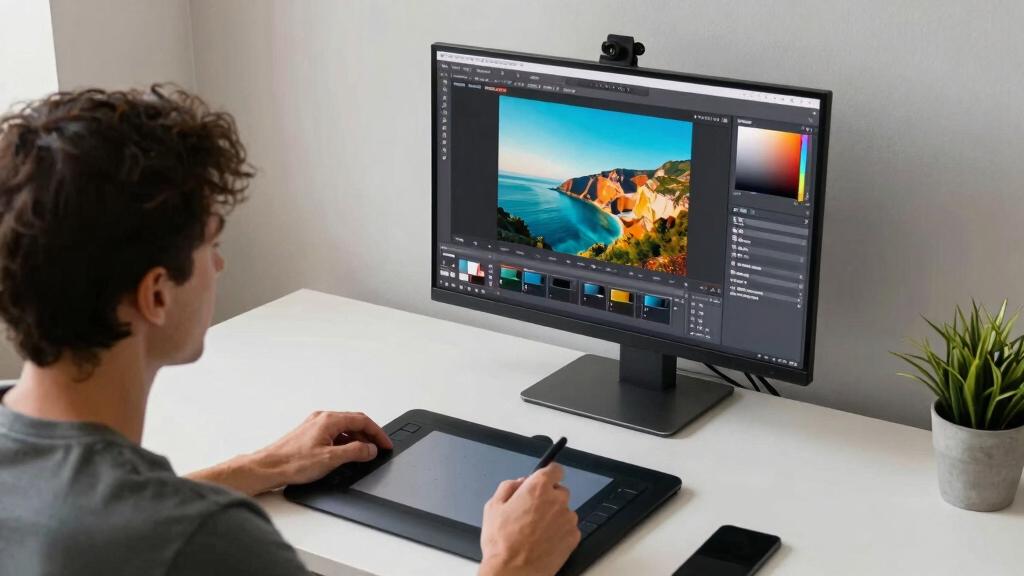
To select these displays, I evaluated calibration accuracy, ease of use, build quality, compatibility with different display technologies, and value. Products were compared based on how well they maintained color fidelity, the comprehensiveness of their calibration features, and their suitability for different user skill levels. Priority was given to solutions that offer consistent, reliable performance across a variety of workflows, with an emphasis on professional-grade color precision. The ranking reflects a balance between performance, user experience, and cost, ensuring options for beginners up to advanced users.| coloraccurate displays for photo editing | Features |
|---|---|
| Calibrite Display 123 Monitor | Before and after check, adjustable counterweight |
| Datacolor Spyder Monitor Calib | DevicePreview Beta, ambient light sensor, customizable profiles |
| Calibrite Photo Kit with Displ | White balance adjustment, exposure reference, customizable targets |
| Calibrite ColorChecker Studio | Adaptive iterative profiling, ambient light measurement |
| Calibrite ColorChecker Display | High repeatability, rotatable diffuser arm, tripod mount |
| Calibrite ColorChecker Digital | — |
| Datacolor SpyderPro Monitor Ca | — |
| Calibrite Display Pro HL Monit | — |
Factors to Consider When Choosing Coloraccurate Displays For Photo Editing
Choosing the right coloraccurate display involves more than just reading specs. It requires understanding your workflow needs, budget, and the types of displays you’ll be working with. Proper calibration tools can dramatically improve color fidelity, but the right choice depends on several factors. Here are key considerations to help you make an informed decision.Calibration Accuracy and Consistency
High calibration accuracy ensures that your display reproduces colors faithfully, which is critical for professional photo editing. Look for solutions that offer hardware calibration and spectrophotometer support, as these provide more precise results than software-only methods. Consistency over time is equally important; opt for products with automatic calibration scheduling and calibration reports to maintain color fidelity without constant manual adjustments.
Display Compatibility and Technology
Your workflow may involve different display types, such as LCD, OLED, or Mini LED. Ensure the calibration device supports your specific display technology to avoid inaccuracies. Some calibration tools are optimized for certain screen types, providing better uniformity and color accuracy. Investing in a device compatible with your hardware helps future-proof your setup and reduces calibration errors.
Ease of Use and Workflow Integration
For many users, a straightforward calibration process saves time and reduces frustration. Features like automatic calibration, intuitive software, and straightforward setup can make a significant difference. Consider whether you need additional tools like color targets or spectrophotometers for advanced profiling, especially if you work with print or multi-device workflows. Simpler interfaces are ideal for beginners, while advanced options suit experienced professionals.
Cost and Value
The price of calibration tools varies widely, often reflecting their feature set. Mid-range models typically offer excellent accuracy for most professionals, while premium options include comprehensive profiling, spectral measurement, and extensive color management tools. Avoid overspending on unnecessary features if you’re an enthusiast or beginner, but don’t skimp on quality if your work demands precise color reproduction. Consider long-term reliability and calibration stability for better value over time.
Support and Software Ecosystem
Reliable customer support and software updates are essential for maintaining calibration accuracy. Check whether the device comes with compatible software for your operating system and whether updates are regularly provided to improve performance. Compatibility with popular editing software like Adobe Photoshop or Lightroom can streamline your workflow. Good support ensures your calibration tools remain effective through hardware or software updates.
Frequently Asked Questions
How often should I calibrate my display for photo editing?
For most professional workflows, calibrating your display once a month is advisable to maintain consistent color accuracy. However, if you work under varying lighting conditions or notice color shifts, more frequent calibration—such as bi-weekly—might be necessary. Many calibration tools support automatic scheduling, making regular calibration easier without manual intervention. Regular calibration ensures your edits remain true to life, especially when working on critical projects.
Can I use a consumer-grade monitor for professional photo editing?
While some high-quality consumer monitors can be used for photo editing, they often lack the factory calibration and color management features needed for professional work. If accuracy is essential, investing in a dedicated color-accurate display paired with calibration tools is recommended. Consumer displays may also suffer from wider color gamuts or uneven backlighting, which can distort your workflow. For critical projects, a professional-grade monitor remains the better choice.
Is a spectrophotometer necessary for my workflow?
A spectrophotometer provides highly precise color measurements, making it ideal for advanced workflows like print production and color profiling across multiple devices. If your work demands the highest fidelity, investing in a spectrophotometer ensures accurate calibration and color consistency. However, for most digital editing tasks, a well-designed colorimeter paired with good calibration software suffices. Consider your project scope before choosing this more specialized tool.
How do I know if my display is suitable for calibration?
Many modern displays can be calibrated effectively, but some are better suited than others. Look for features like wide color gamut support, uniform brightness, and factory calibration reports. OLED and LED screens with high resolution and good contrast ratios often deliver better results after calibration. If your display has uneven backlighting or poor color reproduction, calibration won’t fully fix these issues. Confirm compatibility with your calibration device and check reviews for calibration success stories before purchasing.
What is the best way to ensure long-term color consistency?
The key to maintaining long-term color consistency is regular calibration and monitoring. Use calibration tools that support scheduled automatic calibration to keep your display in check. Store calibration profiles and compare them periodically to detect any drift. Also, controlling ambient lighting in your workspace minimizes environmental effects that could influence color perception. Combining these practices helps achieve stable, predictable color reproduction over time.
Conclusion
The best overall display for most professional photo editors in 2026 is the Calibrite Display Pro HL, thanks to its precise calibration and broad compatibility. Budget-conscious users should consider the Datacolor SpyderMonitor Calibrator, which offers reliable performance at a lower cost. For those needing advanced profiling and spectral measurement, the Calibrite ColorChecker Studio stands out as the premium choice. Beginners or hobbyists will find value in simpler, user-friendly options, while experienced professionals should prioritize models with comprehensive calibration tools. Your selection depends on your workflow demands, budget, and desired level of color fidelity.